Apply Now Programmes Virtual Tour CT-SET 2026 Ph.D
Admissions
Open 2026-27
Apply now
Apply Now
Home  /  Programmes  /  Master's in Anesthesia and Operation Theatre Technology

Master's in Anesthesia and Operation Theatre Technology

Duration: 2 Years Category: Postgraduate Programs

Programme Details

About the Programme

The Master’s in Anaesthesia and Operation Theatre Technology is a two-year postgraduate programme designed to develop advanced clinical, technical, research and managerial competencies in anaesthesia and perioperative care. The programme prepares students to work efficiently in multidisciplinary surgical and critical care teams while ensuring patient safety, quality healthcare delivery and professional excellence.

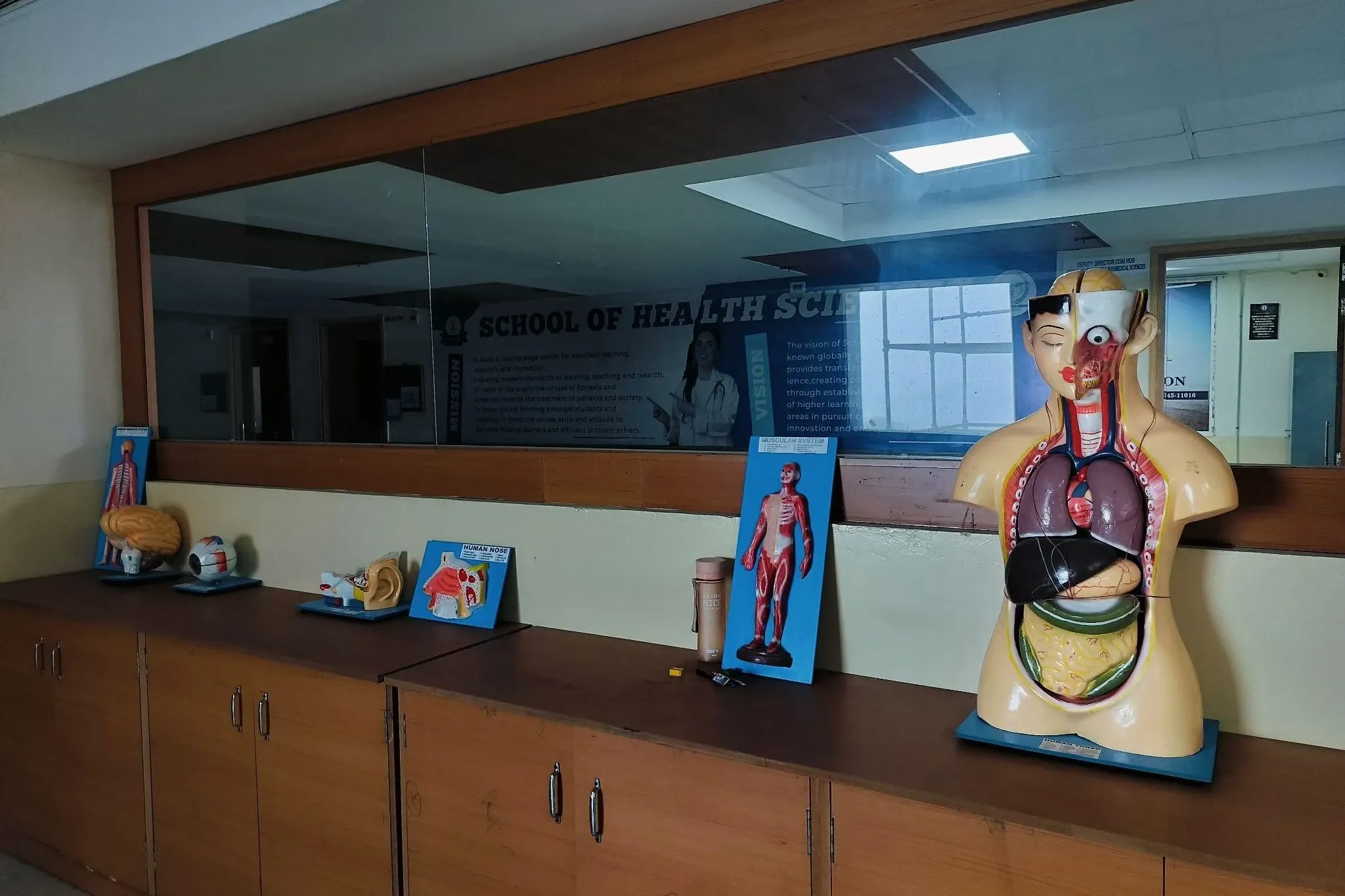
Industry Immersion

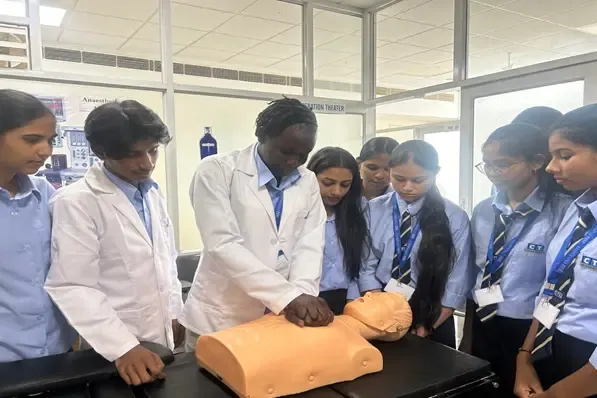
Students receive extensive clinical exposure and hands-on training through hospital rotations, internships, workshops and simulation-based learning in reputed healthcare institutions. Training areas include:

  1. Cardiac Operation Theatre
  2. Neuro Operation Theatre
  3. Intensive Care Units
  4. Emergency and Trauma Care Units
  5. Post Anaesthesia Care Units (PACU)

Students also participate in surgical assistance, advanced anaesthesia procedures, healthcare workshops and research activities to strengthen clinical competence and professional readiness.

Eligibility Criteria

Candidates must have completed a Bachelor’s degree of minimum three years duration in Anaesthesia & Operation Theatre Technology / Anaesthesia Technology / Operation Theatre Technology from a recognized university with minimum 50% marks.

Register Now

Why Choose CT University

Why CT University is the Right Choice for Your Future

CT University Campus

At CT University, we combine industry-integrated learning and global academic partnerships, backed by the CT Group's 30+ year legacy, to prepare students for careers that actually last.

Industry-oriented
learning

Modern campus
facilities

Academic excellence &
mentorship

Global opportunities &
placements

Fee Structure & Scholarships

Program Fee Details

Fee Type Amount
Programme Fees (per Semester) ₹45000
Examination Fees ₹3000
International Fee (USD) $4500

Course Curriculum

1ST SEMESTER SUBJECTS

Provides advanced understanding of relevant applied sciences, integrating anatomy, physiology, pharmacology, pathology, and related concepts essential for safe and effective anaesthesia and operation theatre practice.

Course Outcome:
CO1: Discuss the anatomy of Brain & spinal cord
CO2: Discussthe anatomical & physiological aspects of respiratory and cardiovascular system.
CO3: Record and interpret the lung function tests.
CO4: Explain the homeostasis and hemostasis
CO5: Describe the pharmacology of Adrenergic and Cholinergic drugs and their blockers.
CO6: Explain the pharmacology of Diuretics,antiarrhythmics, antihypertensives and corticosteroids.
CO7: Describe the pharmacology of drugs used in coagulation disorders and other drugs
CO8: Understand immunology & nosocomial infections.

Develops advanced knowledge and practical competencies in anaesthetic equipment, anaesthesia workstation, monitoring devices, airway equipment, and standard anaesthetic procedures with emphasis on safe operation and troubleshooting.
Course Outcome:
CO1: Understand & demonstrate anaesthesia workstation, its components & safety
CO2: Practice safety check of anaesthesia workstation.
CO3: Discuss and operate monitoring devices
CO4: Understand and operate airway devices
CO5: Prepare difficult airway cart.
CO6: Set up for hemodynamic monitoring.
CO7: Understand types of simulators and simulation in anaesthesia

Provides comprehensive knowledge of commonly used anaesthetic and emergency drugs, including their indications, contraindications, dosage principles, administration, monitoring requirements, adverse effects, and management of drug-related emergencies.
Course Outcome:
CO1: Describe the pharmacology of emergency drugs
CO2: Group and demonstrate preparation of emergency drugs.
CO3: Discuss and use antiemetic drugs
CO4: Demonstrate and dilute electrolytes
CO5: Demonstrate fluid infusion including blood
CO6: Discuss transfusion hazards

Develops advanced knowledge and skills in surgical technology, including surgical procedures, instruments, aseptic techniques, patient positioning, surgical assistance, infection prevention, and safe operation theatre practices.
Course Outcome:
CO1: Understand developing a surgical diagnosis
CO2: Demonstrate and apply aseptic technique.
CO3: Understand and demonstrate suturing techniques
CO4: Classify and identify surgical instruments
CO5: Maintenance and troubleshoot specialized surgical devices

2ND SEMESTER SUBJECTS

Provides advanced knowledge and practical application of contemporary anaesthesia techniques, including advanced airway management, general and regional anaesthesia, monitoring, perioperative management, and management of anaesthesia-related complications.
Course Outcome:
CO1: Understand and practice peripheral venous cannulation
CO2: Demonstrate and prepare vascular cannulation
CO3: Explain and demonstrate the applications of ultrasound in ICU
CO4: Understand modern technology in anaesthesia
CO5: Understand and apply emergency anaesthesia guidelines

Provides specialized knowledge of anaesthetic management for complex clinical conditions and specialty procedures, with emphasis on patient assessment, selection of appropriate anaesthetic techniques, monitoring, and perioperative patient safety.
Course Outcome:
CO1: Understand, prepare and demonstrate the anaesthesia for Laparoscopic and Robotic surgeries
CO2: Understand, prepare and demonstrate the anaesthesia for Obstetrics and Gynecological procedures
CO3: Understand, prepare and demonstrate the anesthesia for Orthopedic surgeries.
CO4: Understand, prepare and demonstrate the anesthesia for Ophthalmic surgeries.
CO5: Understand, prepare and demonstrate the anesthesia for Otorhinolaryngoscopic surgeries
CO6: Understand, prepare and demonstrate the anesthesia for Onco surgeries

Develops advanced understanding and clinical competencies in common and specialized surgical procedures, including surgical principles, patient preparation, positioning, instrumentation, perioperative care, and operation theatre practices.
Course Outcome:
CO1: Understand & prepare for Laparoscopic & Robotic surgeries
CO2: Understand spinal cord injuries and management of spinal trauma
CO3: Describe types of fractures and its management
CO4: Understand & prepare for ophthalmic surgeries
CO5: Understand & prepare for ENT surgeries
CO6: Understand & prepare for Obstetrics & gynecological procedures

Develops competencies in research methodology, biostatistics, critical appraisal, evidence-based practice, scientific communication, and basic teaching methodology for effective academic and clinical education in anaesthesia and operation theatre technology.
Course Outcome:
CO1: Understand & apply scales of measurements, incidence, prevalence and central tendency
CO2: Understand sampling methods
CO3: Describe skewness and kurtosis
CO4: Explain tests of significance
CO5: Understand correlation & regression
CO6: Understand & estimate sample size determination
CO7: Describe study designs & scientific documentation

3RD SEMESTER SUBJECTS

Provides advanced knowledge of anaesthetic management for specialized and complex surgical procedures, emphasizing patient assessment, selection and conduct of appropriate anaesthetic techniques, advanced monitoring, perioperative care, and management of complications.
Course Outcome:
CO1: Understand, prepare and demonstrate the anaesthesia for Neurosurgeries
CO2: Understand, prepare and demonstrate the anaesthesia for Pediatric surgeries
CO3: Understand, prepare, and demonstrate the anesthesia for Cardiovascular surgeries.
CO4: Understand, prepare, and demonstrate the anesthesia for Genitourinary surgeries.
CO5: Understand, prepare, and demonstrate the anaesthesia for Plastic & reconstructive surgeries.
CO6: Understand, prepare and demonstrate the anaesthesia for organ transplantation

Develops advanced clinical competencies in complex surgical procedures, including surgical planning, patient preparation, positioning, instrumentation, intraoperative assistance, postoperative care, and safe operation theatre practices.
Course Outcome:
CO1: Understand & prepare for Cardiac, thorax and vascular surgeries
CO2: Understand organ transplantation procedures
CO3: Describe Elective neurosurgeries
CO4: Understand & prepare for plastic & reconstructive surgeries

Provides knowledge of healthcare management and principles of management, including planning, organization, leadership, staffing, communication, resource utilization, quality assurance, patient safety, and effective administration of anaesthesia and operation theatre services.
Course Outcome:
CO1: Understand & apply management concepts & theories
CO2: Mention management functions & process
CO3: Describe basics of HRM & sourcing
CO4: Understand staff training & development
CO5: Understand materials management
CO6: Describe Inventory control, value analysis & biomedical waste management

4TH SEMESTER SUBJECTS

Provides advanced knowledge of common medical conditions and critical care principles, including patient assessment, pathophysiology, monitoring, organ support, emergency management, and multidisciplinary care relevant to anaesthesia and critical care practice.
Course Outcome:
CO1: Understand universal precautions
CO2: Report patient vital signs with different monitoring systems
CO3: Know the techniques, procedures and treatment of intensive care unit patients
CO4: Understand general care, nutrition and respiratory care of intensive care unit patients
CO5: Learn to manage the hospital acquired infections
CO6: Participate in disaster and triage management and trauma management
CO7: Perform basic life support (BLS) and advanced cardiac life support (ACLS)
CO8: Learn to monitor the patient during inter hospital and intra hospital transport

Provides comprehensive research training through analysis, interpretation, and presentation of dissertation findings, demonstrating the application of research methodology, ethical principles, scientific writing, and evidence-based practice in anaesthesia and operation theatre technology.
Course Outcome:
CO1: Develop the ability to apply the methods while working on a research project work
CO2: Describe the appropriate statistical methods required for a particular research design
CO3: Choose the appropriate research design and develop appropriate research hypothesis for a research project
CO4: Develop an appropriate framework for research studies

Program Outcomes & Features

Program Outcomes

  • Apply advanced knowledge of anaesthesia and operation theatre technology in complex clinical situations.
  • Assist anaesthesiologists and surgeons during perioperative and critical care procedures.
  • Manage operation theatre protocols, sterilization systems and healthcare safety practices.
  • Operate and maintain advanced anaesthesia workstations, monitors and medical equipment.
  • Apply evidence-based practices and research methodologies in patient care.
  • Demonstrate leadership, communication, ethical values and professional accountability in healthcare environments.

Program Specific Outcomes

  • Demonstrate proficiency in advanced anaesthesia assistance and patient monitoring techniques.
  • Manage operation theatre resources, emergency protocols and infection control systems effectively.
  • Apply critical care management skills in ICUs and postoperative care units.
  • Contribute to healthcare research, clinical audits and quality improvement practices.
  • Handle advanced anaesthesia equipment and healthcare technologies with competence and precision.

Salient Features

  • NCAHP-aligned and competency-based curriculum.
  • Advanced clinical exposure and hospital-based training. Simulation and research-oriented learning environment.
  • Training in critical care, emergency management and operation theatre protocols.
  • Emphasis on patient safety, infection control and healthcare quality standards.
  • Workshops, seminars, certifications and interdisciplinary learning opportunities.

Labs and Facilities

Anatomy & Physiology Lab

Anatomy & Physiology Lab

Offers anatomical models and physiological testing equipment to enhance understanding of h...

Explore
Operation Theatre (OT) Demo Lab:

Operation Theatre (OT) Demo Lab:

Simulates real surgical environments with modern surgical instruments, anesthesia machines...

Explore

Backed by the Legacy of CT Group, Driven by Proven Success

20000+

Placements

800+

Collaborations

1.2Cr

Highest Placement

1800+

Recruiters

1 Lac+

Alumni

40Cr

WORTH SCHOLARSHIP

Hear From Our Students

"

"CT University’s commitment to excellence in education is reflected in its B.Sc. Physiotherapy program. The rigorous training, focus on evidence-based practice, and emphasis on patient rehabilitation have prepared me to provide effective and ethical physiotherapy care in my career."

"

"CT University ensures a well-rounded experience by balancing academics with extracurricular activities. Various workshops, competitions, and student-led initiatives kept me engaged and motivated, helping me grow both professionally and personally."

"

"The internships and clinical training opportunities at CT University provided me with hands-on experience in hospitals and rehabilitation centers. Working under expert supervision gave me the confidence and practical skills needed to excel as a physiotherapy professional."

"

"What I appreciate most about CT University is its focus on patient-centered care and ethical practices in physiotherapy. The program not only teaches technical skills but also emphasizes compassion, safety, and responsibility in rehabilitation, shaping us into better professionals and individuals."

"

"The infrastructure at CT University is unmatched. The well-equipped labs, including digital radiography and advanced CT and MRI simulators, allowed me to practice and refine my skills. The emphasis on quality assurance and safety protocols in imaging technology ensures that graduates are well-prepared for real-world challenges."

"

"The curriculum at CT University is both comprehensive and future-focused. The B.Sc. Radiology and Imaging Technology course introduced me to advanced imaging techniques like CT, MRI, and Ultrasound, while also teaching me essential soft skills. Thanks to the guidance and placement opportunities provided, I secured a position in a reputed hospital before graduating."

"

"CT University stands out for its student-centric approach. The B.Sc. Radiology program is designed to meet industry standards, and the professors are always approachable and ready to assist. The emphasis on practical learning and internships has given me confidence and clarity in my chosen field. I highly recommend this course to anyone interested in a career in radiology."

"

"My experience at CT University has been truly transformative. The B.Sc. Radiology and Imaging Technology course provides an exceptional blend of theoretical knowledge and hands-on training. The faculty's expertise and the university's state-of-the-art labs have helped me gain a deep understanding of modern imaging techniques. This course has prepared me well for my career in medical imaging."