Apply Now Programmes Virtual Tour CT-SET 2026 Ph.D
Admissions
Open 2026-27
Apply now
Apply Now

Bachelors of Physiotherapy (BPT)

program-details

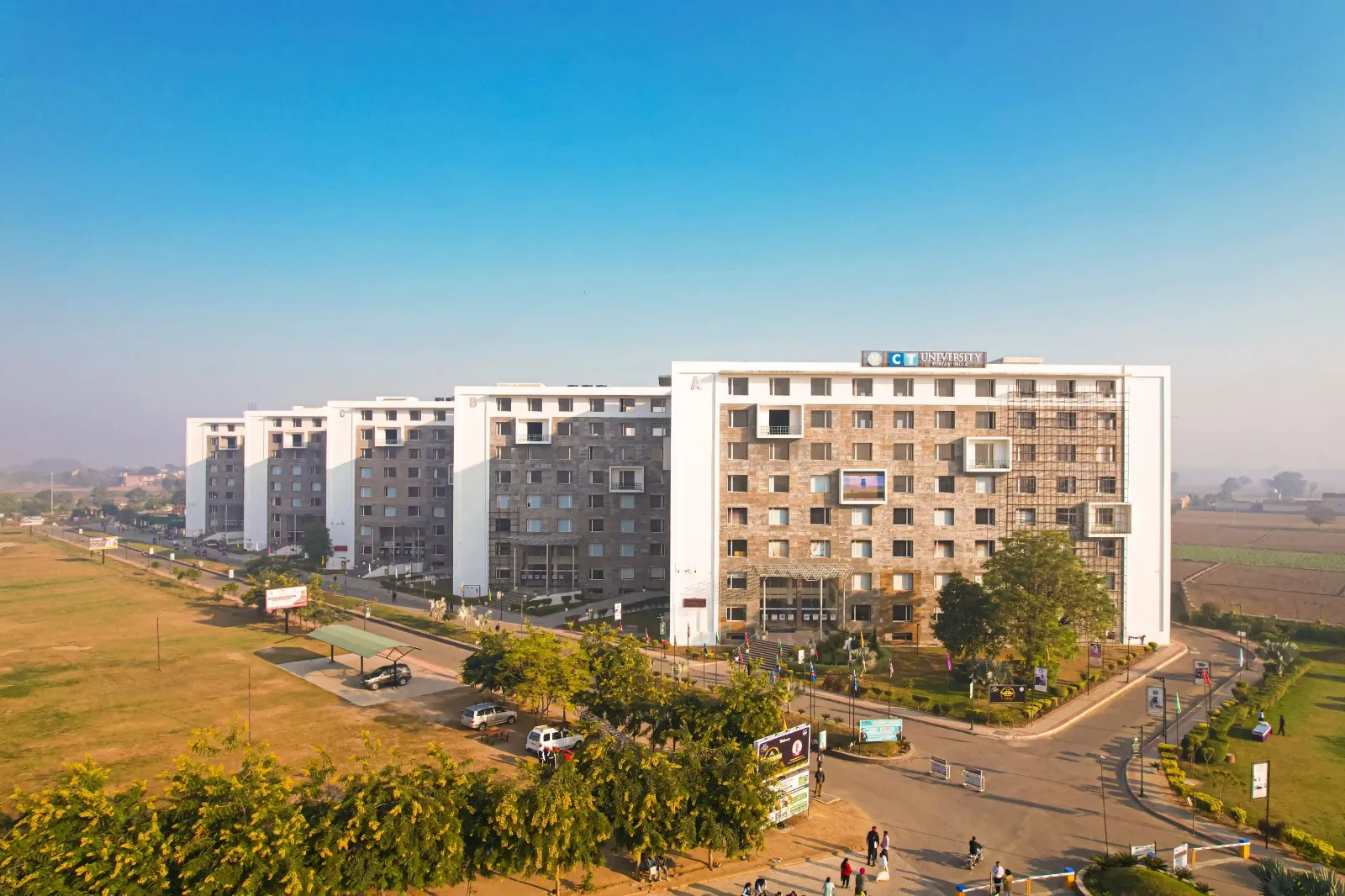
School of Allied and Healthcare, CT University offers 5 years Bachelor of Physiotherapy. It aims to restore the proper functioning of the body. The physiotherapist will also consider ways to improve general well-being and quality of life. To demonstrate knowledge of the theoretical and practical basis of physical therapy. 
Industry Immersion

Defense Establishments: At a defense academy or establishment, the role of the physiotherapist rotates from planning the exercise sessions to treating the injuries of the defense personnel. Employment Sector/Industry for physiotherapists An aspiring physiotherapist can look for a number of options available in the market. There are more than 100 companies or organizations that hire physiotherapists. These recruiting companies judge the qualification of the individuals and then offer them the job they have. To name a few top recruiting companies for physiotherapist you can see the following list:

  1. Defense Ministry of India
  2. First Physio Clinic
  3. Fortis Healthcare Company
  4. Apollo Hospital
  5. Sarthak Health Care
  6. DRS Physio & Wellness
  7. Spectrum Physio Centre
  8. Pain-Free Physiotherapy Clinic.

eligibility criteria

He/she has passed the Higher Secondary (10+2) or equivalent examination recognized by any Indian University or a duly constituted Board with pass marks (50%)in physics, chemistry and biology

Admission criteria

Merit in CT-SET, subject to fulfilling eligibility criteria.

Duration

5 Years

Curriculum

1ST YEAR SUBJECTS

Provides comprehensive knowledge of the structure and organization of the human body, including anatomical systems and their functional relationships relevant to physiotherapy practice.

Introduces the normal functions of the human body systems and physiological mechanisms essential for understanding health, movement, and physiotherapy interventions.

Covers the fundamentals of carbohydrates, proteins, lipids, enzymes, vitamins, minerals, and metabolic processes relevant to human health and physiotherapy practice.

Introduces the principles of therapeutic exercise, including basic exercise techniques, movement, flexibility, strengthening, endurance, and their application in physiotherapy.

Introduces the principles, types, physiological effects, indications, contraindications, and safe application of electro-physical agents used in physiotherapy.

Develops understanding of human behaviour, psychological processes, social factors, communication, and their influence on health, illness, rehabilitation, and patient care.

Introduces the structure, organization, policies, and functioning of healthcare delivery systems in India with emphasis on physiotherapy services and patient-centred care.

Develops effective English communication skills in listening, speaking, reading, writing, and professional interaction relevant to healthcare and physiotherapy practice.

Introduces information technology concepts and digital tools used for communication, documentation, data management, learning, and professional activities in healthcare.

Provides an introduction to the clinical environment, professional conduct, patient interaction, safety practices, healthcare team roles, and basic physiotherapy clinical procedures.

2ND YEAR SUBJECTS

Introduces the basic concepts of disease processes, microorganisms, infection, inflammation, and laboratory investigations relevant to physiotherapy and patient care.

Provides foundational knowledge of drugs, their actions, therapeutic uses, adverse effects, precautions, and relevance to physiotherapy and healthcare practice.

Introduces principles of public health, health promotion, disease prevention, community-based healthcare, and the role of physiotherapists in promoting population health.

Develops essential knowledge and practical skills in emergency assessment, first aid, basic life support, and immediate management of common medical emergencies.

Develops knowledge and practical skills in therapeutic exercises for improving strength, flexibility, endurance, mobility, coordination, and functional independence.

Covers the principles, physiological effects, indications, contraindications, and safe application of electrotherapy modalities in physiotherapy management.

Introduces the principles of biomechanics and kinesiology, including human movement, forces, joint mechanics, posture, gait, and their application in physiotherapy assessment and treatment.

Introduces yoga and major systems of medicine with emphasis on holistic health, wellness, preventive care, and their complementary role in physiotherapy practice.

Provides supervised exposure to clinical settings, patient interaction, professional behaviour, healthcare team functioning, and observation of physiotherapy assessment and treatment procedures.

3RD YEAR SUBJECTS

Introduces the principles of general medicine and paediatrics, covering common medical conditions, clinical presentation, diagnosis, management, and their implications for physiotherapy practice.

Provides foundational knowledge of common surgical conditions, surgical procedures, complications, and post-operative care relevant to physiotherapy management.

Covers common orthopaedic conditions, musculoskeletal injuries, fractures, joint disorders, and their clinical assessment and management relevant to physiotherapy.
Develops knowledge and skills in physiotherapy assessment and management of adult and paediatric medical and surgical conditions across acute, subacute, and rehabilitation settings.

Develops competencies in the physiotherapy assessment and management of adult and paediatric orthopaedic conditions, including musculoskeletal injuries, functional limitations, and rehabilitation.

Develops skills in physical and functional assessment, clinical reasoning, problem identification, goal setting, and formulation of appropriate physiotherapy treatment plans.

Introduces research methodology, biostatistical concepts, critical appraisal, research ethics, and evidence-based practice for informed clinical decision-making in physiotherapy.
Provides supervised clinical learning to develop assessment, treatment, communication, documentation, professional behaviour, and patient-centred physiotherapy practice competencies.

4TH YEAR SUBJECTS

Introduces neurological, psychiatric, and neurosurgical conditions, including their clinical features, diagnosis, management, and implications for physiotherapy practice.

Develops competencies in physiotherapy assessment and management of adult and paediatric neurological and neurosurgical conditions through evidence-based rehabilitation approaches.

Covers common cardiothoracic diseases, surgical procedures, clinical manifestations, complications, and their implications for physiotherapy assessment and management.

Develops skills in physiotherapy assessment and management of adult and paediatric cardiothoracic and post-surgical conditions, including respiratory care and functional rehabilitation.

Introduces sports-related injuries, prevention, rehabilitation, fitness assessment, conditioning, and exercise prescription for safe return to sports and physical activity.

Develops understanding of professional ethics, medico-legal responsibilities, healthcare management, administration, documentation, leadership, and professional accountability in physiotherapy practice.

Develops competencies in community-based physiotherapy, disability prevention, rehabilitation, health promotion, and delivery of patient-centred services for individuals and communities.

fees

Details

Amount

Programme Fees (per Semester)

80000

Examination Fees

3000

International Fees (per Year)

$3300

Programme Outcomes

  • Apply the knowledge of exercise therapy, electro diagnosis and electrotherapy in patient care.
  • Impact of physiotherapy knowledge for the benefit of rehabilitation in society.
  • Apply the concept of community physiotherapy and rehabilitation
  • Apply the concept of physiotherapy with sound knowledge of anatomy, physiology, biochemistry, microbiology and biomechanics.
  • Employ acquired practical skills in diagnostics and therapeutics.
  • Provide the awareness regarding health promotion, prevention of disease and injury
  • Apply skills and therapeutics in the field of cardiopulmonary, neurology, orthopaedic, obstetrics and gynaecology, paediatrics and sports physiotherapy specialty
  • Study and evaluate scientific literature, critically evaluate scientific papers and write a scientific report.
  • Appreciate the fundamental role and value of imaging to provide timely, accurate, and actionable diagnostic information regarding a patient’s medical condition.
  • Able to demonstrate effective word choice, vocabulary, idioms, grammar and sentence structure allowing accurate communication of meaning in written work. 

Programme Specific Outcomes

  • Develop the ability to collect history, perform relevant clinical assessment and frame appropriate electrotherapeutic and exercise therapy management for the patients.
  • Demonstrate clinical decision making ability and provide appropriate patient care.
  • Work effectively in various inter professional collaborative settings like hospitals,
  • Rehabilitation Centers, Special Schools, Health and Fitness Centers, Geriatric Centers,
  • Ergonomic Consultant in different Sectors, such as corporate, Private Consultation, Home Care Services, Industrial Sectors, Sports Injuries management.

Salient Features

  • Student should be able to gain adequate knowledge, skills and clinical hands on experience leading to an ability to establish independent professional practice. 
  • Student should be able to prevent movement dysfunction or maintain/restore optimal function and quality of life in individuals with movement disorders.
  • Student should be able to promote the health and wellbeing of individuals and the general public/society, emphasizing the importance of physical activity and exercise
  • Student should be able to prevent impairments, activity limitations, participatory restrictions and disabilities in individuals at risk of altered movement behaviors due to health factors, socio-economic stressors, environmental factors and lifestyle factors.
  • Student should be able to carry out research projects

Infrastructure