Apply Now Programmes Virtual Tour CT-SET 2026 Ph.D
Admissions
Open 2026-27
Apply now
Apply Now

Bachelor of Optometry

program-details

Optometry is a health care profession which deals with the examination, diagnosis, treatment and management of disease and disorders of eye and the visual system. Mission of the department is to prevent and promote eye care and visual health by crew providing better services which include preparing individual for careers in optometry, the ophthalmic industry and vision science and also advancing knowledge through awareness, teaching, service and research. Having a revolutionary impact on students by focusing on deep inter-disciplinary knowledge, getting practical as well as theoretical concept of Optometry, focusing on leadership, communication and interpersonal skills, personal health and well-being. Creating best of educational experience by engaging with partners outside the traditional borders of University campus. By engaging in a network of Hospitals & other Healthcare providing facilities to create a job-oriented field.

Cultivating productive community by attracting and retaining diverse, best talent and such an environment where research, innovation, creativity and entrepreneurship can flourish. To give students the best knowledge by the most innovative methods and also provide hospital exposure to work on clinical examination, diagnosis various disease, counselling and management.
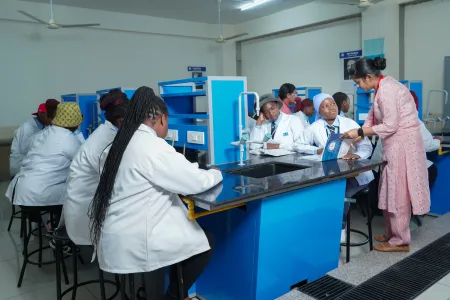
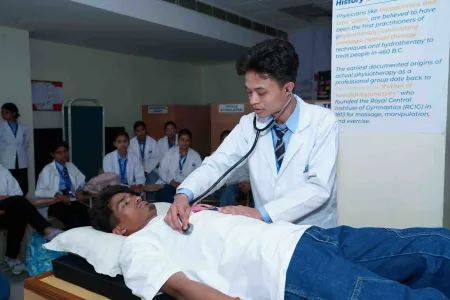
Industry Immersion

This Program will give students knowledge of basic Science like Ocular Anatomy, Ocular Physiology, Contact lens, Binocular vision, Low vision, Sports Vision, occupational Optometry Public health, etc.

eligibility criteria

10+2 with English, Physics, Chemistry and Biology/Mathematics as compulsory subjects from recognized board and having at least 50% marks

Admission criteria

Merit in CT-SET, subject to fulfilling eligibility criteria.

Duration

5 Years

Curriculum

1ST SEMESTER SUBJECTS

Introduces the basic structure and organization of the human body, including major anatomical systems and structures relevant to optometry practice.

Introduces the normal functions and physiological processes of the human body with emphasis on systems relevant to vision and ocular health.

Covers the basic principles of carbohydrates, proteins, lipids, enzymes, vitamins, minerals, metabolism, and their relevance to health and ocular function.

Introduces the principles of light, reflection, refraction, dispersion, interference, diffraction, polarization, and their applications in vision science and optometry.

Covers mathematical principles and geometrical optics, including measurements, optical systems, reflection, refraction, lenses, prisms, and their applications in optometry.

Introduces the scope of optometry, basic eye care services, visual assessment, common ocular conditions, professional roles, and principles of patient-centred optometric practice.

Introduces the principles of balanced nutrition, nutrients, dietary requirements, nutritional deficiencies, and their relationship to general and ocular health.

Develops effective verbal, written, interpersonal, and professional communication skills required for patient interaction and optometric practice.

Provides foundational clinical exposure to optometric practice, including patient history, basic visual assessment, clinical procedures, professional conduct, and patient care.

2ND SEMESTER SUBJECTS

Introduces the basic principles of pharmacology, including drug actions, therapeutic uses, dosage forms, adverse effects, precautions, and relevance to optometric practice.

Covers fundamental disease processes, cellular injury, inflammation, infection, degeneration, neoplasia, and pathological changes relevant to ocular and systemic conditions.

Provides detailed knowledge of the anatomy of the eye, orbit, visual pathways, cranial nerves, and related neural structures essential for optometric assessment and practice.

Covers the physiological functions of the eye, visual system, neural pathways, and mechanisms involved in vision and ocular function.

Introduces biochemical processes and metabolic functions of ocular tissues, including the biochemical basis of normal vision and common ocular disorders.

Develops advanced knowledge of geometrical optics, lenses, prisms, optical systems, aberrations, and their applications in vision correction and optometric practice.

Develops basic computer skills and digital literacy for documentation, data management, communication, learning, and professional activities in optometry.

Develops clinical competencies in patient history, visual assessment, basic ocular examination, clinical decision-making, patient communication, and appropriate optometric care.

3RD SEMESTER SUBJECTS

Introduces general and ocular microorganisms, infection mechanisms, common ocular infections, sterilization, disinfection, and infection control practices relevant to optometry.

Covers the principles, indications, mechanisms, dosage, adverse effects, contraindications, and safe use of drugs commonly used in ocular care.

Covers the principles of visual optics, including vergence, refraction, accommodation, aberrations, optical systems, and their application to visual function and correction.

Introduces the design, properties, performance, and clinical application of ophthalmic lenses, prisms, frames, and optical devices for vision correction.

Introduces common ocular diseases, their causes, signs, symptoms, clinical features, diagnosis, management, and implications for optometric practice.

Introduces Indian systems of medicine and the principles, applications, benefits, limitations, and ethical considerations of telemedicine in contemporary healthcare delivery.

Develops clinical competencies in comprehensive optometric examination, refractive assessment, ocular health evaluation, clinical decision-making, patient counselling, and appropriate referral.

4TH SEMESTER SUBJECTS

Introduces the principles, types, operation, maintenance, and clinical applications of instruments used for optometric examination and ocular assessment.

Develops systematic skills in examination of the visual system, including history taking, visual acuity, ocular motility, binocular vision, anterior and posterior segment assessment, and clinical documentation.

Covers the principles of visual perception and psychophysics, including sensory processing, visual thresholds, contrast, colour perception, depth perception, and assessment of visual function.

Develops advanced understanding of visual optics, including optical aberrations, accommodation, vergence, refractive errors, and their application in clinical vision correction.

Covers common and advanced ocular diseases, their clinical features, diagnosis, management, complications, and indications for optometric referral.

Introduces behavioural health psychology, including human behaviour, psychological wellbeing, stress management, patient behaviour, communication, and their relevance to optometric patient care.

Introduces principles of healthcare quality and patient safety, including risk management, infection prevention, incident reporting, quality improvement, and safe patient-centred care.

Develops advanced clinical competencies in comprehensive optometric examination, diagnosis, refractive correction, ocular health assessment, patient counselling, clinical decision-making, and referral.

5TH SEMESTER SUBJECTS

Covers systemic diseases and their ocular manifestations, clinical features, complications, and implications for optometric assessment, management, and referral.

Develops knowledge and practical skills in dispensing spectacles, lenses, frames, measurements, fitting, adjustment, verification, and patient counselling for vision correction.

Introduces age-related changes in the visual system, common ocular conditions in older adults, assessment techniques, management, low vision considerations, and referral practices.

Covers visual development in children, paediatric eye conditions, age-appropriate examination techniques, refractive assessment, early detection, management, and referral.

Develops knowledge of the diagnosis, assessment, and therapeutic management of anterior segment diseases, including appropriate use of diagnostic procedures and referral when required.

Introduces innovation, emerging technologies, digital tools, problem-solving, and technology-driven approaches relevant to contemporary optometry and healthcare practice.

Develops advanced clinical competencies in comprehensive optometric examination, diagnosis, refractive and binocular vision assessment, ocular disease detection, patient management, counselling, and appropriate referral.

6TH SEMESTER SUBJECTS

Introduces the principles of contact lenses, including types, materials, fitting, assessment, handling, care, complications, and patient education.

Develops knowledge and skills in assessment and rehabilitation of individuals with low vision through optical, non-optical, assistive, and functional strategies.

Covers the principles of binocular vision, ocular alignment, accommodation, vergence, stereopsis, common binocular vision disorders, and their clinical assessment.

Develops knowledge of diagnostic and therapeutic approaches for posterior segment diseases, including retinal, choroidal, and optic nerve conditions, with appropriate referral practices.

Introduces the role of optometry within multidisciplinary healthcare, interprofessional collaboration, holistic patient care, and coordinated management of systemic and ocular health conditions.

Develops knowledge of research design, research ethics, data collection, biostatistical methods, data analysis, and evidence-based approaches relevant to optometric research and practice.

Develops advanced clinical competencies in comprehensive optometric assessment, contact lens care, binocular vision, low vision, ocular disease evaluation, patient management, counselling, and referral.

7TH SEMESTER SUBJECTS

Develops advanced knowledge and skills in contact lens fitting, assessment, specialty lenses, lens care, complication management, and patient counselling.

Develops advanced competencies in binocular vision assessment and management, including accommodative and vergence disorders, ocular alignment, and evidence-based vision therapy.

Introduces principles of public health and epidemiology, including disease patterns, risk factors, prevention, screening, health promotion, and population-based eye care.

Develops understanding of legal responsibilities, professional ethics, patient rights, confidentiality, informed consent, professional conduct, and regulatory aspects of optometry practice.

Develops knowledge and skills in community eye health, eye disease prevention, screening, health education, referral systems, and delivery of accessible eye care services.

Develops advanced clinical competencies in comprehensive optometric examination, contact lens care, binocular vision, ocular disease assessment, patient management, counselling, and appropriate referral.

Develops research skills through identification of a relevant optometric problem, literature review, research planning, data collection, analysis, and preparation of a structured research project.

8TH SEMESTER SUBJECTS

Introduces the principles of occupational optometry, workplace vision assessment, occupational hazards, ergonomic practices, eye safety, and prevention of work-related visual problems.

Develops knowledge and skills in optometric practice management, including administration, patient services, human resources, financial management, documentation, quality improvement, and professional leadership.

Develops competencies in community eye health, tele-optometry, remote eye care, screening, referral, digital consultation, and accessible patient-centred eye care services.

Introduces data science concepts, data management, analytics, visualization, and application of data-driven approaches to healthcare and optometric decision-making.

Develops advanced clinical competencies through comprehensive optometric assessment, diagnosis, management, patient counselling, multidisciplinary care, and appropriate referral.

Develops advanced research competencies through data analysis, interpretation of findings, scientific reporting, presentation, and completion of an independent optometry research project.

9TH & 10TH SEMESTER SUBJECTS

Provides supervised clinical internship experience to develop professional competencies in comprehensive optometric examination, diagnosis, patient management, clinical procedures, community eye care, documentation, ethics, teamwork, and independent professional practice.

fees

Details

Amount

Programme Fees (per Semester)

50000

Examination Fees

3000

International Fees (per Year)

$3000

Programme Outcomes

  • The Students who will Complete this Program will be able to have a lifelong knowledge of Optometry & all the Equipment used in it along with basic science knowledge.
  • Optometry is a new stream in Allied Sciences & there is a Major need of these professionals. Thus, Creating a vast employability option.
  • Optometrist can starts their independent practice in Contact lens, Low Vision care etc. Working Along with Ophthalmologists will make a great & Important role in hospital & ensuring their sustainability.
  • By choosing this stream, the Students will get to know about the equipments& Machines used in Optometry & will be able to operate all modern Optometry Equipments.
  • This program will ensure overall professional development of students & in their behaviour & manners too.
  • This Program can do an overall development of the student to be able to have all the technical aspects about Optometry & Basic Sciences.

Programme Specific Outcomes

  • Ability to analyze, Monitor & give eye care.
  • Understand the fundamentals and applications of Optometry& Critical Care Equipment
  • Ability to dispensed spectacles, Contact lens, and low vision devices.
  • Ability to diagnose the eye disease.
  • Able to detect any Changes in patient's physiological status & able to tackle all types of Complications in low vision patient
  • Able to provide primary eye care.

Salient Features

  • Those who choose this stream are going to study about eye care, eye equipment, Optometry Technology, Equipment, Critical Care, squint management, vision anomalies management etc.
  • Those who get their placement will be known as Optometrist, Consultant Optometrist, contact lens specialist, vision specialist.
  • This Program will create a great source of manpower which can aid in our health sector especially in Vision care, eye health programs, Eye Emergency.
  • Optometrist provide safe & quality patient eye care by using their technical & critical thinking. 
  • This Program will give students knowledge of basic Science like Ocular Anatomy, Ocular Physiology, Contact lens, Binocular vision, Low vision, Sports Vision, Occupational Optometry Public health etc.

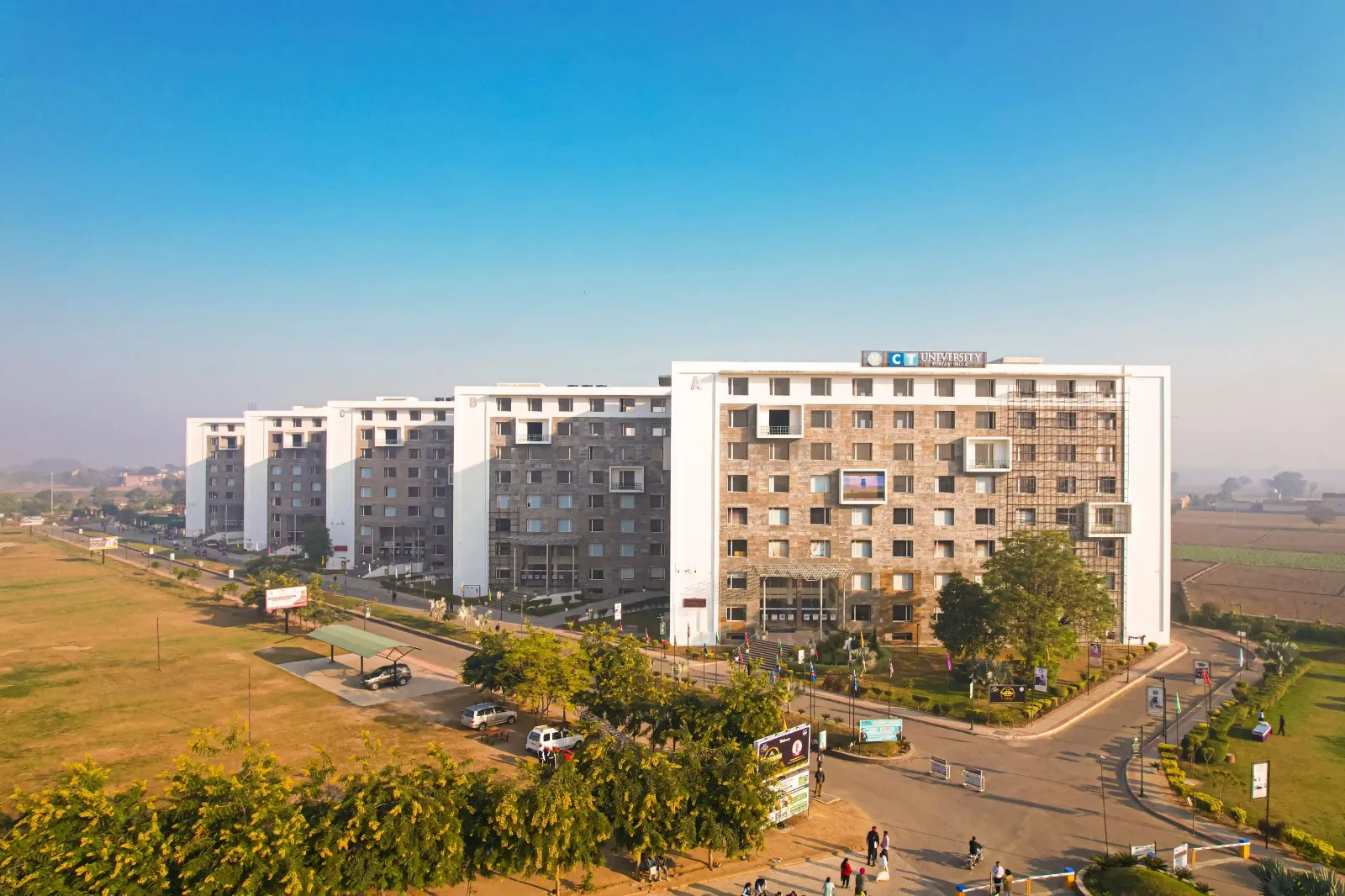
Infrastructure