Apply Now Programmes Virtual Tour CT-SET 2026 Ph.D
Admissions
Open 2026-27
Apply now
Apply Now
Home  /  Programmes  /  B.Tech. Computer Science and Engineering with Specialisation in Cyber Security and Forensics - IBM (lateral Entry)

B.Tech. Computer Science and Engineering with Specialisation in Cyber Security and Forensics - IBM (lateral Entry)

Duration: 3 Years Category: Graduate Programs

Programme Details

About the Programme

As there is an enormous amount of data and to protect the data is one of the challenging tasks of various IT sectors. So, the Cyber Security and Forensics has become an hour of need of today’s society. This course will help the students to become the emerging Cyber Security Experts of the modern era.

Industry Immersion

MAJOR COURSES OFFERED

  1. Python + Clean Coding
  2. Data Visualization
  3. Artificial Intelligence
  4. Machine Learning
  5. Deep Learning
  6. Predictive Analysis
  7. NoSQL
  8. Devops
  9. Data Sciences
  10. Big Data Fundamentals
  11. BlockChain Technology

Eligibility Criteria

Passed Minimum 3-years / 2-years (Lateral Entry) Diploma examination with at least 45% marks (40% marks in case of candidates belonging to reserved category SC/ST) in any branch of Engineering and Technology with atleast 50% marks
OR
Passed B.Sc. Degree from a recognized University as defined by UGC, with at least 45% marks (40% marks in case of candidates belonging to reserved category SC/ST) and passed 10+2 examination with Mathematics as a subject.
OR
Passed D.Voc. Stream in the same or allied sector. (The Universities will offer suitable bridge courses such as Mathematics, Physics, Engineering
drawing, etc., for the students coming from diverse backgrounds to achieve desired learning outcomes of the programme).

Register Now

Why Choose CT University

Why CT University is the Right Choice for Your Future

CT University Campus

At CT University, we combine industry-integrated learning and global academic partnerships, backed by the CT Group's 30+ year legacy, to prepare students for careers that actually last.

Industry-oriented
learning

Modern campus
facilities

Academic excellence &
mentorship

Global opportunities &
placements

Fee Structure & Scholarships

Program Fee Details

Fee Type Amount
Programme Fees (per Semester) ₹85000
Examination Fees ₹3000

Merit Based Scholarship Scheme

Unlock up to 90% Scholarship through CTSET, with scholarships worth Rs 40 Crore! Get access to top-quality education at CT University, Ludhiana — without the financial burden.

Slab >=60% - 74.99% >=75% - 89.99% >=90% & Above
Fee ₹80000 ₹75000 ₹70000

Students can avail these slots depending on the marks they have scored. Each slot reflects a different academic range, helping students understand where they stand and what benefits they qualify for.

Course Curriculum

3RD SEMESTER SUBJECTS

Covers fundamentals of database design, the relational model, SQL, normalization, and transaction management.
Course Outcome:
CO1: Understand basic concepts of database systems and the relational data model.
CO2: Design ER diagrams and convert them into relational schemas.
CO3: Formulate queries using SQL and relational algebra.
CO4: Apply normalization techniques to design efficient, redundancy-free databases.
CO5: Understand transaction management, concurrency control, and recovery techniques.
CO6: Explore concepts of indexing and query optimization.

Hands-on lab for designing databases and implementing SQL queries using RDBMS tools.
Course Outcome:
CO1: Create and manipulate databases using DDL and DML commands.
CO2: Write and execute simple to complex SQL queries.
CO3: Implement joins, subqueries, and views.
CO4: Design and implement PL/SQL procedures, functions, and triggers.
CO5: Apply normalization and ER modeling to real-world case studies.

Introduces linear and non-linear data structures along with algorithm design and analysis techniques.
Course Outcome:
CO1: Understand asymptotic notations and analyze the time/space complexity of algorithms.
CO2: Implement linear data structures such as arrays, stacks, queues, and linked lists.
CO3: Implement non-linear data structures such as trees and graphs.
CO4: Apply searching and sorting algorithms to solve computational problems.
CO5: Understand hashing techniques and their applications.
CO6: Design efficient algorithms using divide-and-conquer, greedy, and dynamic programming approaches.

Lab-based implementation of data structures and algorithmic problem-solving using a programming language.
Course Outcome:
CO1: Implement stacks, queues, and linked lists programmatically.
CO2: Implement tree and graph traversal algorithms.
CO3: Implement and compare various sorting and searching techniques.
CO4: Apply data structures to solve real-world computational problems.
CO5: Analyze the time complexity of implemented algorithms.

Covers advanced mathematical techniques including transforms, numerical methods, and probability essential for engineering applications.
Course Outcome:
CO1: Apply Laplace and Fourier transforms to solve engineering problems.
CO2: Solve differential equations using series solutions and special functions.
CO3: Apply numerical methods for solving algebraic and differential equations.
CO4: Understand concepts of probability and statistical distributions.
CO5: Apply vector calculus concepts to engineering problems.

Advanced Python Programming builds on foundational Python skills to cover advanced language features, functional programming, object-oriented design patterns, concurrency, database connectivity, and API-based application development.
Course Outcome:
CO1: Apply advanced Python constructs such as decorators, generators, and context managers to write efficient code.
CO2: Implement functional programming techniques using lambda functions, map, filter, and reduce.
CO3: Design robust applications using advanced object-oriented programming concepts and design patterns.
CO4: Apply multithreading and multiprocessing to build concurrent Python applications.
CO5: Integrate Python applications with databases and external APIs.
CO6: Develop and deploy a Python-based application integrating multiple advanced concepts.

Advanced Python Programming Lab provides hands-on practice in advanced Python concepts including decorators, generators, multithreading, database connectivity, web scraping, and API development.
Course Outcome:
CO1: Implement advanced Python constructs such as decorators, generators, and context managers.
CO2: Apply multithreading and multiprocessing concepts to build concurrent Python programs.
CO3: Connect Python applications to databases and perform CRUD operations.
CO4: Develop and consume RESTful APIs using Python frameworks.
CO5: Implement web scraping scripts to extract and process data.
CO6: Build a mini-project integrating advanced Python libraries and concepts.

Builds entrepreneurial thinking, business planning, and innovation skills through practical exposure.
Course Outcome:
CO1: Understand the entrepreneurial mindset and identify business opportunities.
CO2: Develop a basic business model and plan for a venture idea.
CO3: Understand fundamentals of innovation, risk-taking, and value creation.
CO4: Apply financial and marketing basics to a proposed venture.
CO5: Present and pitch a business idea effectively.

Cyber Security Fundamentals and Ethics introduces core concepts of information security, threat landscapes, security principles, and the ethical and legal frameworks governing cyberspace.
Course Outcome:
CO1: Understand fundamental concepts of cyber security, threats, and vulnerabilities.
CO2: Explain the CIA triad and core principles of information security.
CO3: Understand common attack vectors and defense mechanisms.
CO4: Understand cyber laws, ethics, and regulatory compliance requirements.
CO5: Analyze real-world cyber security incidents and their ethical implications.
CO6: Apply basic security practices to protect systems and data.

Cyber Security Fundamentals and Ethics Lab provides hands-on exposure to basic security tools, safe system configuration, and simulated exercises illustrating ethical and legal aspects of cyber security.
Course Outcome:
CO1: Configure basic security settings on operating systems and networks.
CO2: Use fundamental security tools to identify common vulnerabilities.
CO3: Demonstrate safe practices for password management and data protection.
CO4: Analyze case studies to identify ethical and legal issues in cyber security.
CO5: Prepare a basic security awareness or incident report.

Incident Response and Threat Hunting covers the incident response lifecycle, threat intelligence, proactive threat hunting techniques, and strategies for detecting and containing security breaches.
Course Outcome:
CO1: Understand the phases of the incident response lifecycle.
CO2: Apply threat intelligence concepts to identify potential security threats.
CO3: Understand proactive threat hunting methodologies and techniques.
CO4: Analyze logs and system artifacts to detect indicators of compromise.
CO5: Apply containment, eradication, and recovery strategies for security incidents.
CO6: Prepare incident response reports and post-incident review documentation.

Incident Response and Threat Hunting Lab provides hands-on practice with log analysis, forensic tools, and simulated incident scenarios to build practical detection and response skills.
Course Outcome:
CO1: Set up and use log collection and analysis tools.
CO2: Identify indicators of compromise using threat hunting tools.
CO3: Perform basic digital forensic analysis on compromised systems.
CO4: Simulate and respond to a security incident in a controlled lab environment.
CO5: Document findings and prepare an incident response report.

4TH SEMESTER SUBJECTS

Covers algorithm design paradigms, complexity analysis, and advanced algorithmic techniques for problem-solving.
Course Outcome:
CO1: Analyze the time and space complexity of algorithms using asymptotic notations.
CO2: Design algorithms using divide-and-conquer, greedy, and dynamic programming strategies.
CO3: Apply graph algorithms for shortest path, spanning tree, and network flow problems.
CO4: Understand backtracking and branch-and-bound techniques.
CO5: Analyze NP-completeness and classify problems based on computational complexity.
CO6: Design and evaluate efficient algorithms for real-world computational problems.

Lab-based implementation and performance analysis of algorithm design techniques.
Course Outcome:
CO1: Implement divide-and-conquer algorithms and analyze their performance.
CO2: Implement greedy and dynamic programming based solutions.
CO3: Implement graph algorithms for traversal, shortest path, and spanning trees.
CO4: Implement backtracking algorithms for constraint satisfaction problems.
CO5: Compare and evaluate algorithm efficiency using empirical analysis.

Introduces networking concepts, protocols, and architectures across the OSI and TCP/IP layers.
Course Outcome:
CO1: Understand network architectures, topologies, and the OSI/TCP-IP reference models.
CO2: Analyze data link layer protocols including error detection and correction techniques.
CO3: Understand network layer concepts including routing algorithms and IP addressing.
CO4: Analyze transport layer protocols and congestion control mechanisms.
CO5: Understand application layer protocols and their real-world implementations.
CO6: Explore network security fundamentals and emerging networking technologies.

Hands-on lab for network configuration, simulation, and protocol analysis.
Course Outcome:
CO1: Configure basic networking devices and IP addressing schemes.
CO2: Simulate network topologies using networking tools/simulators.
CO3: Analyze network traffic and protocols using packet capture tools.
CO4: Implement socket programming for client-server communication.
CO5: Troubleshoot common networking issues in a lab environment.

Covers mathematical foundations including set theory, logic, graph theory, and combinatorics for computer science.
Course Outcome:
CO1: Apply propositional and predicate logic to solve reasoning problems.
CO2: Understand set theory, relations, and functions.
CO3: Apply combinatorics and counting principles to solve problems.
CO4: Understand graph theory concepts including trees, graphs, and their applications.
CO5: Apply algebraic structures such as groups and lattices to computer science problems.

Introduces operating system concepts including process management, memory management, and file systems.
Course Outcome:
CO1: Understand the structure, functions, and types of operating systems.
CO2: Apply process scheduling algorithms and understand process synchronization.
CO3: Understand deadlock detection, prevention, and avoidance techniques.
CO4: Apply memory management techniques including paging and segmentation.
CO5: Understand file system organization and disk scheduling algorithms.
CO6: Explore concepts of virtualization and modern operating systems.

Hands-on lab for implementing OS concepts using shell scripting and system calls.
Course Outcome:
CO1: Implement basic Linux/Unix commands and shell scripts.
CO2: Implement process creation and synchronization using system calls.
CO3: Implement CPU scheduling algorithms programmatically.
CO4: Implement memory management techniques such as paging.
CO5: Implement solutions for classical process synchronization problems.

Covers computer system architecture, instruction sets, memory hierarchy, and processor design.
Course Outcome:
CO1: Understand basic computer organization and functional units.
CO2: Analyze instruction set architectures and addressing modes.
CO3: Understand arithmetic and logic unit design and computer arithmetic.
CO4: Understand memory hierarchy including cache and virtual memory.
CO5: Understand pipelining and instruction-level parallelism.
CO6: Explore I/O organization and multiprocessor architectures.

Website Security introduces common web application vulnerabilities, secure coding practices, authentication and session management, and techniques for protecting websites against common attacks.
Course Outcome:
CO1: Understand the fundamentals of web application architecture and associated security risks.
CO2: Identify common web vulnerabilities such as SQL injection, XSS, and CSRF.
CO3: Apply secure coding practices to prevent common web application attacks.
CO4: Implement secure authentication and session management mechanisms.
CO5: Understand the OWASP Top 10 and related mitigation strategies.
CO6: Apply security testing techniques to assess website vulnerabilities.

Website Security Lab provides hands-on practice in identifying and mitigating web application vulnerabilities using security testing tools in a controlled lab environment.
Course Outcome:
CO1: Set up a web application testing environment.
CO2: Identify common vulnerabilities using web security scanning tools.
CO3: Exploit sample vulnerabilities such as SQL injection and XSS in a controlled environment.
CO4: Implement fixes and secure coding practices to remediate identified vulnerabilities.
CO5: Prepare a website security assessment report.

Big Data Security & Privacy covers security and privacy challenges in big data systems, including data governance, access control, encryption, anonymization, and compliance in distributed data environments.
Course Outcome:
CO1: Understand security and privacy challenges unique to big data environments.
CO2: Apply access control and authentication mechanisms in distributed data systems.
CO3: Understand encryption and data masking techniques for protecting sensitive data.
CO4: Apply data anonymization and privacy-preserving techniques.
CO5: Understand data governance frameworks and regulatory compliance requirements.
CO6: Analyze security and privacy issues in real-world big data platforms.

Big Data Security & Privacy Lab provides hands-on practice in securing big data platforms, implementing access controls, and applying privacy-preserving techniques on large datasets.
Course Outcome:
CO1: Configure access control and authentication on a big data platform.
CO2: Implement encryption for data at rest and in transit in a big data environment.
CO3: Apply data anonymization and masking techniques on sample datasets.
CO4: Monitor and audit access to sensitive data in a distributed system.
CO5: Prepare a security and privacy compliance report for a big data use case.

Builds entrepreneurial thinking and practical business skills through case studies and projects.
Course Outcome:
CO1: Understand advanced concepts of entrepreneurship and business growth.
CO2: Analyze case studies of successful startups and ventures.
CO3: Develop strategies for scaling and sustaining a business.
CO4: Apply leadership and team-building concepts to entrepreneurial ventures.
CO5: Present a refined business plan incorporating market feedback.

5TH SEMESTER SUBJECTS

Covers software development life cycle, requirement analysis, design, and project management principles.
Course Outcome:
CO1: Understand software process models and the software development life cycle.
CO2: Apply requirement elicitation and analysis techniques.
CO3: Apply software design principles including modularity and design patterns.
CO4: Understand software testing techniques and quality assurance practices.
CO5: Apply project management and estimation techniques for software projects.
CO6: Understand software maintenance and configuration management.

Introduces formal languages, automata theory, and computability concepts.
Course Outcome:
CO1: Understand finite automata and regular languages.
CO2: Design context-free grammars and analyze pushdown automata.
CO3: Understand Turing machines and their role in computability.
CO4: Classify problems based on decidability and undecidability.
CO5: Understand complexity classes including P and NP.

Covers object-oriented programming concepts and application development using Java.
Course Outcome:
CO1: Understand the history, features, and fundamental elements of Java programming.
CO2: Apply object-oriented concepts including classes, objects, and inheritance.
CO3: Implement interfaces, packages, and exception handling in Java.
CO4: Understand multithreading and concurrent programming in Java.
CO5: Implement GUI applications using AWT/Swing.
CO6: Handle file I/O and stream operations in Java.

Hands-on lab for developing Java applications using object-oriented concepts.
Course Outcome:
CO1: Implement basic Java programs using core language constructs.
CO2: Implement classes, objects, and inheritance-based programs.
CO3: Implement exception handling and multithreading programs.
CO4: Develop GUI-based applications using Java.
CO5: Implement file handling operations in Java.

Covers information security principles, cryptography basics, and cyber law frameworks.
Course Outcome:
CO1: Understand fundamentals of information security and threat models.
CO2: Apply cryptographic techniques for data confidentiality and integrity.
CO3: Understand network and application security mechanisms.
CO4: Understand cyber laws, IT Act provisions, and compliance requirements.
CO5: Analyze case studies of cybercrimes and security breaches.

Introduces ethical hacking methodologies, tools, and penetration testing techniques.
Course Outcome:
CO1: Understand the fundamentals and phases of ethical hacking.
CO2: Perform reconnaissance and scanning using penetration testing tools.
CO3: Identify and exploit common vulnerabilities in systems and networks.
CO4: Understand web application security testing techniques.
CO5: Prepare penetration testing reports following ethical and legal guidelines.

Hands-on lab for practicing ethical hacking and penetration testing techniques.
Course Outcome:
CO1: Perform network scanning and vulnerability assessment using standard tools.
CO2: Exploit system and application vulnerabilities in a controlled lab environment.
CO3: Perform web application penetration testing.
CO4: Use password cracking and social engineering awareness techniques.
CO5: Document findings in a professional penetration testing report.

Identity & Access Management (IAM) introduces the principles and technologies for managing digital identities, authentication, authorization, and access governance across enterprise systems and cloud environments.
Course Outcome:
CO1: Understand fundamental concepts of identity, authentication, and authorization.
CO2: Apply access control models such as RBAC, ABAC, and least privilege principles.
CO3: Understand single sign-on (SSO), multi-factor authentication (MFA), and federated identity concepts.
CO4: Design IAM policies for on-premises and cloud-based systems.
CO5: Understand identity governance, provisioning, and lifecycle management.
CO6: Analyze IAM-related security risks and compliance requirements.

Identity & Access Management (IAM) Lab provides hands-on practice in configuring authentication, authorization, and identity governance solutions using industry-standard IAM tools and platforms.
Course Outcome:
CO1: Configure user identities, roles, and access policies on an IAM platform.
CO2: Implement multi-factor authentication and single sign-on for sample applications.
CO3: Set up role-based and attribute-based access control for enterprise resources.
CO4: Configure identity federation between on-premises and cloud systems.
CO5: Audit and monitor access logs to identify and address IAM-related risks.

Evaluation of industrial/summer training undertaken by students to assess practical exposure gained.
Course Outcome:
CO1: Demonstrate understanding of the industrial/organizational environment.
CO2: Apply theoretical knowledge to practical, real-world tasks undertaken during training.
CO3: Present and document the training experience through a report and viva-voce.
CO4: Reflect on skills gained and their relevance to career development.

Develops logical reasoning, quantitative aptitude, and analytical problem-solving skills.
Course Outcome:
CO1: Apply logical reasoning techniques to solve analytical problems.
CO2: Solve quantitative aptitude problems involving numbers and arithmetic.
CO3: Apply data interpretation techniques to analyze given data sets.
CO4: Develop problem-solving strategies for competitive examinations.

Advanced module on entrepreneurship focusing on innovation, funding, and venture execution.
Course Outcome:
CO1: Understand advanced funding options and investment readiness for startups.
CO2: Apply innovation management techniques to venture development.
CO3: Understand legal and regulatory aspects of starting a business.
CO4: Develop a comprehensive venture execution plan.
CO5: Present a pitch incorporating financial and operational planning.

6TH SEMESTER SUBJECTS

Covers cryptographic algorithms, network security protocols, and mechanisms to secure data communication.
Course Outcome:
CO1: Understand fundamentals of network security and cryptographic principles.
CO2: Apply symmetric and asymmetric encryption algorithms for data security.
CO3: Understand hash functions, digital signatures, and message authentication.
CO4: Apply key management and public key infrastructure concepts.
CO5: Understand network security protocols such as SSL/TLS, IPSec, and firewalls.
CO6: Analyze security threats and countermeasures in networked systems.

Hands-on lab for implementing cryptographic algorithms and network security techniques.
Course Outcome:
CO1: Implement classical and modern encryption algorithms.
CO2: Implement hashing and digital signature techniques.
CO3: Configure firewalls and basic network security tools.
CO4: Analyze network traffic for security vulnerabilities.
CO5: Implement secure communication using SSL/TLS concepts.

Covers advanced data structures and their applications in efficient algorithm design.
Course Outcome:
CO1: Understand advanced tree structures such as AVL, B-trees, and Red-Black trees.
CO2: Implement advanced graph algorithms and their applications.
CO3: Understand heap structures and priority queue implementations.
CO4: Apply hashing techniques and collision resolution strategies.
CO5: Understand advanced string matching and pattern searching algorithms.
CO6: Analyze the performance trade-offs of advanced data structures.

Lab-based implementation of advanced data structures and their applications.
Course Outcome:
CO1: Implement balanced tree structures such as AVL and B-trees.
CO2: Implement heap-based priority queues.
CO3: Implement advanced graph algorithms programmatically.
CO4: Implement hashing techniques with collision handling.
CO5: Implement string matching algorithms.

Introduces the phases of compiler construction including lexical analysis, parsing, and code generation.
Course Outcome:
CO1: Understand the phases and structure of a compiler.
CO2: Design lexical analyzers using regular expressions and finite automata.
CO3: Design parsers using context-free grammars and parsing techniques.
CO4: Understand syntax-directed translation and intermediate code generation.
CO5: Understand code optimization and target code generation techniques.
CO6: Explore error detection and recovery mechanisms in compilers.

Introduces core AI concepts, search techniques, knowledge representation, and intelligent agent design.
Course Outcome:
CO1: Understand the fundamentals of AI and intelligent agents.

CO2: Apply uninformed and informed search techniques to solve problems.
CO3: Represent knowledge using logic-based and semantic approaches.
CO4: Understand the basics of machine learning and its role in AI systems.
CO5: Apply AI techniques to design simple intelligent systems.
CO6: Understand ethical and societal implications of AI.

Covers data warehouse architecture, OLAP concepts, and data mining techniques for knowledge discovery.
Course Outcome:
CO1: Understand data warehouse architecture and multidimensional data models.
CO2: Apply OLAP operations for data analysis.
CO3: Understand data preprocessing techniques for data mining.
CO4: Apply classification and clustering algorithms for pattern discovery.
CO5: Understand association rule mining techniques.
CO6: Explore applications of data mining in real-world domains.

Digital Forensics and Footprinting introduces the principles of digital evidence collection, forensic investigation methodologies, and reconnaissance techniques used to trace digital footprints across systems and networks.
Course Outcome:
CO1: Understand the fundamentals and legal aspects of digital forensics.
CO2: Apply evidence acquisition and preservation techniques for digital investigations.
CO3: Perform footprinting and reconnaissance to gather information about target systems.
CO4: Analyze file systems, memory, and network artifacts for forensic evidence.
CO5: Use forensic tools to recover and examine deleted or hidden data.
CO6: Prepare a digital forensic investigation report in line with legal and procedural standards.

Digital Forensics and Footprinting Lab provides hands-on practice with forensic imaging, evidence analysis, and reconnaissance tools to investigate simulated security incidents.

Course Outcome:
CO1: Acquire forensic images of storage media while preserving evidence integrity.
CO2: Use footprinting and OSINT tools to gather information about a target.
CO3: Analyze file systems and recover deleted files using forensic tools.
CO4: Examine memory dumps and network logs for indicators of compromise.
CO5: Document forensic findings in a structured investigation report.

Security Operations & Threat Intelligence covers the functioning of a Security Operations Center (SOC), security monitoring, log analysis, and the use of threat intelligence to identify and respond to emerging cyber threats.

Course Outcome:
CO1: Understand the roles, functions, and workflows of a Security Operations Center.
CO2: Apply security monitoring and log analysis techniques using SIEM tools.
CO3: Understand threat intelligence lifecycle and sources of threat data.
CO4: Correlate security events to detect and prioritize potential threats.
CO5: Apply threat intelligence to improve incident detection and response.
CO6: Understand metrics and reporting practices used in security operations.

Security Operations & Threat Intelligence Lab provides hands-on practice with SIEM tools, log analysis, and threat intelligence platforms to detect and investigate simulated security threats.
Course Outcome:
CO1: Configure and use a SIEM tool for security event monitoring.
CO2: Analyze logs to identify suspicious activity and potential threats.
CO3: Use threat intelligence feeds to enrich and prioritize security alerts.
CO4: Investigate simulated security incidents using SOC tools and workflows.
CO5: Prepare a security operations report summarizing detection and response activities.

Builds advanced logical reasoning, quantitative aptitude, and analytical problem-solving skills.
Course Outcome:
CO1: Apply advanced logical reasoning techniques to complex problems.
CO2: Solve advanced quantitative aptitude problems.
CO3: Apply data sufficiency and interpretation techniques.
CO4: Develop strategies for competitive and placement examinations.

Provides students hands-on experience in identifying, designing, and initiating a substantial project applying learned concepts.
Course Outcome:
CO1: Identify a real-world problem and formulate project objectives.
CO2: Conduct literature review and requirement analysis for the project.
CO3: Design the system architecture and methodology for the project.
CO4: Develop an initial working prototype of the proposed solution.
CO5: Present and document the project progress through reports and reviews.

Focuses on developing communication, interpersonal, and professional workplace skills.
Course Outcome:
CO1: Develop effective verbal and written communication skills.
CO2: Apply interpersonal and teamwork skills in professional settings.
CO3: Understand workplace etiquette and professional ethics.
CO4: Develop resume writing and interview preparation skills.

7TH SEMESTER SUBJECTS

Introduces image processing fundamentals and computer vision techniques for visual data analysis.
Course Outcome:
CO1: Understand fundamentals of digital image processing and representation.
CO2: Apply image filtering, enhancement, and edge detection techniques.
CO3: Understand feature extraction and object detection techniques.
CO4: Apply image segmentation and classification techniques.
CO5: Understand deep learning approaches for computer vision tasks.
CO6: Explore real-world applications of computer vision.

Covers Internet of Things architecture, protocols, and applications for connected devices.
Course Outcome:
CO1: Understand IoT architecture, components, and protocols.
CO2: Apply sensor and actuator interfacing concepts.
CO3: Understand communication protocols used in IoT systems.
CO4: Apply cloud integration concepts for IoT data management.
CO5: Understand IoT security challenges and solutions.
CO6: Explore real-world IoT application domains.

Hands-on lab for building IoT-based projects using microcontrollers, sensors, and connectivity modules.
Course Outcome:
CO1: Interface sensors and actuators with microcontroller boards.
CO2: Implement basic IoT communication protocols.
CO3: Develop IoT applications with cloud data integration.
CO4: Implement basic IoT security measures.
CO5: Build and demonstrate a working IoT-based mini-project.

Introduces principles of designing scalable, reliable, and maintainable software systems.
Course Outcome:
CO1: Understand fundamentals of system design and design trade-offs.
CO2: Apply scalability concepts including load balancing and caching.
CO3: Design database and storage solutions for large-scale systems.
CO4: Understand microservices architecture and distributed system design.
CO5: Design fault-tolerant and highly available systems.
CO6: Apply system design principles to real-world case studies.

Introduces blockchain concepts, architecture, and applications in decentralized systems.
Course Outcome:
CO1: Understand fundamentals of blockchain technology and distributed ledgers.
CO2: Understand consensus mechanisms used in blockchain networks.
CO3: Apply smart contract concepts for decentralized applications.
CO4: Understand cryptocurrency and blockchain-based financial systems.
CO5: Explore blockchain applications beyond cryptocurrency.

Hands-on lab for developing and deploying blockchain-based applications and smart contracts.
Course Outcome:
CO1: Set up a basic blockchain network environment.
CO2: Develop and deploy smart contracts.
CO3: Build a simple decentralized application (DApp).
CO4: Implement basic cryptocurrency transaction simulations.
CO5: Evaluate blockchain applications for real-world use cases.

Introduces research methods, ethics, and technical writing skills for academic and applied research.
Course Outcome:
CO1: Understand fundamentals of research design and methodology.
CO2: Apply literature review and research problem formulation techniques.
CO3: Understand data collection and analysis methods for research.
CO4: Apply research ethics and plagiarism-avoidance practices.
CO5: Develop skills for writing and presenting research papers.

Incident Response and Cyber Crisis Management covers advanced incident handling, crisis communication, business continuity, and coordinated response strategies for managing large-scale cyber security incidents.
Course Outcome:
CO1: Understand the incident response and crisis management lifecycle for large-scale cyber incidents.
CO2: Apply frameworks for coordinating cross-functional incident response teams.
CO3: Develop business continuity and disaster recovery plans for cyber crisis scenarios.
CO4: Understand crisis communication strategies for internal and external stakeholders.
CO5: Apply post-incident review and lessons-learned practices to improve organizational resilience.
CO6: Analyze case studies of major cyber crises and their management outcomes.

Incident Response and Cyber Crisis Management Lab provides hands-on practice in simulating and managing large-scale cyber security incidents through tabletop exercises and response coordination tools.
Course Outcome:
CO1: Participate in simulated tabletop exercises for cyber crisis scenarios.
CO2: Use incident response coordination and case management tools.
CO3: Develop a business continuity plan for a simulated organizational scenario.
CO4: Draft crisis communication materials for a simulated cyber incident.
CO5: Prepare a post-incident review report with recommendations for improvement.

Blockchain Solutions Development covers the design and implementation of decentralized applications, smart contracts, and blockchain-based solutions for real-world business use cases.
Course Outcome:
CO1: Understand blockchain platforms and their suitability for different application domains.
CO2: Design and develop smart contracts for decentralized applications.
CO3: Build front-end interfaces that interact with blockchain networks.
CO4: Apply security best practices in smart contract and blockchain application development.
CO5: Deploy and test blockchain-based solutions on a test network.
CO6: Evaluate blockchain solutions for real-world business use cases.

Blockchain Solutions Development Lab provides hands-on practice in building, testing, and deploying smart contracts and decentralized applications using industry-standard blockchain development tools.
Course Outcome:
CO1: Set up a blockchain development environment and toolchain.
CO2: Write and deploy smart contracts on a test blockchain network.
CO3: Develop a front-end application that interacts with deployed smart contracts.
CO4: Test smart contracts for functional correctness and common vulnerabilities.
CO5: Build and demonstrate a working decentralized application (DApp).

Continuation of the capstone project focusing on implementation, testing, and final deployment.
Course Outcome:
CO1: Implement the complete proposed system based on the earlier design.
CO2: Conduct testing and validation of the developed system.
CO3: Refine the solution based on evaluation and feedback.
CO4: Document the complete project methodology, results, and outcomes.
CO5: Present and defend the final project through a viva-voce/demonstration.

Focuses on advanced professional skills including leadership, career readiness, and workplace communication.
Course Outcome:
CO1: Develop advanced presentation and public speaking skills.
CO2: Apply leadership and team management concepts in professional settings.
CO3: Prepare for competitive job interviews and group discussions.
CO4: Understand corporate work culture and professional networking practices.

8TH SEMESTER SUBJECTS

Provides students with industry exposure through a structured training/internship period to apply academic knowledge in a professional environment.
Course Outcome:
CO1: Demonstrate understanding of industry practices, tools, and work culture.
CO2: Apply academic knowledge and skills to real-world industrial tasks.
CO3: Develop professional and technical skills relevant to the chosen domain.
CO4: Present the outcomes of industrial training through a report and viva-voce.

Program Outcomes & Features

Program Outcomes

  • To make students function in their profession with social awareness and responsibility.
  • To make students engineering professionals, innovators or entrepreneurs engaged in technology development, technology deployment, or engineering system implementation in industry.
  • To make students interact with their peers in other disciplines in industry and society and contribute to the economic growth of the country.
  • To make students provide students with contemporary knowledge in Cybersecurity. 
  • To make students understand how cybersecurity can be used as an effective tool in providing assurance concerning privacy and integrity of information. 
  • To make students provide skills to design security protocols for recognize security problems

Program Specific Outcomes

A graduate of the Computer Science and Engineering Program will demonstrate: Identify, formulate, review research literature, and analyze complex engineering problems reaching substantiated conclusions using first principles of mathematics, natural sciences, and engineering sciences. Understand the principles and practices of cryptographic techniques. Understand a variety of generic security threats and vulnerabilities, and identify & analyse particular security problems for given application. Appreciate the application of security techniques and technologies in solving real-life security problems in practical systems. 

Salient Features

Apply appropriate security techniques to solve security problem Design security protocols and methods to solve the specific security problems. Familiar with current research issues and directions of security.

Labs and Facilities

Laboratory

Laboratory

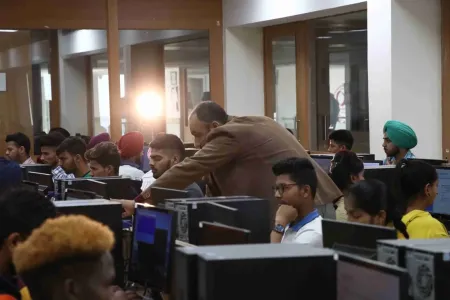
What better way to learn working of anything than to get exposed to it first hand!. The...

Explore

Backed by the Legacy of CT Group, Driven by Proven Success

20000+

Placements

800+

Collaborations

1.2Cr

Highest Placement

1800+

Recruiters

1 Lac+

Alumni

40Cr

WORTH SCHOLARSHIP

Hear From Our Students

"

My journey pursuing BCA at CT University has been profoundly transformative and intellectually enriching. The institution’s dynamic academic environment, coupled with exceptionally supportive faculty, nurtured both my technical acumen and personal growth. The exposure to practical learning, innovative initiatives, and skill-oriented programs significantly elevated my competencies. I take immense pride in being a part of an institution that truly empowers students to excel and evolve.

"

CT University provided me with a platform where I could express myself and grow both personally and professionally. The university conducted various hackathons and activities that significantly enhanced my skills and practical knowledge. These opportunities helped me gain confidence and prepared me for real-world challenges.

"

My time at CT University has been a great learning experience. The faculty was supportive and always encouraged us to grow. Participating in activities like hackathons helped me improve my skills and gain confidence. The campus environment was friendly and comfortable, making it a great place to study and develop.

"

My journey at CT University during my B.Tech has been truly enriching. The faculty members were highly supportive and always approachable, making learning effective and enjoyable. The hostel environment was friendly and accommodating, and as an international student, I felt comfortable and well-adjusted. Overall, CT University provided me with a welcoming atmosphere and a strong academic foundation."

"

I am Harpreet Singh, a proud graduate of CT University, having completed my B.Tech in Civil Engineering in the 2022 batch. My journey at CTU was a transformative experience that laid the strong foundation for my professional growth. The university provided me with not only technical knowledge but also hands-on exposure through labs, workshops, and field visits, which played a vital role in shaping my career.

"

Pursuing my bachelors degree at CT university will always be a journey I’ll cherish for a lifetime. The faculty’s dedication and the university’s practical learning approach prepared me to face real-world engineering challenges with confidence. I am deeply thankful to CT University for nurturing my growth and shaping my professional path. The knowledge and values I gained continue to inspire my commitment to advancing sustainable infrastructure.

"

I have completed B.Tech and M.Tech in Computer Science and Engineering from CT University, Ludhiana. The time I've spent at CTU has been excellent. Being a part of CTU is an amazing experience. The best thing is that campuses consistently prioritize teaching corporate knowledge and soft skills.

"

My heart felt like my academics would suffer due to the lockdown, however CT University ensured that our online classes don’t let that happen.