Apply Now Programmes Virtual Tour CT-SET 2026 Ph.D
Admissions
Open 2026-27
Apply now
Apply Now

Bachelor of Science (Fashion Design)

program-details

The B.Sc. Fashion Design program at CT University is a dynamic three-year undergraduate course that blends creativity with industry-focused learning. The program covers essential aspects of fashion, including design principles, textile studies, garment construction, fashion illustration, and digital design. With access to state-of-the-art design labs, industry visits, guest lectures, and hands-on workshops, students gain practical exposure to current market trends and sustainable practices. The curriculum is designed to foster innovation, entrepreneurship, and technical expertise, preparing graduates for diverse careers in the fashion industry, from apparel design to fashion merchandising and entrepreneurship. 
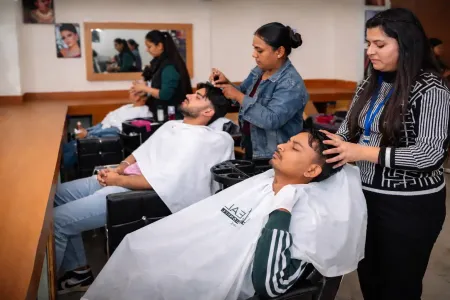
Industry Immersion

Industry immersion in a B.Sc. Fashion Design program provides students with hands-on experience in the fashion industry, bridging the gap between academic learning and real-world applications. Through internships, collaborations with designers, and exposure to manufacturing processes, students gain practical insights into design, production, and market trends. This experience enhances their creative and technical skills, preparing them for successful careers in the fashion industry.

 

eligibility criteria

10+2 or equivalent in any stream with English as a compulsory subject from a recognized board and having atleast 50% marks

Admission criteria

CT Set Exam/Diect Percentage Based Entry

Duration

3 Years

Curriculum

1ST SEMESTER SUBJECTS

Introduces the fundamental elements and principles of design, composition, colour theory, colour psychology, and motifs. Students develop aesthetic awareness and learn to create visually balanced design compositions.

Provides practical experience in drawing, rendering, textures, patterns, colour schemes, and motif development. Students apply design principles to create aesthetic and creative visual compositions.

Develops foundational fashion drawing skills through shading, freehand sketching, perspective, repeat patterns, and silhouette studies. Students learn to visualize and communicate creative fashion concepts through illustration.

Explores the origin of clothing, fashion terminology, fashion cycles, theories, psychology, and sociological aspects of clothing. Students gain an understanding of fashion movements, consumer behaviour, designers, and fashion forecasting.

Introduces essential hand and machine stitches, seams, fabric manipulation, necklines, plackets, and garment finishing techniques. Students develop practical skills for constructing basic garments and accessories.

Introduces computer-aided design applications for fashion and apparel, including digital drawing, motifs, patterns, and design composition. Students develop foundational skills in using digital tools to conceptualize and communicate fashion designs.

Fiber and Yarn Science
Provides knowledge of natural and synthetic textile fibres, their properties, identification, manufacturing, and applications. Students also study yarn classification, production, characteristics, blends, and yarn-related concepts.

Textile Science and Care
Covers textile fibres, yarns, fabric construction, finishes, laundering, stain removal, care labels, and storage practices. The course develops an understanding of textile behaviour and appropriate care for durability and sustainability.

Explores environmental systems, ecosystems, biodiversity, natural resources, and the interdependence between humans and nature. The course develops awareness of environmental policies, conservation, waste management, water management, sanitation, and sustainable practices. Students learn to analyse environmental challenges and develop practical solutions for local and global sustainability.

Develops students’ English communication skills through listening, speaking, reading, and writing. The course focuses on grammar, vocabulary, pronunciation, presentations, audience awareness, body language, and effective use of audio-visual aids. It helps students communicate confidently and appropriately in academic, professional, and everyday situations.

This course introduces the fundamental principles, functions, and processes of management, including planning, organizing, decision-making, leadership, and motivation. It develops students’ ability to analyze organizational situations and apply effective management strategies to address contemporary challenges and improve organizational performance.

2ND SEMESTER SUBJECTS

Provides an overview of the textile and apparel industry, its organizational structure, departments, quality control, and global trade. Students explore industry prospects, government incentives, export-import dynamics, and emerging opportunities.

Traces the evolution of Indian costumes, jewellery, hairstyles, and footwear from ancient civilizations through the British Raj. Students explore regional diversity and the cultural, social, and historical significance of Indian dress.

Develops advanced digital fashion design skills through garment features, accessories, flat sketches, Indian wear, and digital design applications. Students gain practical experience in translating fashion concepts into precise digital formats.

Introduces embroidery, surface manipulation, embellishment, resist dyeing, and fabric printing techniques. Students develop creative skills for adding decorative and value-enhancing details to textile surfaces.

Expands fashion illustration skills through garment features, garment types, accessories, hairstyles, and flat sketching. Students learn to develop complete fashion looks for different garments, themes, and occasions.

Introduces flat pattern development, dart manipulation, sleeves, collars, yokes, plackets, skirts, and basic garment construction. Students gain practical skills in developing accurate patterns and translating them into wearable garments.

Students will develop a fashion design project that showcases the knowledge and creative skills acquired throughout the semester. The project will demonstrate their ability to apply fashion concepts, design techniques, and practical skills in a creative and professional manner.

Fabric Construction-I (Weaving)
Explores major fabric construction methods, including weaving, knitting, non-wovens, looms, and different weave structures. Students learn to understand and analyse fabric construction and its influence on performance and appearance.

Apparel Production Management
Introduces apparel production systems, planning and scheduling, costing, budgeting, manufacturing, and quality control. Students also explore automation and CAD/CAM technologies for improving production efficiency and resource management.

Fabric Construction- I (Lab)
Provides hands-on experience in preparing samples of plain, twill, satin, and sateen weaves and other fabric construction techniques. Students apply construction principles through practical sampling and product development.

Apparel Production Management- (Lab)
Introduces apparel production systems, planning and scheduling, costing, budgeting, manufacturing, and quality control. Students also explore automation and CAD/CAM technologies for improving production efficiency and resource management.

Develops students’ understanding of universal human values, self-awareness, compassion, empathy, truth, non-violence, and moral responsibility. The course encourages personal transformation through selfless service, ethical decision-making, and reflection. Students explore sacrifice, righteousness, renunciation, and simplicity to develop responsible attitudes, meaningful relationships, and inner harmony in contemporary life.

Enhances advanced English communication skills through grammar, note-making, summarization, paraphrasing, vocabulary development, and coherent discourse. Students develop the ability to organize and present ideas effectively in both written and spoken forms. The course strengthens language proficiency for academic, professional, and real-world communication at intermediate to upper-intermediate levels.

Office Automation and Productivity Tools introduces students to essential digital tools used for professional documentation, data management, presentations, databases, and communication. The course develops practical skills in word processing, spreadsheets, presentation software, database management, internet tools, and email systems to enhance workplace productivity and efficiency.

This practical course develops students’ proficiency in using office automation tools such as Word, Excel, PowerPoint, and email applications for professional and academic tasks. It focuses on document creation, data management, presentations, communication, scheduling, and effective use of collaborative and cloud-based productivity tools.

fees

Details

Amount

Programme Fees (per Semester)

55000

Examination Fees

3000

International Fees (per Year)

$2800

Fee Slab

Slab >=60% - 74.99% >=75% - 89.99% >=90% & Above
Fee ₹50000 ₹45000 ₹40000

Students can avail these slots depending on the marks they have scored. Each slot reflects a different academic range, helping students understand where they stand and what benefits they qualify for.

Programme Outcomes

  • Fashion and Fabric Theory Knowledge: Understanding Theories & Principles of behind Fabric Constructions and its Science; History of Art, Textile, Costumes, Fashion theories, Styles, Marketing & Merchandising, of the past and present to appreciate trends, predict appropriate market trends and machine knowledge.
  • Design Process Knowledge: To apply the knowledge of elements of design and principles of design to create new design on paper, graphics, textile and garments.
  • Design / Develop product prototypes: Design a garment or a product by draping or flat pattern making or by using hands on skill or stitching to construct the product to meet desired specification, performance and capabilities: compatible with client need, trend, and market analysis, social and environmental considerations.
  • Modern Tool Usage: Computer Knowledge and skill to apply appropriate CAD and Computer Graphics knowledge to design and create new and industry ready Surface or Garment or Style on computer.
  • Value Addition: Applying traditional practices and methods to add value to a product or garment, creating a balance between the past practices and technological advancement.
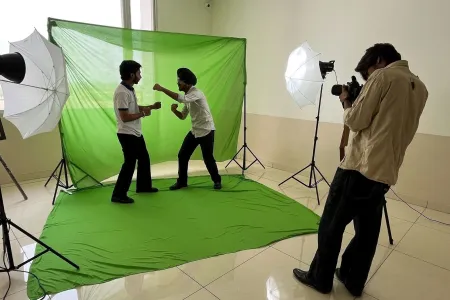
  • Visual Communication: To visually communicate ideas in the form of artistic fashion illustrations, graphic illustration, styling, fashion photography and visual display of merchandise.
  • Designer and Society– Understanding and awareness on sustainable practices for the upliftment of the society and the environment and ethical behavior and IPR knowledge.
  • Communication: Communicate and present effectively orally and in writing. Being able to comprehend and write effective reports and design documents, make presentations and give and receive clear instructions.
  • Individual and team Work: Articulate teamwork principles, work with multidisciplinary team, and appreciate the role of a leader, leadership principles and attitudes conductive to effective professional practices.
  • Life Long Learning: Engage in life – long learning, demonstrate knowledge and understanding of contemporary and emerging issues relevant to their domain – demonstrate knowledge and understanding of business practices and principles of management and understand their limitations, develop awareness of legal consequences.
     

Programme Specific Outcomes

  • The students will have strong foundation in designing and have the ability to visually represent it by illustrations, photographs, graphics and visual display of merchandise.
  • The students will be able to convert their design into a product or a garment using appropriate construction techniques.
  • The students will be able to understand and analyse the market trends and design market friendly, sustainable, ethically viable and client friendly designs and products.
  • Students will be able to work as a team in any organization and become accomplished or successful Designers, Entrepreneurs or Industry ready professionals.

Salient Features

  • Industry-Oriented Curriculum – A well-structured syllabus integrating fashion design, textile science, and digital technology, aligned with current industry trends.
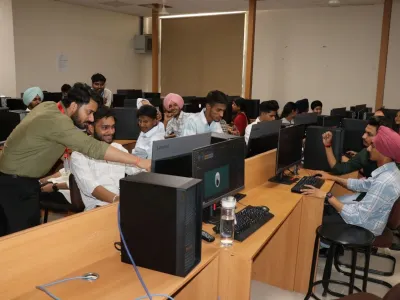
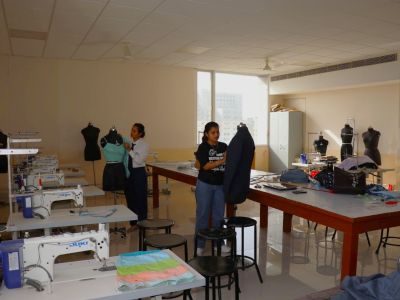
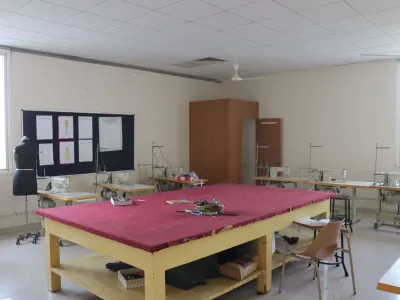
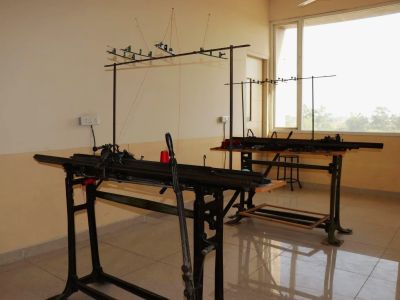
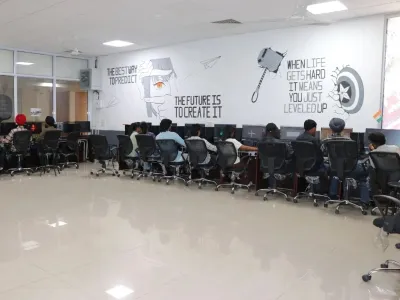
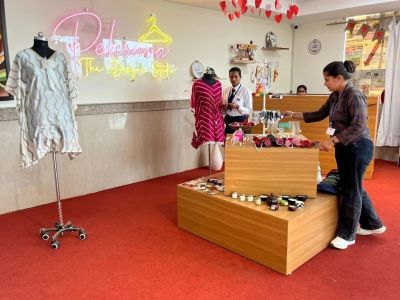
  • State-of-the-Art Labs & Facilities – Fully equipped design studios, CAD labs, and garment construction labs to enhance practical learning.
  • Industry Exposure & Internships – Regular industrial visits, internships, live projects, and collaborations with renowned fashion brands and designers.
  • Sustainability & Innovation Focus – Emphasis on eco-friendly fashion, zero-waste techniques, and ethical practices to promote responsible design solutions.
  • Entrepreneurial & Career Development – Training in fashion business, merchandising, marketing, and branding to foster entrepreneurship and career growth.
  • Expert-Led Workshops & Guest Lectures – Frequent sessions by industry experts, designers, and academicians to provide real-world insights and networking opportunities.
  • Fashion Shows & Competitions – Opportunities to showcase talent through annual fashion shows, exhibitions, and national/international design competitions.
  • Multidisciplinary Approach – Integration of fashion with technology, multimedia, and digital fashion to expand career opportunities in emerging fields.
     

Important Dates

Date Description
21-08-2025 World Fashion Day
07-03-2025 National Handloom Day (India)

Infrastructure