Apply Now Programmes Virtual Tour CT-SET 2026 Ph.D
Admissions
Open 2026-27
Apply now
Apply Now
Home  /  Programmes  /  Certificate Course in Fashion Design

Certificate Course in Fashion Design

Duration: 1 Years Category: Certificate Programs

Programme Details

About the Programme

A Certificate Course in Fashion Design is a specialized program that focuses on developing the creative and technical skills necessary for a career in the fashion industry. The curriculum typically covers design principles, garment construction, textiles, fashion illustration and pattern making. Students gain hands-on experience through practical projects and may participate in fashion shows. This diploma provides a solid foundation for individuals aspiring to work in various roles within the fashion design and apparel industry, emphasizing both artistic expression and practical design skills. 

Industry Immersion

The industry immersion component of a Diploma in Fashion Design involves practical experiences within the fashion industry. This may include internships, workshops and collaborations with fashion houses or designers. Students get hands-on exposure to the entire fashion design process, from concept creation to garment production. They may participate in fashion events, work on real-world projects and engage with industry professionals. This immersion helps students apply their theoretical knowledge in a practical context, understand industry trends and develop essential skills for success in the dynamic field of fashion design. It serves as a bridge between classroom learning and the professional demands of the fashion industry.

Eligibility Criteria

10+2 or equivalent in any stream with English as a compulsory subject from a recognized board and having atleast 50% marks

Candidates with 10+2 certification from Hunar Sikhiya School (HSS) are also eligible.

Register Now

Why Choose CT University

Why CT University is the Right Choice for Your Future

CT University Campus

At CT University, we combine industry-integrated learning and global academic partnerships, backed by the CT Group's 30+ year legacy, to prepare students for careers that actually last.

Industry-oriented
learning

Modern campus
facilities

Academic excellence &
mentorship

Global opportunities &
placements

Fee Structure & Scholarships

Program Fee Details

Fee Type Amount
Programme Fees (per Semester) ₹55000
Examination Fees ₹3000

Merit Based Scholarship Scheme

Unlock up to 90% Scholarship through CTSET, with scholarships worth Rs 40 Crore! Get access to top-quality education at CT University, Ludhiana — without the financial burden.

Slab >=60% - 74.99% >=75% - 89.99% >=90% & Above
Fee ₹50000 ₹45000 ₹40000

Students can avail these slots depending on the marks they have scored. Each slot reflects a different academic range, helping students understand where they stand and what benefits they qualify for.

Course Curriculum

1ST SEMESTER SUBJECTS

Introduces the fundamental elements and principles of design, composition, colour theory, colour psychology, and motifs. Students develop aesthetic awareness and learn to create visually balanced design compositions.
Course Outcome:
CO1: Identify the importance and psychology of different elements of design
CO2: understand the importance of principles of design
CO3: Analyse core values of design compositions
CO4: Combine various design elements to create aesthetic composition
CO5: Trace the use of various elements in urban designs

Provides practical experience in drawing, rendering, textures, patterns, colour schemes, and motif development. Students apply design principles to create aesthetic and creative visual compositions.
Course Outcome:
CO1: Identify the importance and psychology of different elements of design
CO2: understand the importance of principles of design
CO3: Analyse core values of design compositions
CO4: Combine various design elements to create aesthetic composition
CO5: Trace the use of various elements in urban designs

Develops foundational fashion drawing skills through shading, freehand sketching, perspective, repeat patterns, and silhouette studies. Students learn to visualize and communicate creative fashion concepts through illustration.
Course Outcome:
CO1: The study of this course develops the student’s ability to visualize the ideas and putting them in concepts for fashion garments.
CO2: Hands on practice for female croqui and poses
CO3: Hands on practice for male croqui and poses
CO4: Hands on practice for facial feature detailing
CO5: Model Drawing is introduced with the concept of drawing normal figures in movement and different postures.

Explores the origin of clothing, fashion terminology, fashion cycles, theories, psychology, and sociological aspects of clothing. Students gain an understanding of fashion movements, consumer behaviour, designers, and fashion forecasting.
Course Outcome:
CO1: Understand the fashion terminologies, fashion scenario and fashion industry.
CO2: To provide a broad foundation to acquire the knowledge of fashion theory and its growth which develop the students' potential for professional activities that demand considerable independence or for fashion research work
CO3: Develop the ability to analyse market trends and consumer behaviour to inform design decisions and marketing strategies.
CO4: To get an insight into the more recent developments in the field of global fashion and fashion trends
CO5: To foster an understanding of international / Indian designers and their work

Introduces essential hand and machine stitches, seams, fabric manipulation, necklines, plackets, and garment finishing techniques. Students develop practical skills for constructing basic garments and accessories.
Course Outcome:
CO1: Basic stitching and creative skill will be developed which will help them to construct their garments.
CO2: Students will be able to use different stitches and seams as per the requirement of the garment.
CO3: Correct placement and attachment of placket and zippers
CO4: Will be able to convert fullness of garment with different techniques like dart, pleats etc.
CO5: Will be enable students to create basic garments and accessories using sewing techniques they have learned.

Introduces computer-aided design applications for fashion and apparel, including digital drawing, motifs, patterns, and design composition. Students develop foundational skills in using digital tools to conceptualize and communicate fashion designs.
Course Outcome:
CO1: Develop a basic concept of computers & its structure
CO2: Enable students to understand the working of commonly used software and like Adobe Photoshop and CorelDraw, their use in designing.
CO3: Create small design using tools in Ms. Paint, Adobe Photoshop and CorelDraw
CO4: This course focuses on the usage of Usage of computers in Fashion & Apparel Industry
CO5: Students will be able to develop and conceptualize their designs and creations.

Provides knowledge of natural and synthetic textile fibres, their properties, identification, manufacturing, and applications. Students also study yarn classification, production, characteristics, blends, and yarn-related concepts.
Course Outcome:
CO1: To understand the tactile and behavioural characteristics of various fibres and yarns in relation to their application and end use
CO2: To develop a basic sense in students in order to identify certain natural fibres visually and chemically
CO3: Understanding the functional aspects of textile fibres
CO4: understanding various textile yarns used in the industry
CO5: Introduction to various techniques involved in yarn production

Covers textile fibres, yarns, fabric construction, finishes, laundering, stain removal, care labels, and storage practices. The course develops an understanding of textile behaviour and appropriate care for durability and sustainability.
Course Outcome:
CO1: Identify and classify textile fibers based on their properties and origin.
CO2: Understand yarn formation, yarn types, and their impact on fabric performance.
CO3: Analyze the behavior of different fabrics under various conditions.
CO4: Apply knowledge of fabric care, laundering, and stain removal techniques.
CO5: Interpret care labels and recommend suitable cleaning and maintenance procedures.

Entrepreneurship Mindset-I

Explores environmental systems, ecosystems, biodiversity, natural resources, and the interdependence between humans and nature. The course develops awareness of environmental policies, conservation, waste management, water management, sanitation, and sustainable practices. Students learn to analyse environmental challenges and develop practical solutions for local and global sustainability.
Course Outcome:
CO1: Analyse the impact of Biodiversity conservation on species and the environment.
CO2: Apply knowledge of environmental policies and legislations to evaluate and propose solutions for local and global environmental issues.
CO3: Implement environmental management plans to address campus environmental issues such as Waste disposal, water management, and sanitation.
CO4: Students will gain knowledge of the structure and function of ecosystems, biodiversity, and the importance of natural resources.
CO5: Recognize the interdependence between humans and the environment.

Develops students’ English communication skills through listening, speaking, reading, and writing. The course focuses on grammar, vocabulary, pronunciation, presentations, audience awareness, body language, and effective use of audio-visual aids. It helps students communicate confidently and appropriately in academic, professional, and everyday situations.
Course Outcome:
CO1: Use standard English aptly in listening, speaking, and communicative situations
CO2: Write error-free sentences and short texts in English Language
CO3: Comprehend reading passages effectively
CO4: Demonstrate use of apt and relevant vocabulary at lower intermediate to intermediate level
CO5: Develop effective oral presentation skills, including audience analysis and body language
CO6: Apply audio-visual aids to enhance communication and improve pronunciation

This course introduces the fundamental principles, functions, and processes of management, including planning, organizing, decision-making, leadership, and motivation. It develops students’ ability to analyze organizational situations and apply effective management strategies to address contemporary challenges and improve organizational performance.
Course Outcome:
CO1: Understand and explain the fundamental concepts, principles, and functions of management
CO2: Apply planning and decision-making techniques to managerial scenarios .
CO3: Analyze organizational structures and processes to enhance efficiency.
CO4: Evaluate various leadership and motivational theories and their application in management
CO5: Create and implement effective management strategies to address contemporary issues and challenges.

2ND SEMESTER SUBJECTS

Provides an overview of the textile and apparel industry, its organizational structure, departments, quality control, and global trade. Students explore industry prospects, government incentives, export-import dynamics, and emerging opportunities.
Course Outcome:
CO1: Understanding the historical evolution and global development of the textile and apparel sectors.
CO2: Conducting SWOT analysis to assess industry strengths,Weaknesses, opportunities, and threats.
CO3: Analyzing major apparel trading nations and their import-export dynamics.
CO4: Exploring roles in design, sampling, sales, sourcing, merchandising, and production within the apparel sector.
CO5: Evaluating future trends in the domestic and global apparel markets, focusing on export-oriented strategies.

Traces the evolution of Indian costumes, jewellery, hairstyles, and footwear from ancient civilizations through the British Raj. Students explore regional diversity and the cultural, social, and historical significance of Indian dress.
Course Outcome:
CO1: Analyze the evolution of Indian costumes, jewelry, hairstyles, and footwear across historical periods.
CO2: Understand socio-cultural influences on Indian costume trends throughout history.
CO3: Evaluate external influences on Indian costume traditions over time.
CO4: Categorize traditional Indian garments, jewelry, hairstyles, and footwear by historical period and region.
CO5: Interpret the cultural significance of costume elements in Indian history and identity expression.

Develops advanced digital fashion design skills through garment features, accessories, flat sketches, Indian wear, and digital design applications. Students gain practical experience in translating fashion concepts into precise digital formats.
Course Outcome:
CO1: To enable students to gain knowledge of figure sketching and drawing.
CO2: To gain knowledge of various fashion details.
CO3: To acquaint students with knowledge of CAD based application in fashion designing with CorelDraw
CO4: Students will gain hands-on experience in designing garments, patterns, and prints using CAD tools, enabling them to translate their creative ideas into digital format with precision and clarity.
CO5: The students will be equipped with essential CAD software skills, allowing them to create and communicate fashion designs digitally, enhancing their employability and positioning.

Introduces embroidery, surface manipulation, embellishment, resist dyeing, and fabric printing techniques. Students develop creative skills for adding decorative and value-enhancing details to textile surfaces.
Course Outcome:
CO1: The students will develop a thorough understanding of various techniques used to impart various decorative skills on fabric through practical exercises
CO2: Capacity to create design using surface manipulation
CO3: Understanding the basic embroidery stitches
CO4: Capacity to incorporate and develop new design using surface embellishments
CO5: Students will be able to develop utility articles with the help of basic embroidery stitche

Expands fashion illustration skills through garment features, garment types, accessories, hairstyles, and flat sketching. Students learn to develop complete fashion looks for different garments, themes, and occasions.
Course Outcome:
CO1: Basics of clothing origins
CO2: To enable students to have awareness and to gain knowledge of figure sketching and drawing human figures.
CO3: Understanding the basic embroidery stitches
CO4: Students will develop an approach through ideation
CO5: Students will gain knowledge about different themes required in the field of fashion.

Introduces flat pattern development, dart manipulation, sleeves, collars, yokes, plackets, skirts, and basic garment construction. Students gain practical skills in developing accurate patterns and translating them into wearable garments.
Course Outcome:
CO1: To impart skills in basic techniques of pattern making
CO2: To make the variations of basic pattern sets using pattern making techniques
CO3: To impart knowledge on industrial method of pattern making, grading and marker planning
CO4: Students will be able to develop pattern for adults.
CO5: Students will develop the capability and skills of creating the patterns for designer wear with dart manipulation techniques.

Students will develop a fashion design project that showcases the knowledge and creative skills acquired throughout the semester. The project will demonstrate their ability to apply fashion concepts, design techniques, and practical skills in a creative and professional manner.

Explores major fabric construction methods, including weaving, knitting, non-wovens, looms, and different weave structures. Students learn to understand and analyse fabric construction and its influence on performance and appearance.
Course Outcome:
CO1: To impart knowledge of fabric manufacture and fabric properties.
CO2: To enable students to understand fabric structures and to analyse them.
CO3: To make the students aware about complete textile manufacturing processes
CO4: Students will learn to analyze the performance of fabrics based on their construction and properties
CO5: Students will be able to identify different types of fabric weaves, knits, and non-woven structures, and understand how these construction methods impact characteristics such as durability, drape, stretch, breathability, and texture.

Provides hands-on experience in preparing samples of plain, twill, satin, and sateen weaves and other fabric construction techniques. Students apply construction principles through practical sampling and product development.
Course Outcome:
CO1: To impart knowledge of fabric manufacture and fabric properties.
CO2: To enable students to understand fabric structures and to analyse them.
CO3: To make the students aware about complete textile manufacturing processes
CO4: Students will learn to analyze the performance of fabrics based on their construction and properties
CO5: Students will be able to identify different types of fabric weaves, knits, and non-woven structures, and understand how these construction methods impact

Introduces apparel production systems, planning and scheduling, costing, budgeting, manufacturing, and quality control. Students also explore automation and CAD/CAM technologies for improving production efficiency and resource management.
Course Outcome:
CO1: Understand the fundamental concepts and processes involved in apparel production and manufacturing systems.
CO2: Gain the ability to plan, schedule, and manage production activities effectively to meet deadlines and optimize resources.
CO3: Develop skills in cost estimation, budgeting, and financial management within the apparel production environment.
CO4: Apply quality control measures to ensure product standards are met throughout the production process.
CO5: Understand and utilize modern apparel production technologies, including automation and CAD/CAM systems, to enhance production efficiency.

Introduces apparel production systems, planning and scheduling, costing, budgeting, manufacturing, and quality control. Students also explore automation and CAD/CAM technologies for improving production efficiency and resource management.
Course Outcome:
CO1: Explain the structure, functions, terminology, production systems, and workflow involved in apparel manufacturing.
CO2: Apply principles of production planning and control to develop production schedules, capacity plans, and resource allocation strategies for garment manufacturing.
CO3: Calculate garment production costs, including material, labour, overheads, and profit, and prepare basic costing and budgeting sheets.
CO4: Demonstrate the major stages of apparel manufacturing, including fabric preparation, pattern making, grading, marker making, cutting, stitching, finishing, and quality inspection.
CO5: Utilize appropriate quality control methods and digital/automated production technologies, including CAD/CAM, to improve productivity, accuracy, quality, and cost-efficiency in apparel production.

Entrepreneurship Mindset - II

Develops students’ understanding of universal human values, self-awareness, compassion, empathy, truth, non-violence, and moral responsibility. The course encourages personal transformation through selfless service, ethical decision-making, and reflection. Students explore sacrifice, righteousness, renunciation, and simplicity to develop responsible attitudes, meaningful relationships, and inner harmony in contemporary life.
Course Outcome:
CO1: Define and identify core universal human values and relate them to their own lives.
CO2: Demonstrate self-awareness and initiate personal transformation (Human Revolution
CO3: Appreciate the importance of Sewa (selfless service), compassion, and empathy.
CO4: Apply principles of truth, non-violence, and moral responsibility in real-life dilemmas.
CO5: Evaluate ethical decisions involving sacrifice and righteousness through case studies.
CO6: Reflect on the relevance of renunciation and simplicity in modern life for inner peace.

Enhances advanced English communication skills through grammar, note-making, summarization, paraphrasing, vocabulary development, and coherent discourse. Students develop the ability to organize and present ideas effectively in both written and spoken forms. The course strengthens language proficiency for academic, professional, and real-world communication at intermediate to upper-intermediate levels.
Course Outcome:
CO1: Apply effective grammatical structures in English Language for speaking and writing
CO2: Utilize effective note-making techniques in English Language
CO3: Effectively summarize and paraphrase texts in English Language
CO4: Demonstrate use of apt and relevant vocabulary at intermediate to upper-intermediate level
CO5: Employ cohesive and coherent discourse in English communication
CO6: Produce well-organized written and spoken texts in English Language

Office Automation and Productivity Tools introduces students to essential digital tools used for professional documentation, data management, presentations, databases, and communication. The course develops practical skills in word processing, spreadsheets, presentation software, database management, internet tools, and email systems to enhance workplace productivity and efficiency.
Course Outcome:
CO1: Understand the fundamentals and importance of office automation tools.
CO2: Demonstrate the ability to create and manage professional documents using word processing software.
CO3: Apply spreadsheet tools to perform data entry, calculation, and basic data analysis.
CO4: Design engaging and effective presentations using presentation software.
CO5: Develop and manage simple databases for information storage and retrieval.
CO6: Use internet tools and email systems for communication and scheduling

This practical course develops students’ proficiency in using office automation tools such as Word, Excel, PowerPoint, and email applications for professional and academic tasks. It focuses on document creation, data management, presentations, communication, scheduling, and effective use of collaborative and cloud-based productivity tools.
Course Outcome:
CO1: Demonstrate the ability to create and format professional documents using Word.
CO2: Apply spreadsheet tools to perform calculations, use formulas, and present data.
CO3: Design engaging and informative presentations with transitions, animations, and visuals.
CO4: Use email clients for professional communication and manage schedules effectively.
CO5: Integrate different office tools (Word, Excel, PowerPoint) for comprehensive tasks.
CO6: Exhibit productivity through the use of collaborative and cloud-based office tools

Program Outcomes & Features

Program Outcomes

  • PO1: Beauty Science Knowledge: Understand skin, hair and body structure, wellness therapies and industry practices to analyze client needs and forecast beauty trends.
  • PO2: Design and Service Application: Apply design and aesthetic principles to create effective and personalized skincare, haircare and wellness treatments.
  • PO3: Product and Service Development: Develop beauty and wellness services or products that meet market demands, client expectations and sustainability standards.
  • PO4: Modern Tool Usage: Operate salon equipment, diagnostic tools and computer-based applications to deliver professional and advanced services.
  • PO5: Value Addition Techniques: Incorporate traditional methods like herbal and ayurvedic techniques with modern innovations to enhance treatment outcomes.
  • PO6: Visual and Client Communication: Use illustrations, digital media and consultations to visually and verbally communicate beauty and wellness concepts to clients.
  • PO7: Professional Ethics and Society: Follow ethical standards, hygiene protocols and legal practices while promoting eco-friendly and socially responsible services.
  • PO8: Effective Communication: Demonstrate strong oral and written communication skills to interact with clients, teams and industry professionals.
  • PO9: Teamwork and Leadership: Work collaboratively in team environments and exhibit leadership skills in managing salon or wellness operations.
  • PO10: Lifelong Learning: Stay informed about emerging trends, technologies and business practices for continuous professional and personal development.

Program Specific Outcomes

  • PSO1: The students will develop a strong foundation in beauty and wellness concepts and be able to visually represent their ideas through face charts, makeover photography, digital graphics display of beauty products and services.
  • PSO2: The students will be able to transform their creative concepts into real-time services or products using appropriate techniques in skin, hair makeup application.
  • PSO3: The students will understand and analyse beauty industry trends to create sustainable, client-centric ethically sound beauty solutions and service experiences.
  • PSO4: Students will be capable of working collaboratively in salons, wellness centers, or entrepreneurial setups and evolve as accomplished Beauty Experts, Wellness Entrepreneurs, or Industry-ready professionals.

Salient Features

  1. The only University around Ludhiana offering professional courses in Design and Innovation.
  2. Highly qualified professors and lecturers with their upgraded teaching methodologies provide the ideal learning environment to students.
  3. Moreover, students get in-depth knowledge of fundamentals and technological advancements which makes them more skilled and job ready.
  4. Students get an opportunity to get internships right from the 1st year of admission. 
  5. Contemporary course curriculum designed as per the needs of the industry.
  6. Students are given in-house projects to showcase their skills and gain practical experience. Eg. Video making, film making, wall paintings, etc.
  7. 80% practical learning every semester.
  8. Regular industrial visits to make students aware about the workings and present scenario of the same.
  9. Students are motivated to participate in inter school and inter University competitions to make them learn and create out of the box and gain confidence.
  10. Celebrating various important days like world art day, animation day, fashion day and other Indian and western festivals by organizing window displays, competitions and much more.
  11. The course syllabus is managed in a way that helps students with their entrepreneurial skills too.
  12. One to one interaction is the key feature for the school.
  13. Students get to have a job experience along with their studies under the ambassadorship programs.

Labs and Facilities

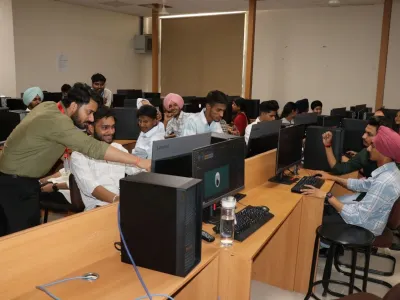
2D Lab

2D Lab

Explore More
01
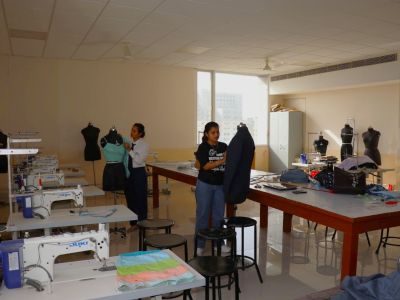
Draping Lab

Draping Lab

Explore More
02
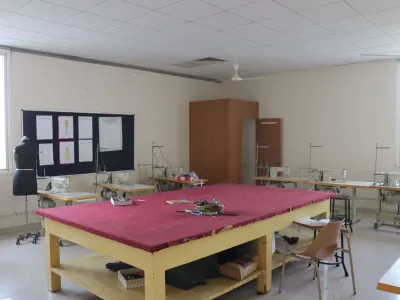
Design/Sewing Lab

Design/Sewing Lab

Explore More
03
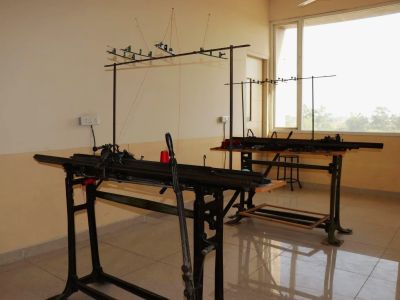
Knitting lab

Knitting lab

Explore More
04
3D Lab

3D Lab

Explore More
05
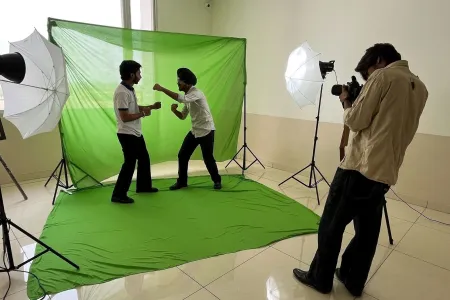
Croma Studio

Croma Studio

Explore More
06
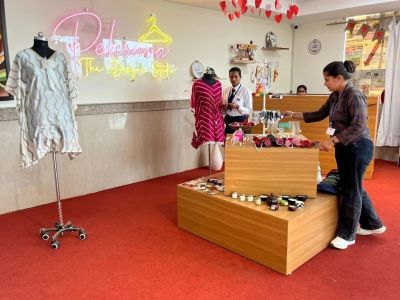
Pehrava

Pehrava

Explore More
07
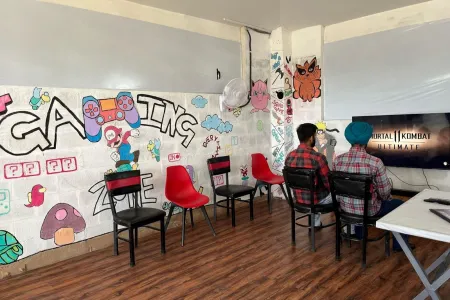
Gaming zone

Gaming zone

Explore More
08
Unibliss Lab

Unibliss Lab

Explore More
09

Backed by the Legacy of CT Group, Driven by Proven Success

30000+

Placements

800+

Collaborations

1.2Cr

Highest Placement

1800+

Recruiters

1 Lac+

Alumni

40Cr

WORTH SCHOLARSHIP

Hear From Our Students

"

Studying B.com in the School of Management Studies at CTU has been a delightful journey. The knowledgeable faculty and engaging coursework have not only deepened my understanding of commerce but also sparked a passion for it. With a perfect blend of academics and extracurricular activities, CTU has been the perfect launchpad for my future endeavors after gaining quality education and great leadership skills and exposure from industrial visits.

"

"CT University stands out for its student-centric approach. The B.Sc. Radiology program is designed to meet industry standards, and the professors are always approachable and ready to assist. The emphasis on practical learning and internships has given me confidence and clarity in my chosen field. I highly recommend this course to anyone interested in a career in radiology."

"

Studying at CT University was an enriching experience, thanks to access to advanced technology and learning resources. The state-of-the-art operation theatre labs, anesthesia workstations, and simulation-based training ensured we were always prepared for both theoretical and practical aspects of our studies.