Apply Now Programmes Virtual Tour CT-SET 2026 Ph.D
Admissions
Open 2026-27
Apply now
Apply Now

Master's in Anesthesia and Operation Theatre Technology

program-details

The Master’s in Anaesthesia and Operation Theatre Technology is a two-year postgraduate programme designed to develop advanced clinical, technical, research and managerial competencies in anaesthesia and perioperative care. The programme prepares students to work efficiently in multidisciplinary surgical and critical care teams while ensuring patient safety, quality healthcare delivery and professional excellence.

Industry Immersion

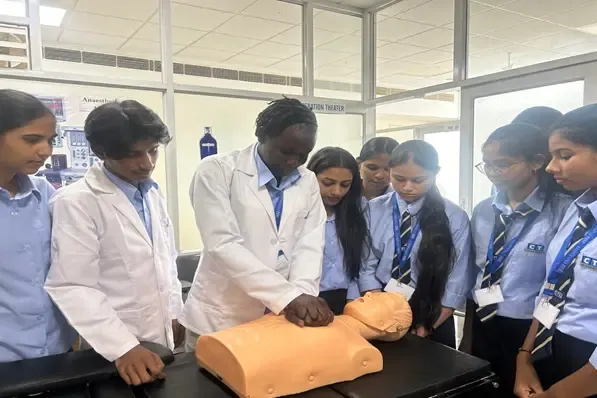
Students receive extensive clinical exposure and hands-on training through hospital rotations, internships, workshops and simulation-based learning in reputed healthcare institutions. Training areas include:

  • Cardiac Operation Theatre
  • Neuro Operation Theatre
  • Intensive Care Units
  • Emergency and Trauma Care Units
  • Post Anaesthesia Care Units (PACU)

Students also participate in surgical assistance, advanced anaesthesia procedures, healthcare workshops and research activities to strengthen clinical competence and professional readiness.

eligibility criteria

Candidates must have completed a Bachelor’s degree of minimum three years duration in Anaesthesia & Operation Theatre Technology / Anaesthesia Technology / Operation Theatre Technology from a recognized university with minimum 50% marks.

Admission criteria

Admission is based on fulfillment of eligibility criteria and university admission guidelines.

Duration

2 Years

Curriculum

1ST SEMESTER SUBJECTS

Provides advanced understanding of relevant applied sciences, integrating anatomy, physiology, pharmacology, pathology, and related concepts essential for safe and effective anaesthesia and operation theatre practice.

Develops advanced knowledge and practical competencies in anaesthetic equipment, anaesthesia workstation, monitoring devices, airway equipment, and standard anaesthetic procedures with emphasis on safe operation and troubleshooting.

Provides comprehensive knowledge of commonly used anaesthetic and emergency drugs, including their indications, contraindications, dosage principles, administration, monitoring requirements, adverse effects, and management of drug-related emergencies.

Develops advanced knowledge and skills in surgical technology, including surgical procedures, instruments, aseptic techniques, patient positioning, surgical assistance, infection prevention, and safe operation theatre practices.

2ND SEMESTER SUBJECTS

Provides advanced knowledge and practical application of contemporary anaesthesia techniques, including advanced airway management, general and regional anaesthesia, monitoring, perioperative management, and management of anaesthesia-related complications.

Provides specialized knowledge of anaesthetic management for complex clinical conditions and specialty procedures, with emphasis on patient assessment, selection of appropriate anaesthetic techniques, monitoring, and perioperative patient safety.

Develops advanced understanding and clinical competencies in common and specialized surgical procedures, including surgical principles, patient preparation, positioning, instrumentation, perioperative care, and operation theatre practices.

Develops competencies in research methodology, biostatistics, critical appraisal, evidence-based practice, scientific communication, and basic teaching methodology for effective academic and clinical education in anaesthesia and operation theatre technology.

3RD SEMESTER SUBJECTS

Provides advanced knowledge of anaesthetic management for specialized and complex surgical procedures, emphasizing patient assessment, selection and conduct of appropriate anaesthetic techniques, advanced monitoring, perioperative care, and management of complications.

Develops advanced clinical competencies in complex surgical procedures, including surgical planning, patient preparation, positioning, instrumentation, intraoperative assistance, postoperative care, and safe operation theatre practices.

Provides knowledge of healthcare management and principles of management, including planning, organization, leadership, staffing, communication, resource utilization, quality assurance, patient safety, and effective administration of anaesthesia and operation theatre services.

4TH SEMESTER SUBJECTS

Provides advanced knowledge of common medical conditions and critical care principles, including patient assessment, pathophysiology, monitoring, organ support, emergency management, and multidisciplinary care relevant to anaesthesia and critical care practice.

Provides comprehensive research training through analysis, interpretation, and presentation of dissertation findings, demonstrating the application of research methodology, ethical principles, scientific writing, and evidence-based practice in anaesthesia and operation theatre technology.

fees

Details

Amount

Programme Fees (per Semester)

45000

Examination Fees

3000

International Fees (per Year)

$4500

Programme Outcomes

  • Apply advanced knowledge of anaesthesia and operation theatre technology in complex clinical situations.
  • Assist anaesthesiologists and surgeons during perioperative and critical care procedures.
  • Manage operation theatre protocols, sterilization systems and healthcare safety practices.
  • Operate and maintain advanced anaesthesia workstations, monitors and medical
    equipment.
  • Apply evidence-based practices and research methodologies in patient care.
  • Demonstrate leadership, communication, ethical values and professional accountability in healthcare environments.

Programme Specific Outcomes

  • Demonstrate proficiency in advanced anaesthesia assistance and patient monitoring
    techniques.
  • Manage operation theatre resources, emergency protocols and infection control systems effectively.
  • Apply critical care management skills in ICUs and postoperative care units.
  • Contribute to healthcare research, clinical audits and quality improvement practices.
  • Handle advanced anaesthesia equipment and healthcare technologies with competence and precision.

Salient Features

  • NCAHP-aligned and competency-based curriculum.
  • Advanced clinical exposure and hospital-based training.Simulation and research-oriented learning environment.
  • Training in critical care, emergency management and operation theatre protocols.
  • Emphasis on patient safety, infection control and healthcare quality standards.
  • Workshops, seminars, certifications and interdisciplinary learning opportunities.

curriculum

Infrastructure