Apply Now Programmes Virtual Tour CT-SET 2026 Ph.D
Admissions
Open 2026-27
Apply now
Apply Now

Baccalaureate in Anesthesia & Operation Theatre Technology - Lateral Entry

program-details

The Baccalaureate in Anaesthesia & Operation Theatre Technology – Lateral Entry programme is designed for diploma holders who wish to advance their knowledge and clinical expertise in anaesthesia and operation theatre technology. The programme provides advanced understanding of anaesthesia procedures, operation theatre management, patient monitoring, critical care support and modern healthcare technologies. Students are trained to assist anaesthesiologists and surgical teams in ensuring safe and effective patient care.

Industry Immersion

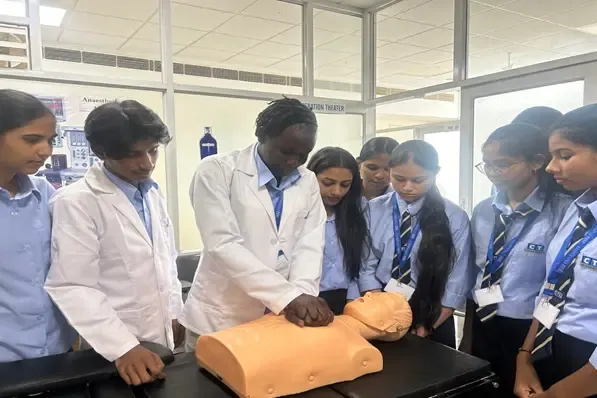
The programme offers extensive practical and clinical exposure through hospital postings,bsimulation-based training and hands-on experience in operation theatres and critical care units. Students are trained in handling advanced anaesthesia machines, monitoring systems, suction apparatus and emergency care equipment while developing professional communication and teamwork skills.

eligibility criteria

Diploma in Anaesthesia Technology (minimum 2 years full-time diploma) completed after 10+2 with English, Physics, Chemistry and Biology as compulsory subjects from a recognized board with at least 50% marks.

Admission criteria

Admission is based on merit and fulfillment of the prescribed eligibility criteria as per university norms.

Duration

3 Years

Curriculum

1ST SEMESTER SUBJECTS

Provides an overview of the structure, organization, financing, policies, and functioning of the Indian healthcare delivery system, including primary, secondary, and tertiary levels of care and the role of healthcare professionals.

Develops knowledge of commonly used medical terminology, abbreviations, documentation practices, and principles of accurate, confidential, and systematic healthcare record keeping.

Provides comprehensive knowledge of gross anatomy and the structure and organization of the human body, with emphasis on anatomical concepts relevant to anaesthesia, operation theatre, and perioperative care.

Provides comprehensive understanding of normal human physiology, including the functions and regulation of major body systems relevant to anaesthesia, surgical procedures, and perioperative patient care.

Develops knowledge and skills in healthcare quality management and patient safety, including quality improvement, infection prevention and control, risk management, incident reporting, patient identification, and safe clinical practices.

2ND SEMESTER SUBJECTS

Provides knowledge of medical laws, professional ethics, patient rights, informed consent, confidentiality, medico-legal responsibilities, and fundamental management principles relevant to healthcare and anaesthesia operation theatre services.

Provides foundational understanding of biomedical sciences relevant to surgery and anaesthesia, integrating anatomy, physiology, pathology, pharmacology, and basic principles of perioperative and surgical care.

Provides foundational knowledge of biochemical processes, blood composition, hematological parameters, coagulation, blood grouping, and laboratory investigations relevant to surgical and anaesthesia practice.

Provides fundamental knowledge of disease processes, microorganisms, infection transmission, diagnostic principles, infection prevention and control, and their relevance to surgical and anaesthesia services.

Provides foundational knowledge of pharmacological principles, including drug actions, indications, contraindications, dosage forms, routes of administration, adverse effects, and safe use of medicines in clinical practice.

Develops basic competencies in computer applications, healthcare information systems, professional communication, interpersonal skills, teamwork, documentation, and effective communication in healthcare settings.

3RD SEMESTER SUBJECTS

Provides an overview of the structure, organization, levels, policies, and functioning of the Indian healthcare delivery system, including the roles of healthcare institutions and professionals.

Provides knowledge of commonly used medical terminology, abbreviations, documentation standards, and principles of accurate, systematic, confidential, and secure healthcare record keeping.

Provides comprehensive knowledge of the structure and organization of the human body, including gross and systemic anatomy relevant to anaesthesia, surgery, operation theatre procedures, and perioperative patient care.

Provides comprehensive understanding of normal human physiology and the functions and regulation of major body systems relevant to anaesthesia, surgical procedures, and perioperative patient management.

4TH SEMESTER SUBJECTS

Provides advanced knowledge and practical application of contemporary anaesthesia techniques, including advanced airway management, general and regional anaesthesia, perioperative monitoring, patient assessment, and management of anaesthesia-related complications.

Provides advanced knowledge of surgical procedures, including surgical principles, patient preparation, positioning, instrumentation, intraoperative assistance, postoperative care, and safe operation theatre practices.

Provides foundational knowledge of intensive care principles, including critical patient monitoring, airway and ventilatory support, fluid and electrolyte management, infection control, emergency care, and basic management of critically ill patients.

Provides knowledge of common medical conditions and their clinical management, with emphasis on patient assessment, disease recognition, perioperative care, emergency management, and coordination of multidisciplinary healthcare services.

5TH SEMESTER SUBJECTS

Provides advanced knowledge and application of anaesthesia techniques for specialized and complex surgical procedures, including patient assessment, advanced monitoring, perioperative management, and management of anaesthesia-related complications.

Provides advanced knowledge of specialized surgical procedures, including patient preparation, positioning, surgical instrumentation, intraoperative assistance, postoperative care, and safety practices in specialized operation theatre settings.

Provides knowledge of emerging technologies, contemporary techniques, evidence-based practices, and innovations in anaesthesia and surgery, with emphasis on patient safety, improved clinical outcomes, and modern perioperative care.

Provides foundational knowledge of disaster preparedness and management, emergency response, mass-casualty management, environmental health, occupational safety, and sustainable practices relevant to healthcare and operation theatre services.

6TH SEMESTER SUBJECTS

Provides advanced knowledge and application of specialized anaesthesia techniques for complex surgical procedures, including patient assessment, advanced monitoring, perioperative management, and management of potential anaesthetic complications.

Provides advanced knowledge and practical competencies in specialized surgical procedures, including patient preparation, positioning, instrumentation, intraoperative assistance, postoperative care, and operation theatre safety.

Integrates advanced anaesthesia and surgical principles for the management of complex perioperative cases, with emphasis on multidisciplinary coordination, patient safety, advanced technology, and evidence-based clinical practice.

Develops competencies in research methodology, biostatistics, research design, data collection and analysis, critical appraisal, scientific writing, and application of evidence-based practice in anaesthesia and operation theatre technology.

7TH & 8TH SEMESTER SUBJECTS

Provides supervised clinical internship experience across anaesthesia, surgical, and specialty services, enabling students to integrate theoretical knowledge with clinical practice, develop technical and patient-care competencies, and demonstrate safe, ethical, and professional practice in multidisciplinary healthcare settings.

fees

Details

Amount

Programme Fees (per Semester)

60000

Examination Fees

3000

International Fees (per Year)

$3000

Fee Slab

Slab >=60% - 74.99% >=75% - 89.99% >=90% & Above
Fee ₹55000 ₹50000 ₹45000

Students can avail these slots depending on the marks they have scored. Each slot reflects a different academic range, helping students understand where they stand and what benefits they qualify for.

Programme Outcomes

  • Assist anaesthesiologists during anaesthesia administration and perioperative procedures.
  • Operate and maintain modern anaesthesia and operation theatre equipment.
  • Apply patient monitoring and infection control practices in healthcare settings.
  • Support emergency, trauma, ICU and critical care services effectively.
  • Demonstrate professional competence, communication skills and ethical healthcare
    practices.
  • Apply scientific and technical knowledge in operation theatre and anaesthesia management.

Programme Specific Outcomes

  • Develop expertise in handling advanced anaesthesia equipment and monitoring systems.
  • Gain proficiency in perioperative patient care and airway management procedures.
  • Assist healthcare teams in operation theatres, ICUs and emergency departments.
  • Apply technical and clinical skills for safe anaesthesia assistance and patient care.
  • Build professional competency for employment in multispecialty hospitals and healthcare institutions.

Salient Features

  • Competency-based and industry-oriented curriculum.
  • Advanced clinical exposure and hands-on training.
  • Training in modern anaesthesia and operation theatre technologies.
  • Simulation and skill laboratory-based learning.
  • Focus on patient safety, infection control and perioperative care.
  • Development of technical, communication and professional skills for healthcare practice.

Infrastructure