Apply Now Programmes Virtual Tour CT-SET 2026 Ph.D
Admissions
Open 2026-27
Apply now
Apply Now
Home  /  Programmes  /  Bachelor of Hotel Management and Catering Technology (Hons.) (Lateral Entry)

Bachelor of Hotel Management and Catering Technology (Hons.) (Lateral Entry)

Duration: 3 Years Category: Graduate Programs

Programme Details

About the Programme

The Bachelor of Hotel Management and Catering Technology (Hons.) (Lateral Entry) is a three-year program designed for students who have completed a diploma or equivalent qualification in hotel management or related fields. It focuses on enhancing skills in hotel operations, catering, food production, hospitality management and customer service. The program includes both theoretical and practical training, often through internships and industry exposure. Graduates can pursue managerial roles in hotels, restaurants, event management and hospitality-related sectors.

Eligibility Criteria

For 3 Years Course - Certificate Course in Hotel Management of minimum one year duration from a recognized university with atleast 50% marks

Register Now

Why Choose CT University

Why CT University is the Right Choice for Your Future

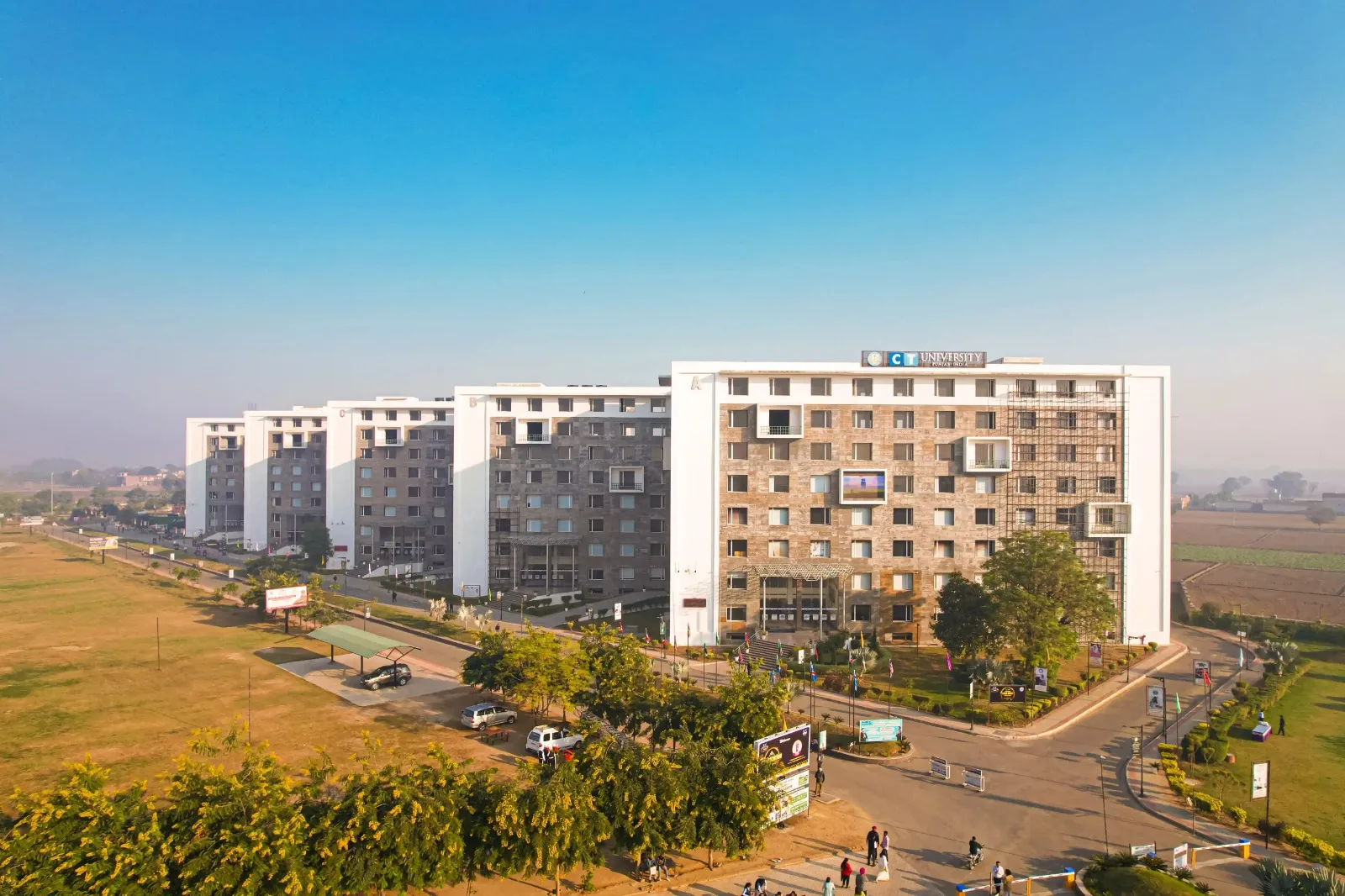
CT University Campus

At CT University, we combine industry-integrated learning and global academic partnerships, backed by the CT Group's 30+ year legacy, to prepare students for careers that actually last.

Industry-oriented
learning

Modern campus
facilities

Academic excellence &
mentorship

Global opportunities &
placements

Fee Structure & Scholarships

Program Fee Details

Fee Type Amount
Programme Fees (per Semester) ₹65000
Examination Fees ₹3000

Merit Based Scholarship Scheme

Unlock up to 90% Scholarship through CTSET, with scholarships worth Rs 40 Crore! Get access to top-quality education at CT University, Ludhiana — without the financial burden.

Slab >=60% - 74.99% >=75% - 89.99% >=90% & Above
Fee ₹60000 ₹55000 ₹50000

Students can avail these slots depending on the marks they have scored. Each slot reflects a different academic range, helping students understand where they stand and what benefits they qualify for.

Course Curriculum

3RD SEMESTER SUBJECTS

Introduces the diverse culinary traditions, ingredients, cooking methods and food cultures of major regions of India.
Course Outcome:
CO1: Understand the cultural significance and diversity of regional Indian cuisines.
CO2: Prepare key dishes from Kashmiri, Punjabi and Awadhi cuisines using authentic methods.
CO3: Demonstrate skills in cooking traditional Rajasthani and Gujarati specialties with regional authenticity.
CO4: Execute Maharashtrian and Bengali recipes, applying local spices and traditional techniques.
CO5: Master Hyderabadi and South Indian dishes, emphasizing complex flavor layering and regional styles.
CO6: Explore Goan cuisine and tandoori techniques, incorporating fusion elements and bread-making skills.

Provides hands-on training in the preparation, presentation and service of traditional dishes from different regions of India.
Course Outcome:
CO1: Prepare foundational Indian mother gravies with consistency and accuracy.
CO2: Cook traditional Awadhi and Rajasthani dishes using authentic methods.
CO3: Execute popular Punjabi and Bengali recipes with regional flavor balance.
CO4: Create Kashmiri and South Indian dishes applying traditional techniques.
CO5: Reproduce Indian breakfast and street food items reflecting local tastes.
CO6: Apply diverse regional cooking techniques to maintain dish authenticity

Develops comprehensive knowledge of food and beverage service operations, including restaurant organization, menu planning, service procedures, cost control and guest relations.
Course Outcome:
CO1: Apply cost control techniques to manage budgets, inventory and operational efficiency in food and beverage operations.
CO2: Plan and execute catering events with vendor coordination, safety compliance and appropriate menu design.
CO3: Demonstrate specialty service skills, including butler and gueridon service, with cultural and formal dining practices.
CO4: Analyze and apply beverage knowledge for effective pairing and menu planning.
CO5: Employ CRM strategies to enhance guest satisfaction, personalize service and resolve service issues
CO6: Use menu engineering tools to design menus aligned with profitability, nutrition and market trends.

Provides practical training in professional food and beverage service operations through simulated and real-service activities.
Course Outcome:
CO1: Manage advanced F&B operations including cost control, inventory, catering and safety compliance.
CO2: Execute specialty service styles with refined table setting and innovative presentation techniques.
CO3: Demonstrate expertise in alcoholic beverages, pairing, serving and beverage menu planning.
CO4: Apply advanced communication and CRM skills to enhance guest satisfaction and loyalty.
CO5: Design and engineer menus aligned with food trends, dietary needs and profitability.
CO6: Integrate theory with practical skills across F&B operations, service, beverage and CRM domain

Introduces the integrated operations of front office and housekeeping departments and their role in effective hotel management.
Course Outcome:
CO1: Apply proper registration and check-in/check-out procedures.
CO2: Handle guest billing, voucher processing and account settlement efficiently.
CO3: Calculate room tariff and use effective room selling techniques.
CO4: Identify and implement safety, security and emergency procedures.
CO5: Maintain cleanliness and hygiene in all public areas of the hotel.
CO6: Manage linen inventory, uniform distribution and sewing room activities.

Provides practical exposure to front office and housekeeping procedures through demonstrations, simulations and operational exercises.
Course Outcome:
CO1: Maintain impeccable cleanliness in all hotel areas.
CO2: Ensure seamless guest experiences at the front desk.
CO3: Respond swiftly and effectively to any hotel emergencies.
CO4: Optimize hotel revenue through strategic pricing and promotions.
CO5: Ensure optimal inventory and presentation of linens and uniforms.

Introduces the principles and procedures of first aid for managing common injuries, accidents and medical emergencies.
Course Outcome:
CO1: Will emphasize the students to learn about first aid techniques.
CO2: Students will learn about the basic first aid techniques.
CO3: They will understand the basics of bone fractures and dislocation of bones.
CO4: They will learn the managing ways of electric shock condition.
CO5: Students will learn about the mechanism of drug toxicity.

Introduces basic French language skills and hospitality-specific vocabulary for professional communication.
Course Outcome:
CO1: Master French LSRW skills
CO2: Build vocabulary for daily life and common phrases in hospitality
CO3: Understand and use basic grammar effectively
CO4: Construct basic sentence structures
CO5: Introduce oneself, express preferences, describe people, places and things and write professional emails and letters
CO6: Handle phone calls, bookings, customer requests, give directions and order food, demonstrating fluency and politeness

Develops advanced entrepreneurial competencies through business ideation, opportunity evaluation, business planning, innovation and venture development. Delivered through blended and self-paced learning approaches, supported by experiential learning, mentoring, startup-oriented activities and innovation practices.

Provides opportunities for students to pursue online courses and certifications in specialized or emerging areas of hospitality, tourism and related disciplines. MOOCs courses from recognized platforms such as NPTEL/SWAYAM may be mapped or included after registration opens.

Introduces students to an additional Indian or foreign language to enhance their linguistic and intercultural communication abilities. Learn One More Bharatiya Bhasha / Foreign Languages courses are optional. Options include: Basic French (Modern Indian Languages), Basic Korean, Basic Spanish, Basic Hindi (Learn-One-More-Bharatiya-Bhasha), Basic Punjabi and Basic Urdu.

4TH SEMESTER SUBJECTS

Provides students with hands-on industry experience by exposing them to real-world operations in hotels, restaurants, resorts, airlines and tourism organizations.

5TH SEMESTER SUBJECTS

Introduces the legal principles, regulations and statutory requirements governing the hospitality industry.
Course Outcome:
CO1: Explain the fundamentals of Indian hospitality law, hotel operations and business formation in the hospitality industry.
CO2: Interpret the provisions of the Indian Contract Act, 1872 and analyze various types of business contracts and their legal implications.
CO3: Identify the licenses, insurance requirements, intellectual property rights, franchising practices and regulatory compliances necessary for hotel operations.
CO4: Examine the legal responsibilities of hospitality establishments towards employees and guests, including rights, duties and liabilities.
CO5: Discuss public health, environmental protection and waste management laws relevant to hospitality operations.
CO6: Apply food legislation, food safety standards, adulteration prevention measures and liquor licensing regulations in food and beverage service establishments.

Develops specialized knowledge and skills through an elective course selected from the departmental basket.

Option 1: International Cuisines (F&B Production)
This course develops knowledge and practical skills in the preparation, presentation and service of major international cuisines.
Course Outcome:
CO1: Explain the organization, layout, equipment, menus and operational functions of a bar.
CO2: Demonstrate knowledge of bar ingredients, service accessories, opening and closing procedures and professional selling techniques.
CO3: Identify the production processes, classifications, brands and service methods of beers and other fermented beverages.
CO4: Describe the types, production methods, brands and service standards of spirits, liqueurs and tobacco products.
CO5: Differentiate between various aperitifs, vermouths and bitters based on their characteristics, types and brands.
CO6: Analyze the production, categories, flavors and country of origin of popular liqueurs used in beverage operations.

Option 2: Art of Baking (F&B Production)
This course introduces students to the principles, techniques, ingredients, equipment and processes involved in baking and confectionery.
Course Outcome:
CO1: Explain the scope of bakery and confectionery, bakery organization, hygiene practices and the use of bakery equipment and tools.
CO2: Identify bread-making ingredients, methods, production steps, baking temperatures and varieties of breads from around the world.
CO3: Demonstrate knowledge of sponge and cake-making ingredients, methods and equipment used in bakery production.
CO4: Describe the preparation, handling, storage and equipment used for cold and frozen desserts such as sorbets and ice creams.
CO5: Apply various cake-making methods including sugar-butter, flour-butter, Genoese, blending and rubbing techniques.
CO6: Analyze the functions of bakery commodities, icing types, moistening agents, fats, oils and factors affecting the quality of biscuits and cookies.

Option 1: International Cuisines Lab (F&B Production)
This practical course provides hands-on training in the preparation and presentation of selected international cuisines.
Course Outcome:
CO1: Prepare authentic Chinese and German dishes using appropriate ingredients, cooking methods and presentation techniques.
CO2: Demonstrate practical skills in the preparation of Chinese, Italian and French cuisine while adhering to standard recipes and kitchen procedures.
CO3: Execute traditional Chinese and British dishes, applying suitable cooking techniques and maintaining product quality.
CO4: Produce a variety of Chinese and Italian regional specialties with emphasis on flavor, texture and presentation.
CO5: Prepare and present Spanish and Mexican dishes, demonstrating knowledge of their culinary traditions and characteristic ingredients.
CO6: Integrate international culinary skills to plan, prepare and present complete multi-cuisine menus following professional food production standards.

Option 2: Art of Baking Lab (F&B Production)
This practical course provides hands-on experience in baking and confectionery operations. Students practice the preparation of breads, cakes, pastries, cookies, desserts and related products using appropriate ingredients, equipment and techniques.
Course Outcome:
CO1: Explain the scope of bakery and confectionery, bakery organization, hygiene practices and the use of bakery equipment and tools.
CO2: Identify bread-making ingredients, methods, production steps, baking temperatures and varieties of breads from around the world.
CO3: Demonstrate knowledge of sponge and cake-making ingredients, methods and equipment used in bakery production.
CO4: Describe the preparation, handling, storage and equipment used for cold and frozen desserts such as sorbets and ice creams.
CO5: Apply various cake-making methods including sugar-butter, flour-butter, Genoese, blending and rubbing techniques.
CO6: Analyze the functions of bakery commodities, icing types, moistening agents, fats, oils and factors affecting the quality of biscuits and cookies.

Option 1: Food & Beverage Management (F&B Service)
This course develops managerial knowledge and skills required for effective food and beverage operations.
Course Outcome:
CO1: Apply menu engineering and menu analysis techniques to evaluate menu performance and enhance profitability.
CO2: Analyze revenue and labor control measures, including costing, staffing guidelines and profit and loss statements for effective operational management.
CO3: Implement food and beverage control procedures related to purchasing, receiving, storing, issuing, production and beverage management.
CO4: Evaluate sales, revenue, cash handling, forecasting and budgetary control systems used in hospitality operations.
CO5: Plan and organize events by applying concepts of MICE, theme development, budgeting, venue selection, supplier management and event marketing.
CO6: Calculate and interpret break-even analysis, contribution, PV ratio, marginal cost and related financial indicators for business decision-making.

Option 2: Bar Management (F&B Service)
This course introduces the principles and practices of managing bar operations in hospitality establishments.
Course Outcome:
CO1: Explain the organization, layout, equipment, menus and operational functions of a bar.
CO2: Demonstrate knowledge of bar ingredients, service accessories, opening and closing procedures and professional selling techniques.
CO3: Identify the production processes, classifications, brands and service methods of beers and other fermented beverages.
CO4: Describe the types, production methods, brands and service standards of spirits, liqueurs and tobacco products.
CO5: Differentiate between various aperitifs, vermouths and bitters based on their characteristics, types and brands.
CO6: Analyze the production, categories, flavors and country of origin of popular liqueurs used in beverage operations.

Option 1: Food & Beverage Management Lab (F&B Service)
This practical course provides hands-on training in managing food and beverage operations.
Course Outcome:
CO1: Prepare a comprehensive restaurant business plan incorporating feasibility studies, menu design, pricing, licensing and marketing strategies.

CO2: Design and manage banquet functions, staffing plans, job descriptions and service operations for hospitality events.
CO3: Develop event management business models through market research, budgeting, vendor networking, branding and technology integration.
CO4: Create customer loyalty programs using digital tools, reward systems, personalized engagement and omnichannel service strategies.

CO5: Plan and organize hospitality events by preparing event dossiers, coordinating vendors, managing resources and executing vertical and horizontal events.
CO6: Demonstrate professional food and beverage service skills through gueridon service, buffet arrangement, high-tea planning and small event catering operations.

Option 2: Bar Management Lab (F&B Service)
This practical course develops operational and managerial skills through hands-on bar activities.
Course Outcome:
CO1: Identify bar equipment, ingredients, supplies and demonstrate the service of liqueurs using appropriate service styles.
CO2: Organize dispense bar mise-en-place, prepare bar garnishes and mixes and perform professional wine service procedures.
CO3: Prepare and serve classical cocktails and demonstrate the service of aperitifs following standard beverage service practices.
CO4: Demonstrate the correct service of spirits and apply professional procedures for the service of cigars and cigarettes.
CO5: Prepare a variety of mocktails and execute formal banquet toast ceremonies and beverage service etiquette.
CO6: Apply beverage service principles to menu planning, wine pairing and efficient bar operations in hospitality establishments.

Option 1: Hotel Engineering & Maintenance (Hospitality)
This course provides an understanding of engineering systems, utilities, equipment and maintenance practices essential for hotel operations.
Course Outcome:
CO1: Explain the role of hotel engineering and maintenance in ensuring efficient and safe hotel operations.
CO2: Identify the major engineering systems and utilities used in hotels, including electrical, water supply, HVAC and fire safety systems.
CO3: Describe the working principles and applications of hotel equipment such as lifts, escalators, kitchen equipment and laundry machinery.
CO4: Apply preventive and corrective maintenance practices to maintain hotel facilities and equipment effectively.
CO5: Analyze common engineering and maintenance issues in hotel operations and suggest appropriate solutions.
CO6: Evaluate maintenance strategies and safety practices to improve operational efficiency, sustainability and guest satisfaction in hotels.

Option 2: Principles of Hospitality Management (Hospitality)
This course introduces the fundamental principles and practices of hospitality management. management, guest service, communication, leadership, quality management and emerging trends.
Course Outcome:
CO1: Comprehensive understanding of the fundamentals management concepts.
CO2: learn the meaning and process of planning.
CO3: Enhance Organizational Understanding.
CO4: Explore the nature and scope of staffing.
CO5: Improve Directing Capabilities.
CO6: Understand Managerial Control.

Explores the relationship between Indian festivals, traditional food, cultural heritage and tourism experiences.

Introduces concepts and techniques for managing stress, developing emotional resilience and maintaining personal well-being.

Develops advanced entrepreneurial skills related to venture planning, business development, innovation, financial awareness and strategic decision-making. Delivered through blended and self-paced learning approaches, supported by experiential learning, mentoring, startup-oriented activities and innovation practices.

Provides opportunities for students to pursue online courses and certifications in specialized or emerging areas of hospitality, tourism and related disciplines. MOOCs courses from recognized platforms such as NPTEL/SWAYAM may be mapped or included after registration opens.

Introduces the principles of disaster preparedness, risk assessment, mitigation, response and recovery. Develops students' ability to manage emergencies and ensure safety, continuity and resilience in hospitality and tourism operations.

6TH SEMESTER SUBJECTS

This course provides an understanding of human resource management practices in the hospitality industry. It covers human resource planning, recruitment, selection, training and development, performance appraisal, compensation, employee relations, motivation and retention.
Course Outcome:
CO1: Understand the role and scope of human resource development in hospitality and tourism organizations.
CO2: Identify and analyze key HRD functions such as training, employee orientation and career planning in service-based enterprises.
CO3: Evaluate employee performance and understand the role of appraisals and feedback mechanisms in staff development.
CO4: Apply motivational theories and employee engagement strategies to enhance workforce productivity in hospitality and tourism.
CO5: Understand workforce diversity and develop skills to manage multicultural teams in global tourism and hospitality environments.
CO6: Demonstrate the ability to design and implement HRD strategies that align with organizational goals and service excellence standards.

This course introduces the fundamental concepts and processes of research in hospitality and tourism.
Course Outcome:
CO1: Understand the concept of Research Methodology.
CO2: Develop clear and relevant research questions or hypotheses.
CO3: Choose suitable sampling method for collecting data.
CO4: Combine multiple data sources to enhance the validity of research findings.
CO5: Process and analyse the data through graphical presentation.
CO6: Draft detailed research proposals outlining objectives, methods and expected outcome

This course develops advanced culinary knowledge and skills required for professional food production operations.
Course Outcome:
CO1: Develop an understanding of the larder kitchen
CO2: Demonstrate the ability to accurately produce plane and kitchen design.
CO3: Familiarize with the usage of herbs, spices and wine and cooking to able to work in various kitchen.
CO4: Acquire knowledge about Charcuterie Section
CO5: Familiarize with the different types of edible and non-edible garnishes
CO6: Acquire knowledge about different types of salads and their components

This practical course provides hands-on training in advanced food production techniques and professional kitchen operations.
Course Outcome:
CO1: Identify the ingredients, herbs, spices, equipment and kitchen tools required for the preparation of major international cuisines.
CO2: Explain the history, evolution and cultural influences of Chinese, French, Italian and other international cuisines.
CO3: Demonstrate proficiency in preparing authentic Chinese regional dishes using standard recipes and cooking techniques.
CO4: Prepare classical and regional French and Italian dishes by applying authentic culinary methods and presentation standards.
CO5: Produce a variety of breads by following standard bakery principles, fermentation techniques and baking procedures.
CO6: Select and operate different types of bakery ovens and kitchen equipment while adhering to food safety, hygiene and professional kitchen practices.

This elective provides students with an opportunity to develop specialized knowledge and skills in an area of hospitality relevant to their academic interests and career aspirations.

Option 1: Banquet and Restaurant Operations Management (Food Division)
This course develops advanced knowledge and managerial skills required for effective banquet and restaurant operations.
Course Outcome:
CO1: Understand the principles of planning and operating Food & Beverage outlets, including layout design, menu planning, staffing and equipment selection.
CO2: Develop the knowledge and skills required to organize and manage banquet operations, function catering and banquet protocols.
CO3: Plan and execute various banquet functions, buffet services, outdoor catering and special events effectively.
CO4: Apply event management principles to plan, coordinate and evaluate cultural, social, business and corporate events.
CO5: Understand the concepts, components and significance of MICE and conference management in the hospitality and tourism industry.
CO6: Demonstrate effective kitchen stewarding practices, including sanitation, inventory management and maintenance of cleaning equipment.

Option 2: Room Division Operations Management (Room Division)
This course focuses on the management of room division operations, particularly front office and housekeeping functions.
Course Outcome:
CO1: Understand the scope, structure and functions of Room Division Management and its role in enhancing guest satisfaction.
CO2: Apply contemporary trends, sustainability practices and digital technologies to improve room division operations and guest services.
CO3: Analyze and implement revenue management principles, pricing strategies and demand forecasting techniques to maximize hotel profitability.
CO4: Evaluate hotel operational and financial performance using key industry performance indicators and productivity metrics.
CO5: Demonstrate effective guest relationship management through service excellence, personalization, complaint handling and loyalty program management.
CO6: Utilize digital marketing, CRM systems, business intelligence tools and emerging technologies to improve operational efficiency and guest experience.

Option 1: Banquet and Restaurant Operations Management Lab (Food Division)
This practical course provides hands-on experience in managing banquet and restaurant operations.
Course Outcome:
CO1: Demonstrate an understanding of the planning, layout and operational requirements of restaurant and banquet facilities.
CO2: Apply restaurant and banquet planning principles to design layouts and perform banquet booking and event coordination procedures.
CO3: Select appropriate equipment, resources and décor for restaurant and banquet operations while ensuring cost-effectiveness and operational efficiency.
CO4: Plan menus and perform banquet and buffet service operations in accordance with standard hospitality service procedures.
CO5: Organize and execute banquet functions and hospitality events by applying event planning, coordination and guest service skills.
CO6: Manage inventory, stock records, operational checklists and resource documentation for efficient banquet and restaurant operations.

Option 2: Room Division Operations Management Lab (Room Division)
This practical course provides hands-on training in room division operations.
Course Outcome:
CO1: Explain the organizational structure, functions and interrelationship of departments within the room division
CO2: Apply guest service and customer relationship management principles by developing loyalty programs and enhancing guest satisfaction initiatives.
CO3: Evaluate sustainable practices and emerging technologies to improve efficiency and service quality in room division operations.
CO4: Develop operational checklists, guest service packages and performance evaluation tools to ensure effective room division management.
CO5: Design strategies for guest feedback management, environmental sustainability and continuous service improvement in hospitality operations.
CO6: Apply revenue management and pricing strategies to optimize room occupancy, profitability and overall operational performance.

Option 1: CRM in Hospitality (Hospitality)
This course develops an understanding of Customer Relationship Management (CRM) practices in the hospitality industry.
Course Outcome:
CO1: Explain the concepts, types and significance of events in the hospitality and tourism industry.
CO2: Apply the principles of event planning, budgeting and scheduling for hospitality events.
CO3: Apply the principles of event planning, budgeting and scheduling for hospitality events.
CO4: Demonstrate the execution of hospitality events by coordinating operations, guest services and team responsibilities.
CO5: Analyze potential risks and challenges associated with event management and propose appropriate contingency measures.
CO6: Evaluate the success of hospitality events using feedback, performance indicators and post-event reporting to recommend improvements.

Option 2: Event Management (Hospitality)
This course introduces the principles and practices of planning, organizing, executing and evaluating events in the hospitality and tourism industry.
Course Outcome:
CO1: Understand the basics, scope, types and roles in event management.
CO2: Apply planning, budgeting and scheduling techniques for event preparation.
CO3: Analyze event marketing, branding and promotional strategies.
CO4: Manage logistics, venue layout and technical arrangements for events.
CO5: Coordinate live event execution with teams, vendors and stakeholders.
CO6: Evaluate event outcomes and explore careers in event management.

This course develops an entrepreneurial mindset by encouraging creativity, innovation, opportunity identification, problem-solving and business-oriented thinking. Delivered through blended and self-paced learning approaches, supported by experiential learning, mentoring, startup-oriented activities and innovation practices.

Provides opportunities for students to pursue online courses and certifications in specialized or emerging areas of hospitality, tourism and related disciplines. MOOCs courses from recognized platforms such as NPTEL/SWAYAM may be mapped or included after registration opens.

This course focuses on developing professional competencies required for successful transition into the workplace. Evaluation shall be on a Satisfactory/Unsatisfactory basis.

7TH SEMESTER SUBJECTS

This course develops knowledge and skills in planning, designing, analyzing and evaluating menus for hospitality operations.
Course Outcome:
CO1: Understand the fundamentals of menu planning and its importance in food service.
CO2: Identify different types of menus and principles of menu design.
CO3: Develop balanced menus based on nutritional and customer requirements.
CO4: Apply menu engineering techniques to improve menu performance.
CO5: Calculate menu cost, food cost percentage and selling price.
CO6: Explain contemporary trends in menu planning and menu engineering.

This course provides an understanding of the planning and management of outdoor catering operations.
Course Outcome:
CO1: Explain the fundamentals and operational structure of outdoor catering.
CO2: Apply menu planning and production management principles for catering events.
CO3: Manage logistics, resources and operational requirements of outdoor catering.
CO4: Organize and supervise event service operations effectively.
CO5: Implement food safety, hygiene and quality assurance measures.
CO6: Analyze financial and marketing strategies for catering businesses.

This practical course provides hands-on experience in planning and executing outdoor catering events.
Course Outcome:
CO1: Students will be able to recognize and explain the organizational structure and operational requirements of outdoor catering.
CO2: Students will be able to plan menus and manage quantity food production for different catering events.
CO3: Students will be able to coordinate logistics, equipment, inventory and manpower for outdoor catering operations.
CO4: Students will be able to organize and supervise event service operations while ensuring customer satisfaction.
CO5: Students will be able to implement food safety, hygiene and quality assurance practices in catering operations.
CO6: Students will be able to prepare budgets, analyze costs and develop marketing strategies for catering businesses.

This course introduces the principles and practices of marketing in the hospitality industry.
Course Outcome:
CO1: Identify unique marketing challenges due to the nature of the tourism and hospitality industry structure and its diverse products
CO2: Develop strategies and tactics that may be used to avoid challenges and turn them into opportunities
CO3: Analyze behavior in tourism consumption for segmentation and target marketing
CO4: Develop and manage tourism and hospitality products for diverse consumers
CO5: Acquire knowledge about 7 Ps of marketing and its important
CO6: Develop the different types of selling techniques in market

This elective provides students with an opportunity to develop specialized knowledge and skills in a selected area of hospitality according to their academic interests and career aspirations.

Option 1: Lodging Management (Room Division)
Develops advanced knowledge of lodging operations, accommodation management, revenue optimization, guest services and quality management in contemporary hospitality establishments.
Course Outcome:
CO1: Explain the planning and organization of housekeeping department operations for efficient hotel management.
CO2: Analyze staffing requirements and workforce planning needs for housekeeping operations.
CO3: Prepare renovation plans, snag lists and renovation sheets for maintenance and refurbishment projects.
CO4: Differentiate between capital budgets and operating budgets used in hospitality organizations.
CO5: Recognize the importance of environmental concerns and sustainable practices in housekeeping operations.
CO6: Analyze crisis situations and respond appropriately by following established protocols and safety procedures.

Option 2: Front office Management (Room Division)
Develops advanced competencies in front office management, guest cycle operations, reservations, revenue management, customer relations and technology-driven hotel services.
Course Outcome:
CO1: Explain the functions, organizational structure and interdepartmental coordination of the front office department.
CO2: Manage guest services efficiently from reservation to checkout using standard operating procedures and modern practices.
CO3: Perform front office accounting activities, including guest folio management, billing and night auditing procedures.
CO4: Apply revenue and yield management techniques to optimize room sales and improve profitability.
CO5: Evaluate staffing requirements, training needs, emergency situations and guest safety measures in front office operations.
CO6: Utilize hotel technologies, property management systems and mobile applications to enhance guest experience and operational efficiency.

Option 1: Lodging Management Lab (Room Division)
Provides practical training in lodging operations, room management, guest services, quality control and operational procedures through simulated and industry-oriented activities.
Course Outcome:
CO1: Demonstrate supervisory skills through effective briefing, debriefing and monitoring of Food & Beverage service operations.
CO2: Develop Standard Operating Procedures (SOPs), organizational structures and manpower plans for various Food & Beverage establishments.
CO3: Prepare duty rosters, job descriptions and job specifications for efficient workforce planning and management.
CO4: Perform specialized Food & Beverage service techniques, including Gueridon service, flambé preparations and table-side cooking.
CO5: Design, evaluate and present Food & Beverage business models and operational strategies for different hospitality and catering operations.

Option 2: Front office Management Lab (Room Division)
Provides hands-on training in advanced front office procedures, reservations, check-in and check-out, guest relations, billing and hotel management systems.
Course Outcome:
CO1: Students will be able to recognize and explain the management functions and operational structure of the front office department.
CO2: Students will be able to handle guest services, documentation and financial control procedures in front office operations.
CO3: Students will be able to audit and analyze front office financial transactions using guest folios, vouchers and night audit procedures.
CO4: Students will be able to analyze customer behavior and respond effectively to guest needs, complaints and emergency situations.
CO5: Students will be able to apply forecasting, revenue management and yield management techniques to enhance hotel revenue performance.

Option 1: Advanced Culinary Management (Food Division)
Develops advanced skills in culinary operations, menu planning, kitchen management, food cost control, production planning and leadership in professional kitchens.
Course Outcome:
CO1: Evaluate contemporary culinary trends and their application in hospitality operations.
CO2: Analyse and reinterpret regional Indian cuisines using modern culinary approaches.
CO3: Apply advanced cooking techniques and modern kitchen technologies to enhance food quality and efficiency.
CO4: Design specialized menus catering to diverse nutritional and dietary requirements.
CO5: Implement sustainable and digitally managed culinary practices for operational excellence.
CO6: Develop profitable menus using advanced costing, procurement and menu engineering pri

Option 2: Advanced Bakery & Patisserie Management (Food Division)
Develops advanced knowledge and skills in bakery and patisserie production, product development, costing, presentation, quality control and professional bakery management.
Course Outcome:
CO1: Create artistic sugar craft and decorative confectionery elements for professional bakery presentations.
CO2: Develop gluten-free and allergen-conscious bakery products using alternative ingredients and modern formulation techniques.
CO3: Apply plant-based baking principles to produce high-quality vegan bakery products.
CO4: Design innovative functional bakery products that meet contemporary health and wellness requirements.
CO5: Construct gourmet plated desserts utilizing advanced presentation and sensory evaluation techniques.
CO6: Formulate sustainable bakery business concepts incorporating operational, financial and marketing considerations.

Option 1: Advanced Culinary Management Lab (Food Division)
Provides practical experience in advanced culinary production, menu execution, kitchen supervision, food costing, presentation and professional culinary management practices.
Course Outcome:
CO1: Students will be able to identify bakery ingredients and demonstrate bread-making processes using professional standards.
CO2: Students will be able to analyze and rectify common faults in breads, cakes and pastry products.
CO3: Students will be able to demonstrate advanced pastry and laminated dough production techniques.
CO4: Students will be able to create and decorate cakes using contemporary icing and finishing methods.
CO5: Students will be able to prepare and present professional bakery and dessert products with aesthetic appeal and quality standards.

Option 2: Advanced Bakery & Patisserie Management Lab (Food Division)
Provides hands-on training in advanced baking and patisserie techniques, product development, decoration, presentation, costing and quality management.
Course Outcome:
CO1: Students will be able to identify bakery ingredients and demonstrate bread-making processes using professional standards.
CO2: Students will be able to analyze and rectify common faults in breads, cakes and pastry products.
CO3: Students will be able to demonstrate advanced pastry and laminated dough production techniques.
CO4: Students will be able to create and decorate cakes using contemporary icing and finishing methods.
CO5: Students will be able to prepare and present professional bakery and dessert products with aesthetic appeal and quality standards.

This course focuses on advanced professional and employability skills required for career development in the hospitality industry. Evaluation shall be on a Satisfactory/Unsatisfactory basis.

8TH SEMESTER SUBJECTS

Provides supervised industry exposure in hospitality operations, enabling students to apply academic knowledge while developing professional, operational, communication and workplace competencies.

Enables students to document, analyze and present their industrial training experience through a structured report demonstrating practical learning and professional competencies.

Program Outcomes & Features

Program Outcomes

  1. Exhibit in depth industry integrated operational & technical knowledge of all the core departments of the Hotel.
  2. Interpret practical, theoretical and personal skills required for entry level management. positions within a variety of international hospitality industry.
  3. Contextualize advance and integrated knowledge of recent developments in hospitality and tourism industry
  4. Communicate effectively in a multicultural environment of hospitality & tourism industry.
  5. Perform work activities effectively and efficiently to the expected standards of hospitality industry
  6. Develop superior knowledge and implement ethical standards and professionalism.
  7. Function effectively as an individual and as a member or leader in diverse teams and in multidisciplinary settings.
  8. Creatively solve daily challenges in the workplace with professional competence.
  9. Understand the impact of the hotel, hospitality and tourism in societal and environmental. contexts and demonstrate the knowledge of the need for sustainable development.
     

Program Specific Outcomes

  1. Comprehend and express the core technical, analytical and conceptual skills appropriate for hospitality industry.
  2. Develop the concepts and application of managerial, financial, computer and technical. skills that are needed to be successful within the hospitality industry.
  3. Demonstrate ability to apply strategies for managing diverse, multicultural hospitality.
  4. Apply the knowledge gained to manage and evaluate functional systems in hospitality and lodging operations.
  5. Comprehend and articulate written and oral communication as appropriate for hospitality. Environments.
     

Labs and Facilities

Advanced Training Restaurant

Advanced Training Restaurant

Explore More
01
Airlines Lab

Airlines Lab

Explore More
02
Basic Training Restaurant

Basic Training Restaurant

Explore More
03
Front Office Lab

Front Office Lab

Explore More
04
Housekeeping Lab

Housekeeping Lab

Explore More
05
Model Guest Room

Model Guest Room

Explore More
06
Quantity Kitchen

Quantity Kitchen

Explore More
07

Backed by the Legacy of CT Group, Driven by Proven Success

30000+

Placements

800+

Collaborations

1.2Cr

Highest Placement

1800+

Recruiters

1 Lac+

Alumni

40Cr

WORTH SCHOLARSHIP

Hear From Our Students

"

Studying B.com in the School of Management Studies at CTU has been a delightful journey. The knowledgeable faculty and engaging coursework have not only deepened my understanding of commerce but also sparked a passion for it. With a perfect blend of academics and extracurricular activities, CTU has been the perfect launchpad for my future endeavors after gaining quality education and great leadership skills and exposure from industrial visits.

"

"CT University stands out for its student-centric approach. The B.Sc. Radiology program is designed to meet industry standards, and the professors are always approachable and ready to assist. The emphasis on practical learning and internships has given me confidence and clarity in my chosen field. I highly recommend this course to anyone interested in a career in radiology."

"

Studying at CT University was an enriching experience, thanks to access to advanced technology and learning resources. The state-of-the-art operation theatre labs, anesthesia workstations, and simulation-based training ensured we were always prepared for both theoretical and practical aspects of our studies.