Diploma in Civil Engineering
The School of Engineering and Technology, CT University offers a 3-year Diploma in Civil Engineering.
The course objective of the Diploma in Civil Engineering is to provide students with a strong foundation in the principles and practices of civil engineering. The program aims to equip students with the necessary technical knowledge, analytical skills, and practical experience required to design, plan, and manage infrastructure projects effectively. The curriculum emphasizes the fundamentals of structural, environmental, transportation,
geotechnical, and construction engineering. It combines theoretical concepts with extensive hands-on training, laboratory work, and field exposure, enabling students to become industry-ready professionals. Graduates of this program are prepared to pursue rewarding careers in construction companies, government departments, infrastructure development agencies, and consultancy firms, or to further their studies in civil engineering and related fields. The program also includes professional training and certification in collaboration with leading industries and organizations, ensuring that students gain up-to-date knowledge of modern construction technologies, design software, and sustainable engineering practices.
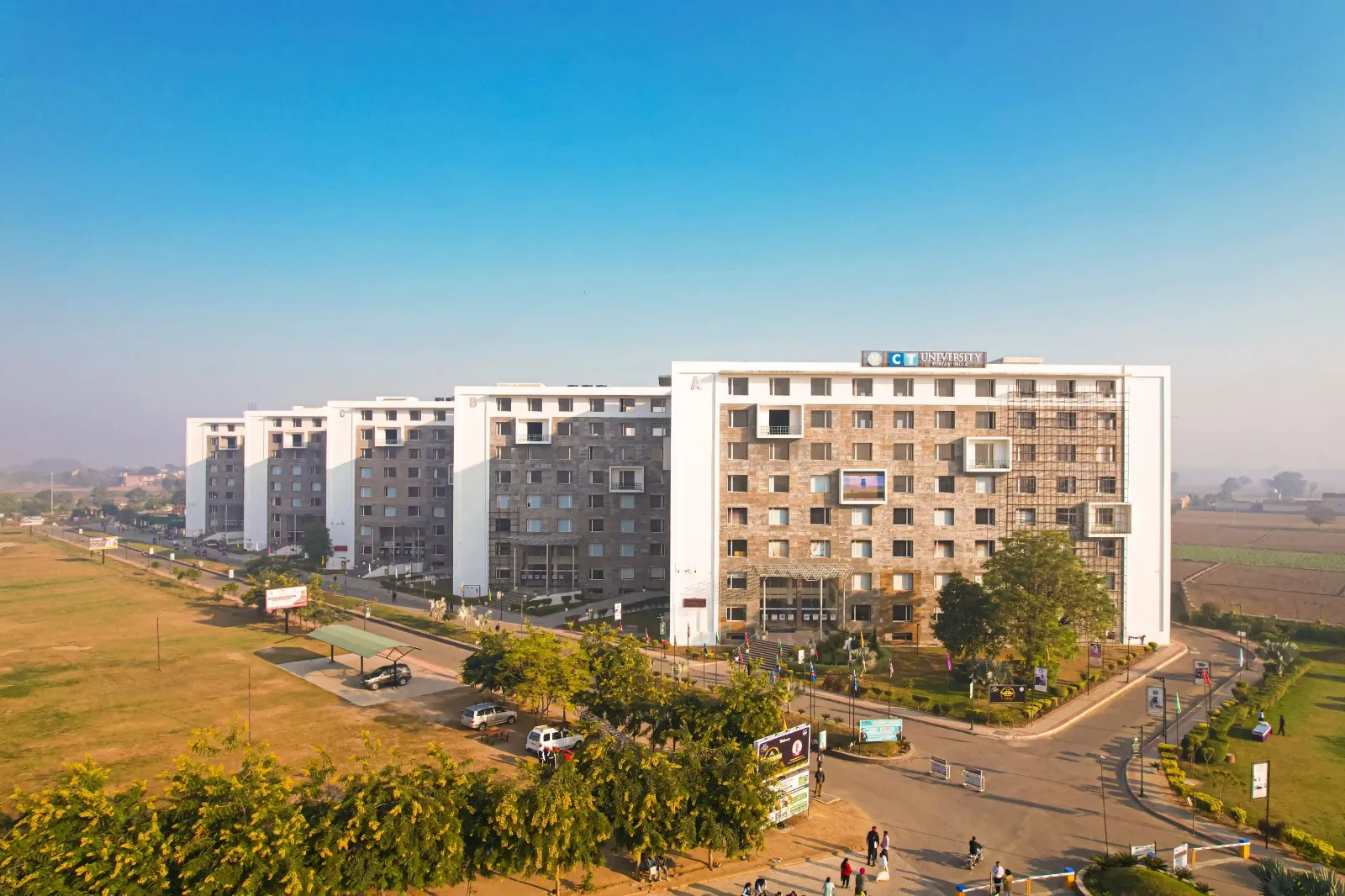
The Industry Immersion component of the Diploma in Civil Engineering at School of Engineering and Technology, CT University is designed to bridge the gap between academic learning and real-world engineering practices. It provides students with the opportunity to gain hands-on experience in the civil engineering industry through internships, industrial training, and site visits.
During the program, students engage with leading construction companies, infrastructure firms, and government organizations to understand practical aspects of design, surveying, materials testing, project management, and sustainable construction. This real-time exposure enhances their technical competence, problem-solving abilities, and understanding of professional work environments.
Through this industry immersion, students learn to apply theoretical knowledge to practical situations, develop teamwork and leadership qualities, and become industry-ready professionals capable of addressing modern engineering challenges.
Graduates of the program will demonstrate excellence in professionalism, moral and ethical practices, social and environmental awareness, and strong interpersonal skills. They will exhibit adaptable communication abilities and a global outlook, enabling them to appreciate diversity in the professional world and academic pursuits.
Pass with 50% aggregate marks in 10th (with Mathematics, Science and English) or equivalent.
Merit in CT-SET, subject to fulfilling eligibility criteria.
3 Years
|
Details |
Amount |
|---|---|
|
Programme Fees (per Semester) |
₹40000 |
|
Examination Fees |
₹3000 |
|
International Programme Fees (per Year) |
Not Applicable |
Apply Engineering Fundamentals: Apply knowledge of mathematics, science, and core civil engineering principles to analyse and solve real-world engineering problems.
Design Civil Structures: Design, plan, and develop civil engineering projects such as buildings, roads, bridges, and water systems with an emphasis on safety, functionality, and sustainability.
Use Modern Engineering Tools: Utilize modern tools, software, and equipment such as AutoCAD, STAAD Pro, and surveying instruments for effective civil engineering practices.

Conduct Experiments and Analyse Data: Perform laboratory and field experiments to test materials, assess performance, and interpret data for engineering applications.
Demonstrate Professional Ethics and Teamwork: Exhibit professional behavior, ethical responsibility, effective communication, and the ability to work collaboratively in multidisciplinary teams.
Promote Sustainable and Lifelong Learning: Recognize the importance of environmental sustainability and engage in lifelong learning to keep pace with technological and industrial advancements.
Comprehensive Curriculum: Well-structured curriculum covering core areas such as Structural Engineering, Surveying, Transportation, Geotechnical, Environmental, and Construction Management.
Practical Learning Approach: Emphasis on hands-on training through laboratories, fieldwork, site visits, and real-time construction project exposure.
Industry-Oriented Training: Collaboration with leading construction companies and organizations for internships, workshops, and industry certifications.
Modern Infrastructure: Equipped with advanced laboratories, surveying instruments and design software like AutoCAD, STAAD Pro, and GIS tools.
Skill and Personality Development: Focus on communication skills, teamwork, leadership and ethical values to prepare students for professional success.
Career and Higher Education Opportunities: Opens pathways for employment in government departments, private construction firms, consultancy services, and higher studies in civil engineering and related fields.