Apply Now Programmes Virtual Tour CT-SET 2026 Ph.D
Admissions
Open 2026-27
Apply now
Apply Now
Home  /  Programmes  /  Diploma in Computer Science and Engineering (Lateral Entry)

Diploma in Computer Science and Engineering (Lateral Entry)

Duration: 2 Years Category: After 10th Programs

Programme Details

About the Programme

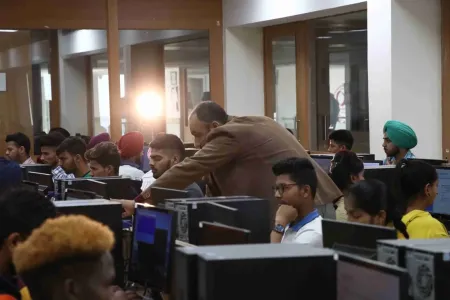
School of Engineering and Technology, CT University offers 2 years Diploma in Computer Science Engineering (CSE) Lateral Entry. The course objective of a Diploma in Computer Science Engineering (CSE) Lateral Entry is to provide students with a solid foundation in the field of computer science and engineering. The program aims to equip students with the necessary knowledge, skills, and practical experience to pursue a career in the rapidly evolving field of computer science and technology. It provides rigorous foundations of core Computer Science, combination of theoretical core concepts with practical training of software tools equips the students to be industry ready. The curriculum includes professional training and certification offered by top leading industry. 

Industry Immersion

Graduates will demonstrate excellence in professionalism, moral and ethical practice, social background awareness, and interpersonal skills with adaptable communication in order to foster a global perspective in graduates, allowing them to recognize diversity in the world and in academic pursuits.

Eligibility Criteria

Candidates who have passed 10 + 2 Examination with physics/ Mathematics/ Chemistry/ Computer Science/ Electronics/ Information Technology /Biology/ Informatics Practice/ Biotechnology/ Technical Vocational Subject/Agriculture/ Engineering Graphics/ Business Studies/ Entrepreneurship (as per table 8.4 of Approval Process Hand book 2024-27) 
OR
10th along with 2 years ITI shall be eligible for admission to Second Year Diploma Courses of in any branch of Engineering and Technology.

b) Two years certificate course in skill Technician (Machinist), Skill Technician (Machine Maintenance) & Quality Assurance Inspector form R&D Centre for Bicycle & Sewing Machine, Ludhiana.

Register Now

Why Choose CT University

Why CT University is the Right Choice for Your Future

CT University Campus

At CT University, we combine industry-integrated learning and global academic partnerships, backed by the CT Group's 30+ year legacy, to prepare students for careers that actually last.

Industry-oriented
learning

Modern campus
facilities

Academic excellence &
mentorship

Global opportunities &
placements

Fee Structure & Scholarships

Program Fee Details

Fee Type Amount
Programme Fees (per Semester) ₹40000
Examination Fees ₹3000

Merit Based Scholarship Scheme

Unlock up to 90% Scholarship through CTSET, with scholarships worth Rs 40 Crore! Get access to top-quality education at CT University, Ludhiana — without the financial burden.

Slab >=60% - 74.99% >=75% - 89.99% >=90% & Above
Fee ₹35000 ₹30000 ₹25000

Students can avail these slots depending on the marks they have scored. Each slot reflects a different academic range, helping students understand where they stand and what benefits they qualify for.

Course Curriculum

3RD SEMESTER SUBJECTS

This course develops the ability to analyze and design basic digital systems using number systems, Boolean algebra, logic gates, and combinational and sequential circuits. It also develops skills in simplifying logic expressions and working with flip-flops, counters, registers, and memory devices.
Course Outcome:
CO1: Verify and interpret the truth tables of basic logic gates and realize Boolean functions using AND, OR, NOT, NAND, and NOR gates.
CO2: Design and analyze combinational logic circuits including half adders, full adders, 4-bit binary adders, and 2's complement subtractors.
CO3: Verify and interpret the truth tables and operation of flip-flops used in sequential logic circuits.
CO4: Analyze and verify the operation of combinational logic devices, including multiplexers, de-multiplexers, encoders, and decoders.
CO5: Design and verify the operation of sequential circuits, including a 4-bit ring counter.
CO6: Design, implement, and verify the operation of 4-bit shift registers, including SISO, SIPO, PISO, and PIPO configurations.

This course develops problem-solving skills using the C programming language and enables students to write, compile, debug, and execute C programs. It develops logical thinking, algorithmic skills, programming techniques, and understanding of C syntax and constructs.
Course Outcome:
CO1: Identify the problem and formulate an algorithm for it.
CO2: Identify various control structures and implement them, and use pointers.
CO3: Use structures and union for handling data.
CO4: Explain and execute member functions of C in the programme.
CO5: Describe and implement array concept in C programme.
CO6: Handle File with C.

This course develops skills in designing, creating, and managing databases. Students gain proficiency in SQL for querying and manipulating data and learn to ensure data integrity, security, and efficient storage.
Course Outcome:
CO1: Explain the fundamental concepts, architecture, and components of Database Management Systems.
CO2: Design and analyze database architecture using the Entity-Relationship (ER) model and relational model.
CO3: Differentiate various types of keys and convert ER models into relational database schemas.
CO4: Apply normalization techniques to design efficient and consistent database tables.
CO5: Write and execute SQL queries for data definition, manipulation, retrieval, and control.
CO6: Develop and implement a relational database using Oracle, MySQL, or SQL Server to solve real-world data management problems.

This practical course provides hands-on experience in database management systems, focusing on relational database concepts and SQL. Students learn to design and implement databases, create tables and relationships, manipulate data, manage transactions, and apply database security concepts.
Course Outcome:
CO1: Explain the fundamental concepts, architecture, and components of Database Management Systems.
CO2: Design and analyze database architecture using the Entity-Relationship (ER) model and relational model.
CO3: Differentiate various types of keys and convert ER models into relational database schemas.
CO4: Apply normalization techniques to design efficient and consistent database tables.
CO5: Write and execute SQL queries for data definition, manipulation, retrieval, and control.
CO6: Develop and implement a relational database using Oracle, MySQL, or SQL Server to solve real-world data management problems.

This course develops understanding and management of computer hardware and software resources. It covers process management, memory management, file systems, concurrency, synchronization, Linux, and security principles needed for efficient operating-system operation.
Course Outcome:
CO1: Identify memory management technique.
CO2: Differentiate scheduler algorithm.
CO3: Setup of Linux labs. Use Linux for running various programming languages.
CO4: Set up open-source labs.
CO5: Describe and identify various file system.
CO6: Assist in handling other open sources.

This course develops understanding of the Internet and applications such as e-mail, FTP, Telnet, newsgroups, and video conferencing. It develops competency in designing professional websites and interactive web pages and provides an overview of HTML, CSS, and JavaScript.
Course Outcome:
CO1: Define internet and its operation. Outline application of internet.
CO2: Use application of video conferencing.
CO3: Use application of video conferencing.
CO4: Describe the application of E-communication and benefit to society.
CO5: Describe and identify various file system.
CO6: Define and differentiate between various web browsers. Develop static webpage/web portal. Validate input data.

This laboratory course develops practical skills in analyzing and designing digital systems using number systems, Boolean algebra, logic gates, and combinational and sequential circuits. Students work with flip-flops, counters, registers, and digital devices.
Course Outcome:
CO1: Verify and interpret the truth tables of basic logic gates and realize Boolean functions using AND, OR, NOT, NAND, and NOR gates.
CO2: Design and analyze combinational logic circuits including half adders, full adders, 4-bit binary adders, and 2's complement subtractors.
CO3: Verify and interpret the truth tables and operation of flip-flops used in sequential logic circuits.
CO4: Analyze and verify the operation of combinational logic devices, including multiplexers, de-multiplexers, encoders, and decoders.
CO5: Design and verify the operation of sequential circuits, including a 4-bit ring counter.
CO6: Design, implement, and verify the operation of 4-bit shift registers, including SISO, SIPO, PISO, and PIPO configurations.

This practical course reinforces C programming through hands-on exercises involving editing, compiling, control structures, arrays, strings, structures, pointers, unions, and file operations.
Course Outcome:
CO1: Identify the problem and formulate an algorithm for it.
CO2: Identify various control structures and implement them, and use pointers.
CO3: Use structures and union for handling data.
CO4: Explain and execute member functions of C in the programme.
CO5: Describe and implement array concept in C programme.
CO6: Handle File with C.

This practical course provides hands-on experience with operating-system concepts and working environments, particularly Windows and Linux. Students practice operating-system commands and utilities while developing practical understanding of system operation and management.
Course Outcome:
CO1: Identify memory management technique.
CO2: Differentiate scheduler algorithm.
CO3: Setup of Linux labs. Use Linux for running various programming languages.
CO4: Set up open-source labs.
CO5: Describe and identify various file system.
CO6: Assist in handling other open sources.

This practical course develops hands-on competency in Internet applications and web technologies. Students practice Internet access and services such as e-mail, Telnet, FTP and IRC, and work with HTML, CSS, JavaScript, and interactive web-page development.
Course Outcome:
CO1: Define internet and its operation. Outline application of internet.
CO2: Use application of video conferencing.
CO3: Use application of video conferencing.
CO4: Describe the application of E-communication and benefit to society.
CO5: Describe and identify various file system.
CO6: Define and differentiate between various web browsers. Develop static webpage/web portal. Validate input data.

This value-added course develops awareness of yogic practices and their role in physical fitness, mental well-being, concentration, discipline, and balanced living. It introduces fundamental yoga practices and encourages students to develop healthy habits, self-awareness, relaxation, and a positive approach to personal and academic life.
Course Outcome:
CO1: Explain the basic principles and practices of yoga and their importance in daily life.
CO2: Demonstrate fundamental yogic practices for improving physical fitness and flexibility.
CO3: Apply yoga practices to improve concentration, relaxation, and mental well-being.
CO4: Develop discipline, self-awareness, and healthy habits through regular yoga practice.
CO5: Practice appropriate yogic techniques for maintaining a balanced and healthy lifestyle.
CO6: Demonstrate a positive and responsible approach toward personal, academic, and overall well-being.

This course provides student-centred and community-oriented activities that promote awareness, social responsibility, teamwork, communication, leadership, energy conservation, and responsible behaviour.
Course Outcome:
CO1: Develop awareness of energy conservation and responsible use of energy resources.
CO2: Create awareness about the harmful effects of drug use and substance abuse.
CO3: Demonstrate social responsibility through participation in community-oriented activities.
CO4: Develop teamwork, leadership, and communication skills through student-centred activities.
CO5: Promote responsible behaviour and healthy lifestyle practices among peers and the community.
CO6: Demonstrate initiative and active participation in awareness and social responsibility activities.

4TH SEMESTER SUBJECTS

This course develops generic employability skills and an entrepreneurial mindset through communication, self-management, teamwork, leadership, problem-solving, opportunity identification, entrepreneurship, and business planning.
Course Outcome:
CO1: Explain the importance of generic skills, lifelong learning, and self-development.
CO2: Demonstrate effective communication, teamwork, leadership, and interpersonal skills in professional situations.
CO3: Apply critical thinking, problem-solving, and decision-making techniques to workplace and daily-life situations.
CO4: Identify business opportunities and prepare a basic business plan using entrepreneurship principles.

This course develops problem-solving and algorithmic skills using arrays, linked lists, stacks, queues, trees, graphs, and related data structures. Students learn to design and analyze algorithms, manage data efficiently, and compare searching and sorting techniques.
Course Outcome:
CO1: Explain abstract data types, algorithm design principles, and analyze algorithm complexity.
CO2: Perform operations on arrays and strings using suitable searching techniques.
CO3: Implement stacks, queues, and recursion to solve computational problems.
CO4: Develop programs using linked lists for dynamic data management.
CO5: Implement tree structures and explain basic graph traversal techniques.
CO6: Apply suitable sorting and searching algorithms by comparing their efficiency.

This course introduces object-oriented programming using C++. It develops understanding of classes and objects, encapsulation, constructors, inheritance, polymorphism, abstraction, exception handling, and reusable software design.
Course Outcome:
CO1: Explain the fundamental concepts of object-oriented programming and the features of C++.
CO2: Develop C++ programs using classes, objects, constructors, destructors, and member functions.
CO3: Apply inheritance and polymorphism to develop reusable and flexible C++ programs.
CO4: Implement operator overloading, function overloading, and other advanced C++ programming concepts.
CO5: Apply exception handling, templates, and file handling in C++ applications.
CO6: Design and implement object-oriented solutions to solve practical computing problems using C++.

This course develops understanding of the organization and architecture of modern computer systems, including data representation, instruction execution, CPU organization, arithmetic algorithms, memory hierarchy, cache and virtual memory, I/O organization, interrupts, DMA, multicore processors, and parallel processing.
Course Outcome:
CO1: Illustrate the use of number system and coding system.
CO2: Compare and contrast different RISC and CISC architectures.
CO2: Understand the use of registers in computer organization.
CO3: Apply various arithmetic operations.
CO4: Identify different I/O interfaces.
CO4: Distinguish different types of interrupts and DMA.
CO5: Understand the purpose of memory hierarchy.
CO6: Compare and contrast the use of different memory organizations.

This course develops understanding of network architectures and protocols, network design and configuration, network security principles, troubleshooting, and performance optimization. It covers IP addressing, network devices, wireless and modern networking, and protection against cyber threats.
Course Outcome:
CO1: Explain the fundamentals of computer networks, communication media, and networking architectures.
CO2: Configure IP addressing, networking protocols, and network services.
CO3: Install, configure, and troubleshoot network devices and basic enterprise networks.
CO4: Implement wireless networks, cloud networking concepts, and virtual networking technologies.
CO5: Apply network security mechanisms to protect organizational resources against cyber threats.
CO6: Design, monitor, and manage secure computer networks using appropriate tools and best practices.

This practical course provides hands-on experience in implementing core data structures and algorithms. Students work with arrays, linked lists, stacks, queues, trees, searching, sorting, and C programming while developing algorithmic thinking, debugging, testing, and data-structure selection skills.
Course Outcome:
CO1: Identify the problem and formulate an algorithm for it.
CO2: Identify the various designing techniques.
CO3: Store data, process data in linked list.
CO4: Sort the data in ascending or descending order.
CO5: Apply various data structure techniques in an array.
CO6: Implement trees and various traversing techniques.
CO7: Implement various sorting algorithms and to compare them for checking efficiency.
CO8: Identify proper data handling technique for handling data.

This practical course develops hands-on skills in implementing object-oriented programs using C++. Students practice classes, objects, constructors, inheritance, polymorphism, packages or modular organization, exception handling, and reusable program design.
Course Outcome:
CO1: Develop basic C++ programs using classes, objects, functions, and constructors.
CO2: Implement inheritance and polymorphism through practical C++ programs.
CO3: Apply function and operator overloading in C++ applications.
CO4: Implement exception handling, templates, and file handling using C++.
CO5: Design and develop object-oriented programs to solve practical problems.
CO6: Test, debug, and demonstrate C++ programs using appropriate programming practices.

This laboratory course develops practical networking skills including network setup, wireless configuration, IP addressing, subnetting, device configuration, connectivity troubleshooting, network monitoring, and basic network security.
Course Outcome:
CO1: Explain the fundamentals of computer networks, communication media, and networking architectures.
CO2: Configure IP addressing, networking protocols, and network services.
CO3: Install, configure, and troubleshoot network devices and basic enterprise networks.
CO4: Implement wireless networks, cloud networking concepts, and virtual networking technologies.
CO5: Apply network security mechanisms to protect organizational resources against cyber threats.
CO6: Design, monitor, and manage secure computer networks using appropriate tools and best practices.

A supervised minor project in which students identify a problem, design and implement a computing solution, test and document the work, and present the completed project.
Course Outcome:
CO1: Identify and analyze a relevant problem and define clear project requirements.
CO2: Design an appropriate computing solution using suitable concepts, tools, and technologies.
CO3: Implement the proposed solution by applying programming and problem-solving skills.
CO4: Test and evaluate the developed system to verify its functionality and performance.
CO5: Prepare proper technical documentation describing the project design, implementation, and results.
CO6: Demonstrate and present the completed project effectively, explaining the approach, outcomes, and applications.

This course provides student-centred activities focused on entrepreneurial awareness, initiative, teamwork, communication, leadership, and exposure to entrepreneurship-oriented practices.
Course Outcome:
CO1: Develop awareness of basic entrepreneurial concepts and opportunities.
CO2: Demonstrate initiative and creativity in identifying entrepreneurial ideas.
CO3: Develop teamwork and leadership skills through student-centred activities.
CO4: Apply effective communication and interpersonal skills in collaborative activities.
CO5: Understand basic entrepreneurial practices through participation in awareness and related activities.
CO6: Demonstrate professional attitude, confidence, and responsibility in entrepreneurship-oriented activities.

5TH SEMESTER SUBJECTS

A structured industry-training experience providing practical exposure to professional work environments and enabling students to apply technical knowledge, workplace practices, communication, teamwork, and problem-solving skills.
Course Outcome:
CO1: Apply technical knowledge and skills in a professional industrial work environment.
CO2: Demonstrate practical understanding of workplace practices and professional procedures.
CO3: Apply problem-solving and analytical skills to real-world industrial tasks.
CO4: Demonstrate effective communication and teamwork in a professional environment.
CO5: Develop professional discipline, responsibility, and work ethics through industry exposure.
CO6: Document and present the training experience, tasks performed, and skills acquired effectively.

This course introduces fundamental Artificial Intelligence concepts and intelligent behaviour in machines. It develops understanding of intelligent agents, search and problem-solving strategies, game-playing, knowledge representation, probability foundations, machine learning, and neural networks.
Course Outcome:
CO1: Understand the basic concepts of Artificial Intelligence and Machine Learning.
CO2: Use Probability and Distribution for solving AI Problems.
CO3: Explain the concepts of state space representation, exhaustive search, heuristic search together with the time and space complexities.
CO4: Know the importance of AI for various Gaming Techniques.
CO5: Use various Knowledge representation techniques.
CO6: Explain the concept of Machine learning and Neural Networks.

This practical course develops hands-on skills in Artificial Intelligence through programs involving PROLOG, the 8-queens problem, depth-first and breadth-first search, best-first search, the 8-puzzle, travelling salesman problem, and neuron simulation using TensorFlow.
Course Outcome:
CO1: Understand the basic concepts of Artificial Intelligence and Machine Learning.
CO2: Use Probability and Distribution for solving AI Problems.
CO3: Explain the concepts of state space representation, exhaustive search, heuristic search together with the time and space complexities.
CO4: Know the importance of AI for various Gaming Techniques.
CO5: Use various Knowledge representation techniques.
CO6: Explain the concept of Machine learning and Neural Networks.

This course introduces Java programming and object-oriented programming concepts, including Java syntax, control structures, classes and objects, inheritance, polymorphism, interfaces, packages, exception handling, collections, and basic file handling.
Course Outcome:
CO1: Understand Java programming fundamentals, syntax, data types, operators, control structures, and Java development environment.
CO2: Apply object-oriented programming concepts in Java including classes, objects, inheritance, polymorphism, encapsulation, and abstraction.
CO3: Develop Java applications using interfaces, packages, object classes, and wrapper classes for modular programming.
CO4: Implement exception handling and multithreading concepts to develop robust and efficient Java applications.
CO5: Design graphical user interfaces using Java Swing components, layouts, and event-driven programming techniques.
CO6: Develop Java-based applications integrating GUI components, event handling, file handling, and advanced programming concepts.

This practical course provides hands-on experience in developing Java programs and applying object-oriented concepts through exercises involving control flow, arrays, functions, classes, constructors, inheritance, polymorphism, packages, interfaces, and exception handling.
Course Outcome:
CO1: Develop basic Java programs using syntax, variables, data types, operators, expressions, and control structures.
CO2: Implement object-oriented programming concepts using classes, objects, methods, constructors, and encapsulation.
CO3: Apply inheritance and interface concepts to design reusable and modular Java programs.
CO4: Implement exception handling mechanisms using built-in and user-defined exceptions for robust applications.
CO5: Analyze and apply Java programming concepts to develop efficient and structured software solutions.
CO6: Develop Java applications using object-oriented principles and advanced programming techniques for real-world problem solving.

This course imparts knowledge of Python programming methodologies and their significance. It develops the ability to write non-trivial Python programs using Python syntax, control flow, functions, modules, data structures, exception handling, file I/O, classes, and regular expressions.
Course Outcome:
CO1: Execute Python code in a variety of environments.
CO2: Use correct Python syntax and control flow constructs.
CO3: Use various standard Python modules such as os, sys, math, and time
CO4: Trap various errors via the Python Exception Handling model
CO5: Use the IO model in Python to read and write disk files
CO6: Create their own classes and use existing Python classes.

This practical course develops programming logic and problem-solving skills through Python exercises. Students practice Python syntax, control structures, functions, built-in data structures, modules, file operations, error handling, and small application-oriented programs.
Course Outcome:
CO1: Execute Python code in a variety of environments.
CO2: Use correct Python syntax and control flow constructs.
CO3: Use various standard Python modules such as os, sys, math, and time.
CO4: Trap various errors via the Python Exception Handling model.
CO5: Use the IO model in Python to read and write disk files.
CO6: Create their own classes and use existing Python classes.

This course develops understanding of cloud computing concepts and challenges, including cloud service and deployment models, virtualization, cloud security, storage, scheduling, scalability, performance, cost optimization, and governance.
Course Outcome:
CO1: Understand the core concepts of the cloud computing paradigm.
CO2: Understand various Service Models and Deployment Models.
CO3: Apply the concept of virtualization.
CO4: Describe the scheduling of tasks in the cloud.
CO5: Illustrate the fundamental concepts of cloud storage.
CO6: Describe various security issues in the cloud.

This practical course develops hands-on understanding of cloud computing through cloud applications, cloud vendors, cloud-platform configuration, Cloud9, virtualization using a hypervisor, and cloud simulation using CloudSim.
Course Outcome:
CO1: Understand the core concepts of the cloud computing paradigm.
CO2: Understand various Service Models and Deployment Models.
CO3: Apply the concept of virtualization.
CO4: Describe the scheduling of tasks in the cloud.
CO5: Illustrate the fundamental concepts of cloud storage.
CO6: Describe various security issues in the cloud.

This course provides exposure to Free and Open Source Software and open-source project management. It covers open-source licensing, Git and GitHub, open-source web technologies, Linux, shell scripting, and the Linux file system.
Course Outcome:
CO1: Understand the difference between open source software and commercial software.
CO2: Install and use open source software.
CO3: Develop web sites using content management systems.
CO4: Use version control systems.
CO5: Install and configure LAMP/WAMP Stack.

This practical course develops hands-on skills with Free and Open Source Software through virtual machine setup, Ubuntu/Linux installation, Linux commands, file and directory management, permissions, and shell scripting.
Course Outcome:
CO1: Understand the difference between open source software and commercial software.
CO2: Install and use open source software.
CO3: Develop web sites using content management systems.
CO4: Use version control systems.
CO5: Install and configure LAMP/WAMP Stack.

This course introduces fundamental management concepts and develops understanding of planning, organizing, staffing, directing, controlling, decision-making, and basic managerial practices relevant to organizational and professional settings.
Course Outcome:
CO1: Explain the principles of management including its functions in an organization.
CO2: Inculcate leadership qualities to motivate self and others.
CO3: Manage human resources.
CO4: Maintain and be a part of healthy work culture in an organization.
CO5: Use marketing skills for the benefit of organization
CO6: Explain basics of accounting and finance.
CO7: Explain the functions of material management.
CO8: Use modern concepts of management.
CO9: Understand various types of cyber-crimes and cyber-attacks.

This course introduces mobile and cellular communication technologies, including mobile communication architecture, GSM, GPRS, CDMA, EDGE, 3G, 4G, and 5G technologies. It also covers Mobile IP, Mobile TCP, wireless technologies such as Wi-Fi, Bluetooth, NFC, WiMAX, MANET, and VANET, along with mobile operating systems and introductory mobile application development.
Course Outcome:
CO1: Understand core concepts and various issues of mobile communication technologies.
CO2: Compare and contrast the different features of GSM and 3G, 4G, 5G technologies.
CO3: Analyse and use of Transport layer in Mobile IP technology.
CO4: Classify various wireless technologies.
CO5: Describe the use of various Mobile OS and their features.

This practical course develops hands-on skills in mobile communication and wireless technologies. Students explore mobile communication components, GSM architecture and mobility management, cellular technologies, Mobile IP, wireless networks, mobile operating systems, and basic mobile application development through structured practical exercises.
Course Outcome:
CO1: Understand the fundamentals of mobile/cellular communication and network operating systems.
CO2: Analyze the architecture, mobility management and evolution of cellular technologies (GSM, GPRS, CDMA, EDGE, 3G/4G/5G).
CO3: Implement and evaluate Mobile IP and Mobile TCP protocols used in mobile computing.
CO4: Configure and assess wireless technologies including Wi-Fi, Bluetooth, NFC, WiMAX, MANET and VANET.
CO5: Develop and deploy simple applications for mobile operating systems using the WWW programming model.

This course provides student-centred activities designed to support personality development, professional confidence, communication, teamwork, leadership, and awareness of personal and career development.
Course Outcome:
CO1: Develop self-awareness and a positive attitude towards personal and professional growth.
CO2: Demonstrate effective communication skills in personal, academic, and professional situations.
CO3: Develop confidence and interpersonal skills through participation in student-centred activities.
CO4: Demonstrate teamwork and leadership skills while working collaboratively with others.
CO5: Develop awareness of personal and career development opportunities.
CO6: Demonstrate professional behaviour, confidence, and responsibility in academic and workplace environments

6TH SEMESTER SUBJECTS

A compulsory industry internship providing extended workplace exposure and an opportunity to apply technical, analytical, communication, teamwork, and professional skills in real-world settings.
Course Outcome:
CO1: Apply technical knowledge and skills to real-world industrial problems and work environments.
CO2: Demonstrate professional skills through participation in industry-based tasks and activities.
CO3: Apply analytical and problem-solving skills to assigned workplace responsibilities.
CO4: Demonstrate effective communication and teamwork in a professional environment.
CO5: Develop professional discipline, work ethics, time management, and responsible workplace behaviour.
CO6: Prepare and present internship work effectively through proper documentation, reporting, and presentation.

Program Outcomes & Features

Program Outcomes

  • The Graduates are expected to solve complex engineering problems by applying knowledge of mathematics, physics, engineering fundamentals, and an engineering specialization.
  • The Graduates should be able to design a device, part, or process to meet specific requirements while keeping in mind practical constraints such as cost, financial, social, political, ethical, health and safety, manufacturability, and sustainability.
  • The Graduates are expected to provide computer-based solutions that do not jeopardize public health, protection, cultural, social, or legal considerations.
  • The Graduates are expected to Create, choose, and apply suitable methodologies, resources, and modern engineering such as IT tools, including prediction and modelling to complex engineering activities, while keeping in mind the required limitations.
  • The Graduates are expected to communicate efficiently with the engineering community and society at large on complex engineering tasks, such as being able to comprehend and write appropriate reports and design documents, give and receive specific guidance.

Salient Features

  • To prepare graduates with a strong foundation in Computer Science and Applications and problem solving &programming skills in order to build successful careers professionals in industry, government, academia, research, entrepreneurial pursuit and consulting firms.
  • To equip students with analytical, design, development and soft skill to find innovative solutions to the real-world problems in collaboration with industry and professional societies.
  • To inculcate entrepreneurship, managerial skills and teamwork in our students through demonstration of good analytical, design and implementation skills for the betterment of individual and society at large.
  • To produce graduates who are ethical, socially responsible and lifelong learners to fulfill their goals.

Labs and Facilities

Laboratory

Laboratory

Explore More
01

Backed by the Legacy of CT Group, Driven by Proven Success

30000+

Placements

800+

Collaborations

1.2Cr

Highest Placement

1800+

Recruiters

1 Lac+

Alumni

40Cr

WORTH SCHOLARSHIP

Hear From Our Students

"

My journey pursuing BCA at CT University has been profoundly transformative and intellectually enriching. The institution’s dynamic academic environment, coupled with exceptionally supportive faculty, nurtured both my technical acumen and personal growth. The exposure to practical learning, innovative initiatives, and skill-oriented programs significantly elevated my competencies. I take immense pride in being a part of an institution that truly empowers students to excel and evolve.

"

CT University provided me with a platform where I could express myself and grow both personally and professionally. The university conducted various hackathons and activities that significantly enhanced my skills and practical knowledge. These opportunities helped me gain confidence and prepared me for real-world challenges.

"

My time at CT University has been a great learning experience. The faculty was supportive and always encouraged us to grow. Participating in activities like hackathons helped me improve my skills and gain confidence. The campus environment was friendly and comfortable, making it a great place to study and develop.

"

My journey at CT University during my B.Tech has been truly enriching. The faculty members were highly supportive and always approachable, making learning effective and enjoyable. The hostel environment was friendly and accommodating, and as an international student, I felt comfortable and well-adjusted. Overall, CT University provided me with a welcoming atmosphere and a strong academic foundation."

"

I am Harpreet Singh, a proud graduate of CT University, having completed my B.Tech in Civil Engineering in the 2022 batch. My journey at CTU was a transformative experience that laid the strong foundation for my professional growth. The university provided me with not only technical knowledge but also hands-on exposure through labs, workshops, and field visits, which played a vital role in shaping my career.

"

Pursuing my bachelors degree at CT university will always be a journey I’ll cherish for a lifetime. The faculty’s dedication and the university’s practical learning approach prepared me to face real-world engineering challenges with confidence. I am deeply thankful to CT University for nurturing my growth and shaping my professional path. The knowledge and values I gained continue to inspire my commitment to advancing sustainable infrastructure.

"

I have completed B.Tech and M.Tech in Computer Science and Engineering from CT University, Ludhiana. The time I've spent at CTU has been excellent. Being a part of CTU is an amazing experience. The best thing is that campuses consistently prioritize teaching corporate knowledge and soft skills.

"

My heart felt like my academics would suffer due to the lockdown, however CT University ensured that our online classes don’t let that happen.